
Chin implant or sliding genioplasty? Start with the bone and bite.
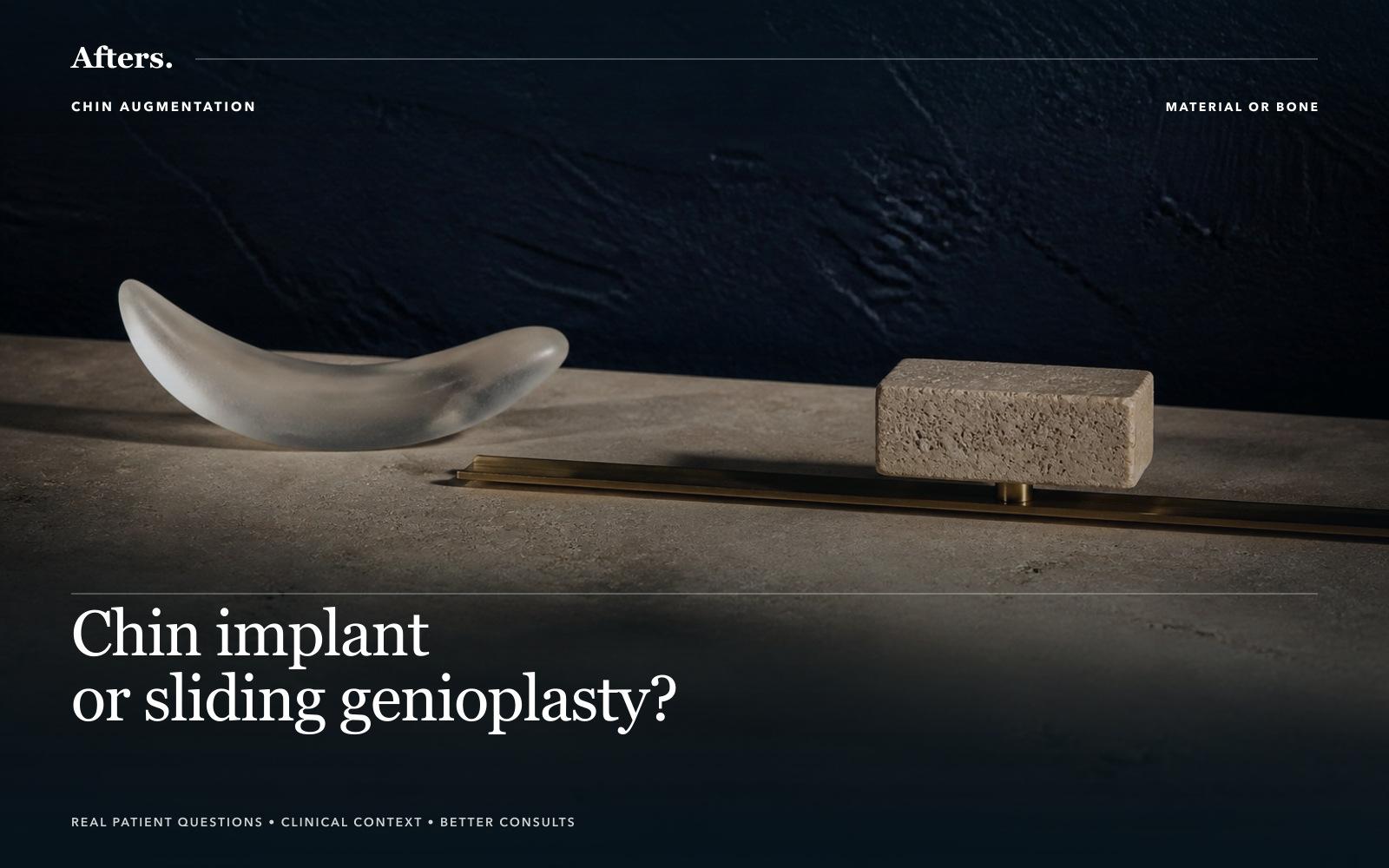
A chin implant places a manufactured shape over the existing skeleton. A sliding genioplasty cuts and moves the chin segment itself. Both can add projection, but they do not have the same control over height, asymmetry, width, or jaw relationships.
AI-assisted editorial analysis based on Afters search-demand data and the named clinical sources.Educational only—not medical advice. How we write
The search moment
If both operations improve a weak profile, why would anyone choose bone surgery?
Implant
Adds a device
Genioplasty
Moves bone
First check
Bite + jaw
Compare real results
Compare the front view before the profile
Use cases with similar bite, chin height, width, asymmetry, and neck contour. Ask whether the result came from an implant, bone movement, or combined work.
See chin results90-day Search Console signal
Chin, jawline, and chin-implant searches show a distinct profile-correction audience.
1.16K
Impressions
20
Queries
Chin lipo
Existing click
The top-1,000-query export contained 20 chin-augmentation, chin-implant, chin-lipo, or jawline queries. Existing traffic to the chin-lipo article also shows why profile readers need bone and soft-tissue options separated.
A profile photograph is only the opening view.
The examination should assess projection, vertical chin height, width, asymmetry, lower-lip relationship, soft-tissue thickness, dental bite, and the position of the entire lower jaw. A small chin can be an isolated chin-shape issue or part of a jaw relationship that affects the teeth and airway.
ASPS guidance for a recessed chin recommends evaluating dental occlusion. If the jaw or bite is abnormal, a cosmetic chin procedure may camouflage one part of the profile without addressing the larger skeletal problem. An orthodontic or oral-and-maxillofacial opinion can be appropriate before choosing either cosmetic option.
Do not skip the front view
Ask how the proposed operation changes chin width and symmetry from the front, not only projection in a profile simulation.
An implant adds a prefabricated shape over the bone.
A chin implant is placed through an incision beneath the chin or inside the mouth. Available designs vary in projection, width, and extension along the jaw. The operation can be a focused way to add projection when the bite is acceptable and the desired change matches an implant shape.
The tradeoffs include infection, sensation change, malposition, asymmetry, visibility or palpability, bone remodeling beneath the implant, and possible removal or revision. A device that creates a strong profile can also make the chin look too wide or unnatural from the front if its dimensions do not fit the face.
Sliding genioplasty moves the patient’s chin bone.
Cleveland Clinic describes the operation as an osteotomy: the surgeon cuts the chin segment and moves it forward, backward, sideways, or in a way that changes vertical height. Plates or screws secure the new position. The incision is commonly inside the mouth.
Moving bone offers more three-dimensional control and avoids a permanent implant, but it is a more involved skeletal operation. Risks include bleeding, infection, asymmetry, contour problems, and numbness or tingling of the chin or lower lip. The movement must be planned around tooth roots and nerves.
Neither operation substitutes for jaw surgery when the jaw is the problem.
Sliding genioplasty moves the chin point, not the tooth-bearing portion of the lower jaw. It can improve balance without changing the bite in selected patients. Orthognathic surgery repositions a larger jaw segment and belongs to a different diagnosis, planning process, and recovery.
Ask the surgeon to show where the lower jaw sits relative to the upper jaw and cranial base. If the recommendation is cosmetic camouflage, have them name what remains uncorrected. A second opinion is reasonable when simulations focus on the profile but the examination never addresses bite, asymmetry, or airway symptoms.
Questions for a three-dimensional chin plan
The answer should cover profile, front view, vertical height, width, bite, and device or bone risks.
Is my concern isolated to the chin or part of the lower jaw position?
How is my bite and do I need orthodontic or maxillofacial assessment?
How will each option change width and symmetry from the front?
What implant shape or bone movement are you proposing?
Where are the mental nerves and tooth roots relative to the plan?
How would you manage malposition, numbness, or dissatisfaction?
Cleveland Clinic: sliding genioplasty
A medically reviewed explanation of bone movement, implant differences, candidacy, recovery, and risks.
ASPS: chin-surgery procedure
Patient guidance on implants, bone reduction, incision choices, anesthesia, and permanence.
ASPS: options for a small or recessed chin
The role of dental bite, skeletal imaging, implant planning, and broader jaw relationships.
The questions that usually come next
Which lasts longer, a chin implant or sliding genioplasty?
Both are intended as long-term changes. Implants can require removal or revision; repositioned bone heals in its new position but can also need revision.
Does sliding genioplasty change the bite?
It moves the chin segment rather than the tooth-bearing jaw, so it generally does not correct a bite problem. Orthognathic surgery is a different operation.
Can a chin implant fix asymmetry?
Some implant designs and positioning can improve mild asymmetry, but a fixed manufactured shape may not match a complex skeletal difference. The plan needs front-view and three-dimensional assessment.
Is genioplasty always better because it uses my own bone?
No. It offers different control and avoids an implant, but it is more involved bone surgery. The right choice depends on anatomy, goals, bite, risk tolerance, and surgeon expertise.
Compare the front view before the profile
Use cases with similar bite, chin height, width, asymmetry, and neck contour. Ask whether the result came from an implant, bone movement, or combined work.
See chin results