Nefertiti neck lift: Nefertiti Neck Lift: Does It Work?
 Felipe LeeCo-founder, Afters · Updated October 16, 2026
A Nefertiti neck lift can soften muscle-related bands. ASPS describes Botox for neck bands and jawline; platysma injections do not remove fat or loose skin. See what the trials measured, who was studied and what to ask.
- Treatment
- Nonsurgical
- FDA band approval
- October 18, 2024
- Effect
- Temporary
Does a Nefertiti neck lift fit your concern?
Start with the tissue you want changed. The evidence below separates movement-related bands, jawline satisfaction and concerns the trials did not measure.
 What is a Nefertiti neck lift?A Nefertiti neck lift uses botulinum toxin along the platysmal bands and jawline to reduce muscle pull, according to ASPS; it is a nonsurgical treatment.
- Can a Nefertiti neck lift replace neck surgery?A Nefertiti neck lift does not remove fat or loose skin, and the platysma expert review separates those concerns from contraction-related bands.
- Is the Nefertiti neck lift FDA approved?FDA approved BOTOX Cosmetic for temporary improvement in adult moderate to severe platysma bands associated with platysma muscle activity on October 18, 2024; that does not approve every Nefertiti neck lift package.
- How many units does a Nefertiti neck lift use?The BOTOX Cosmetic label gives 26, 31 or 36 Units per platysma-band treatment, depending on the band pattern, rather than one dose for every Nefertiti neck lift.
- Who is a good candidate for a Nefertiti neck lift?The platysma expert review describes a Nefertiti neck lift candidate as someone with prominent bands and jawline blunting, little skin laxity and minimal under-chin fat, rather than someone chosen by age alone.
- Who should avoid a Nefertiti neck lift?The BOTOX Cosmetic label contraindicates a Nefertiti neck lift using that product in people with relevant toxin hypersensitivity or infection at a proposed injection site, and warns about pre-existing neuromuscular, swallowing and breathing problems.
- What did the Nefertiti neck lift dose study find?The 2025 randomized phase-two report found more day-14 band improvement with onabotulinumtoxinA than placebo in 164 analyzed participants, but its investigational higher doses also produced neck weakness and dysphagia; it does not establish one success rate for a Nefertiti neck lift.
- Does a Nefertiti neck lift work in clinical trials?The BOTOX Cosmetic label reports that roughly 31–32% of treated participants met its stringent day-14 band endpoint versus 0–2% with placebo across two pivotal trials with 408 toxin and 426 placebo participants, supporting a defined Nefertiti neck lift benefit.
 Can a Nefertiti neck lift improve the jawline?A 2026 pooled analysis of the two pivotal trials reported day-14 jawline satisfaction of 43.3% with toxin versus 10.4% with placebo, supporting a possible perceived jawline benefit from a Nefertiti neck lift without proving skin or fat removal.
- Is repeating a Nefertiti neck lift supported?The July 2026 open-label extension followed 350 people exposed to onabotulinumtoxinA across treatment cycles and reported repeat-treatment benefit and adverse events, but it cannot prove every Nefertiti neck lift becomes more effective with repetition.
- What do Nefertiti neck lift reviews really show?The 2019 systematic review and overlapping modern syntheses support interest in Nefertiti neck lift treatment, but their heterogeneous cohorts and reporting conflicts do not yield one reliable current US success or complication rate.
- How long does a Nefertiti neck lift last?ASDS describes platysmal-band improvement lasting about three to four months before muscle action returns, so a Nefertiti neck lift is temporary rather than a lasting surgical correction.
- What are the side effects of a Nefertiti neck lift?The BOTOX Cosmetic label warns about swallowing and breathing difficulties and muscle weakness, so a Nefertiti neck lift needs a functional-risk discussion as well as discussion of bruising and pain.
 Who should inject a Nefertiti neck lift?FDA and CDC advise a licensed, trained provider using product from authorized sources for toxin injections, and ASPS asks who will actually inject and whether that person has specific training, making those useful starting questions for a Nefertiti neck lift.
 How should I judge Nefertiti neck lift before and after photos?ASPS recommends asking for before-and-after photographs and reasonable expectations, and a Nefertiti neck lift comparison needs matching neck position, contraction and a complete treatment list to be interpretable.
- What should I ask before a Nefertiti neck lift?ASPS and AAD recommend discussing goals, medical history, actual injector, alternatives, cost and reasonable results before a Nefertiti neck lift, so leave with a specific treatment plan and contact instructions.
What it is
What is a Nefertiti neck lift?
A Nefertiti neck lift uses botulinum toxin along the platysmal bands and jawline to reduce muscle pull, according to ASPS; it is a nonsurgical treatment. Botox for neck bands and platysma injections describe this muscle-focused approach. The name refers to Queen Nefertiti of ancient Egypt, whose neck and jaw profile inspired the comparison, according to Richard Swift’s New York practice. The word lift describes an intended visual effect.
- 1Superficial platysma
The anatomy review describes a thin muscle across the neck and lower face. Vertical bands and jawline blunting describe muscle prominence in the expert review.
Anatomical Proposal for Botulinum Neurotoxin Injection Targeting the Platysma Muscle for Treating Platysmal Band and Jawline Lifting: A Review.Platysma Prominence: Review and Expert Analysis of Clinical Presentation, Burden, and Treatment Considerations.
- 2Band and upper-platysma areas
The Botox Cosmetic label includes the bands and upper platysma below the jawline. The shaded areas locate the discussion; they are not injection sites or a dose map.
BOTOX Cosmetic (onabotulinumtoxinA) US prescribing information
Schematic tissue relationships and sequence, not measurements, an injection plan, a prescription or a predicted result. No brand-unit conversion or individual treatment schedule is implied.
The name describes a muscle-focused treatment
The anatomy review describes the platysma across the neck and lower face. Its visible margins can form vertical cords when you contract it. The drawing locates broad muscle regions without giving injection points.
ASPS describes treatment along the jawline as well as the bands. The approved BOTOX Cosmetic regimen includes upper platysma below the jawline; jawline language alone does not identify the rest of a proposed package.
Richard Swift’s New York practice attributes Nefertiti to the ancient Egyptian queen. The 2007 named-technique abstract describes a visual mini-lift effect. Neither the name nor that description means surgery is performed.
The label describes BOTOX Cosmetic as a neuromuscular blocking agent. Relaxing a superficial muscle can make its bands less prominent, but the name does not tell you which product, dose or additional areas a practice proposes. Ask to have your concern identified on your own neck at rest and during contraction. The 2007 named-technique paper supplies historical terminology, not evidence that injections reproduce surgical tissue repositioning. Its overseas experience is not used here as a US outcome estimate.
“Which part of my neck concern comes from platysma activity, and what exactly would you treat?”
What it can change
Can a Nefertiti neck lift replace neck surgery?
A Nefertiti neck lift does not remove fat or loose skin, and the platysma expert review separates those concerns from contraction-related bands. A muscle-focused treatment may soften a band while leaving the reason you dislike your neck unchanged. The July 2026 repeat-treatment study explicitly generated no aesthetic results for resting banding, platysma ptosis or skin laxity. Its results cannot be used to promise correction of those concerns.
Muscle activity
Blue: superficial platysma
Separate tissue concerns
Blue: skin and overlying fat
- 1Toxin acts on muscle activity
The label describes neuromuscular blocking. The expert review reports band improvement without a substantial effect on skin laxity or jowling.
BOTOX Cosmetic (onabotulinumtoxinA) US prescribing informationPlatysma Prominence: Review and Expert Analysis of Clinical Presentation, Burden, and Treatment Considerations - PMC
- 2Skin and fat are different concerns
The expert review separates skin laxity and under-chin fullness from muscle prominence. ASPS routes surgical neck-lift questions to a separate operation. This comparison shows tissue concerns, not an incision plan or a predicted result.
Platysma Prominence: Review and Expert Analysis of Clinical Presentation, Burden, and Treatment Considerations - PMCNeck Lift | American Society of Plastic SurgeonsLiposuction | American Society of Plastic Surgeons
Schematic tissue relationships and sequence, not measurements, an injection plan, a prescription or a predicted result. No brand-unit conversion or individual treatment schedule is implied.
Identify the tissue before choosing treatment
Kane’s 1999 New York report found band improvement among timely returners but no observed lower-face lifting with that historical technique. It counted patient-injections, not an established number of unique patients, and does not settle every modern jawline question. There is no controlled surgical-neck comparison in this research. If your goal is removing skin or fat, use the surgical guides linked here to understand those alternatives. Compare the actual tissue target before comparing convenience, price or photographs.
“Would relaxing muscle address my main concern, or should I discuss a neck lift or neck liposuction?”
Approval and product
Is the Nefertiti neck lift FDA approved?
FDA approved BOTOX Cosmetic for temporary improvement in adult moderate to severe platysma bands associated with platysma muscle activity on October 18, 2024; that does not approve every Nefertiti neck lift package. Approval is specific to onabotulinumtoxinA, the indication and labeled treatment. The regimen includes upper platysma below the jawline as well as bands. Calling all neck Botox off-label is therefore inaccurate, as is calling every branded neck treatment approved.
Approval follows the product and indication
Ask whether the proposed treatment follows that label or includes a different dose, product or additional muscle. FDA says off-label use can involve a different indication, route or dose, and providers may generally prescribe an approved drug for an unapproved use when medically appropriate. That permission does not mean FDA has assessed that use’s safety and effectiveness. Cosmetic approval also does not establish an insurance benefit. A clear consent discussion names the exact product and explains the evidence for any departure.
“Which parts of my Nefertiti plan follow the BOTOX Cosmetic label, and which parts are off-label?”
Approval and product
How many units does a Nefertiti neck lift use?
The BOTOX Cosmetic label gives 26, 31 or 36 Units per platysma-band treatment, depending on the band pattern, rather than one dose for every Nefertiti neck lift. Those totals include upper-platysma treatment below the jawline. They are not a typical-unit estimate for every service using this name, and they cannot be transferred to another toxin brand. A different proposed total needs an explanation of its product, areas and rationale.
Read the label’s total by band presentation
The October 2024 label describes superficial intramuscular treatment and cautions about deeper neck structures. The diagram intentionally omits injection points. ASPS’s quoted 60-plus-unit trend remark describes broader treatments; it is not the approved regimen or a survey of usual dosing. The phase-two higher-dose arm also tested a different question under trial conditions. Do not turn a clinician’s technique demonstration into a personal prescription. Write the brand beside the total so later quotes and treatment records remain interpretable.
“What product and total units are you proposing, and how does that compare with its label?”
Who it fits
Who is a good candidate for a Nefertiti neck lift?
The platysma expert review describes a Nefertiti neck lift candidate as someone with prominent bands and jawline blunting, little skin laxity and minimal under-chin fat, rather than someone chosen by age alone. You need an examination to tell which tissues contribute to your appearance. The review’s description is an expert selection approach, not a validated prediction rule. Having bands does not establish that the visible change will meet your goals.
An examination should explain the target and the limits
The expert review describes prominent bands and jawline blunting with little skin laxity and minimal submental fat. This is an expert recommendation, not a validated prediction that a particular person will be satisfied.
The phase-two trial required moderate or severe prominence on both sides during maximal contraction, BMI below 30 and correct muscle contraction. It excluded excessive laxity, predominant fat or jowls, abnormal anatomy and prior surgical treatment.
The label’s pivotal participants were 19–82, mean 49, and were 94% female and 91% White. Those enrollment figures are not an ideal-age rule. Evidence is less informative for people poorly represented in the trials.
The label, checked October 16, 2026, says only 13 treated subjects in the band trials were 65 or older and prints 3.6%; its subgroup denominator does not reconcile with the aggregate trial counts. That percentage is not independently verified here. Older-adult evidence is limited, without an automatic birthday cutoff. Trial BMI and prior-surgery exclusions also describe studied populations, not universal contraindications. Ask how your skin, resting bands, fat and previous procedures differ from those selected trial participants.
“Which features make me a reasonable candidate, and which features make the trial results less applicable?”
Who it fits
Who should avoid a Nefertiti neck lift?
The BOTOX Cosmetic label contraindicates a Nefertiti neck lift using that product in people with relevant toxin hypersensitivity or infection at a proposed injection site, and warns about pre-existing neuromuscular, swallowing and breathing problems. Other situations require individual assessment rather than an internet clearance checklist. Pregnancy and breastfeeding recommendations need discussion too. Lack of adequate pregnancy or lactation data is not evidence that exposure is harmless.
Separate contraindications from situations needing assessment
The label checked October 16, 2026 warns that muscle relaxants, aminoglycosides and other medicines affecting neuromuscular transmission can increase effects, and that anticholinergic medicines can potentiate systemic anticholinergic effects. Different toxins used together or within months have unknown combined effects. Mayo asks about Botox within the preceding four months. Bring dates and product names, all prescriptions, nonprescription drugs and supplements, and prior surgery. Coordinate blood-thinner decisions with the prescriber; this guide supplies no medication-holding schedule.
“Do my health history, medicines, pregnancy plans or earlier injections change whether you would treat me?”
What the studies found
What did the Nefertiti neck lift dose study find?
The 2025 randomized phase-two report found more day-14 band improvement with onabotulinumtoxinA than placebo in 164 analyzed participants, but its investigational higher doses also produced neck weakness and dysphagia; it does not establish one success rate for a Nefertiti neck lift. The primary endpoint was clinician-rated improvement of at least one grade on both sides during maximal contraction. Participants were followed for four months after one treatment.
Dose-ranging results keep their own populations
This manufacturer-funded trial ran at US and Canadian centers, and its analysis population was 95.1% female and 93.9% White. Reported weakness began 4–45 days after treatment and lasted 4–68 days; one case was initially severe. A lower-dose facial-paresis case lasted 133 days. These individual courses are not expected recovery schedules. The paper selected a maximum of 36 Units for phase three to balance efficacy and safety. A larger response percentage alone does not justify copying the higher-dose technique.
“How does the evidence for your proposed dose account for both improvement and functional side effects?”
What the studies found
Does a Nefertiti neck lift work in clinical trials?
The BOTOX Cosmetic label reports that roughly 31–32% of treated participants met its stringent day-14 band endpoint versus 0–2% with placebo across two pivotal trials with 408 toxin and 426 placebo participants, supporting a defined Nefertiti neck lift benefit. Both clinician and participant had to rate bands minimal or mild and improved by at least two grades during maximum contraction. These results describe that outcome, not every possible visible improvement.
The pivotal trials measured several kinds of improvement
The lower threshold of one-grade improvement produced higher response percentages in a different analysis population. Neither number should replace the other. The trials assessed one treatment through day 120 and included sites outside the US. The full-text report discloses Allergan Aesthetics support for design and conduct, with AbbVie involvement in interpretation and publication review. Funding does not erase the controlled comparison, but it belongs beside the evidence. Longer-term independent maintenance and direct comparison with surgery remain unanswered here.
“Which trial outcome matches the change I want, and how would you measure that outcome in me?”
What the studies found
Can a Nefertiti neck lift improve the jawline?
A 2026 pooled analysis of the two pivotal trials reported day-14 jawline satisfaction of 43.3% with toxin versus 10.4% with placebo, supporting a possible perceived jawline benefit from a Nefertiti neck lift without proving skin or fat removal. The underlying efficacy cohorts totaled 408 toxin and 426 placebo participants; the abstract does not give each satisfaction item’s evaluable denominator. Satisfaction is a different question from the label’s stringent band endpoint.
Keep appearance, satisfaction and band scores separate
Treatment satisfaction at day 14 was 64.0% with toxin versus 11.5% with placebo; jawline satisfaction was 43.3% versus 10.4%. These reuse the two pivotal cohorts, totaling 408 toxin and 426 placebo efficacy participants. The abstract does not expose the per-item evaluable denominators.
Among the 186 toxin/195 placebo psychosocially impacted analysis population, 61.2% versus 11.8% were satisfied or very satisfied at day 14. That is neither the pooled satisfaction measure nor the stringent joint band-response endpoint.
Kane’s New York report described band improvement among 44 timely follow-up injections from 50 patient-injections, limited by redundant skin, with no observed lower-face lifting. A different historical technique does not negate every modern jawline finding or prove a surgical effect.
The pooled paper reuses participants rather than adding a new independent trial. The phase-two patient-reported paper also reuses its original 164-person dataset, with exploratory analyses, observed data and no multiplicity adjustment. Measure-development interviews included 30 participants, then cognitive groups of 20 and 5; they helped develop questions, not establish a 30-patient jawline success rate. Ask whether the expected change concerns definition during movement, resting contour or your satisfaction. Those outcomes cannot be substituted for one another.
“What jawline change is realistic for my anatomy, and are you describing a measured result or satisfaction?”
What the studies found
Is repeating a Nefertiti neck lift supported?
The July 2026 open-label extension followed 350 people exposed to onabotulinumtoxinA across treatment cycles and reported repeat-treatment benefit and adverse events, but it cannot prove every Nefertiti neck lift becomes more effective with repetition. Its eight-month extension followed a four-month randomized lead-in. Later treatment was selected by returning severity and time since treatment, and there was no continuing placebo comparison. Results at rest and skin laxity were not assessed.
The repeat study adds exposure, with important limits
The paper reports four dysphagia events in three people, not four dysphagia patients. Facial-paresis and dysphagia groups overlap, so adding them would double-count someone. Its adjoining overall-event prose gives 33.7% and 97 of 350, while Table 3 lists 118 of 350; this guide does not silently reconcile the discrepancy. The treatment-related count is a separate measure. Allergan Aesthetics funded the study and participated in design, analysis and publication approval. This is not independent multiyear maintenance evidence.
“What would make you recommend another treatment, and how would you reassess benefit and side effects first?”
What the studies found
What do Nefertiti neck lift reviews really show?
The 2019 systematic review and overlapping modern syntheses support interest in Nefertiti neck lift treatment, but their heterogeneous cohorts and reporting conflicts do not yield one reliable current US success or complication rate. A review is useful only when its treatments, denominators and endpoints match your question. Adding a pooled paper to its underlying trials does not create more independent participants, and a broad lifting review may study different injection techniques.
A review can reuse patients and still contain errors
The 2019 review’s day-14 45-of-48 response is sometimes mistaken for all 78 patients. Its later abstract and body also disagree, and product counts do not sum to its stated total. The modern safety meta-analysis needs primary-data re-extraction before numerical safety conclusions; no repaired pool is invented here. The broader 2026 review was available only as an abstract. These limitations leave the primary controlled trials more useful for a clearly defined band question than a headline claiming nearly everyone improves.
“Can you show me the original study behind the success or safety number you are quoting?”
What to expect
How long does a Nefertiti neck lift last?
ASDS describes platysmal-band improvement lasting about three to four months before muscle action returns, so a Nefertiti neck lift is temporary rather than a lasting surgical correction. That guidance does not provide a patient denominator or predict your individual duration. Society and hospital onset descriptions also differ. The trials’ day-14 assessment and four-month follow-up should not become a promise that every neck reaches the same peak or wears off on schedule.
Injection visit
Placement assessed by the clinician
Effect develops
Sources describe days to weeks
Effect wears off
General guidance describes months
- 1Injection visit
The label describes administration into the superficial platysma. Appointment length and injection time are different source descriptions with no measured Nefertiti visit-time endpoint.
BOTOX Cosmetic (onabotulinumtoxinA) US prescribing informationBotox Near Me, Salt Lake City | University of Utah Health
- 2Effect develops
AAD gives three to seven days for general toxin results. Cleveland Clinic gives three to four days for noticeable effects and ten to fourteen days for full effects. These are general education statements, not a neck-specific guarantee.
Botulinum toxin therapy: OverviewBotox (Botulinum Toxin): What It Is, Results & Side Effects
- 3Effect wears off
ASPS describes about three to four months for general toxin improvement and return of muscle reactions as effects fade. This is not a universal maintenance schedule.
Botulinum Toxin Results | American Society of Plastic Surgeons
Schematic tissue relationships and sequence, not measurements, an injection plan, a prescription or a predicted result. No brand-unit conversion or individual treatment schedule is implied.
Different clocks answer different questions
AAD’s general toxin education says 3–7 days. Cleveland Clinic says noticeable effects around days 3–4 and full effects in 10–14 days. Trial assessment at day 14 does not establish the same onset or peak for every neck.
ASDS describes about 3–4 months for platysmal-band improvement before muscle action returns. General Cleveland Clinic education gives a broader 3–6-month range. These statements have no measured Nefertiti duration distribution or common patient denominator.
The label says more frequent dosing than every 3 months has not been clinically evaluated. The extension also required return to a severity threshold after at least 84 days. A minimum trial interval does not establish that you need another injection then.
General appointment descriptions differ too. ASPS says injections usually take less than 15 minutes; Utah calls a general Botox procedure about one hour. Neither measures a Nefertiti-specific visit, and the sources do not establish why the descriptions differ. General exercise restrictions also differ between AAD and Cleveland Clinic. Ask for your clinician’s written plan and use the linked what-to-expect guide for that discussion. A short appointment or return to usual activities does not establish an absence of functional risk.
“When will you assess my response, and what would determine whether and when I return?”
SourcesAbbVieAmerican Society of Plastic SurgeonsAmerican Society of Plastic SurgeonsAmerican Society of Plastic SurgeonsAmerican Academy of DermatologyAmerican Academy of DermatologyAmerican Society for Dermatologic SurgeryMayo ClinicCleveland ClinicUniversity of Utah HealthPlastic and Reconstructive Surgery
Safety
What are the side effects of a Nefertiti neck lift?
The BOTOX Cosmetic label warns about swallowing and breathing difficulties and muscle weakness, so a Nefertiti neck lift needs a functional-risk discussion as well as discussion of bruising and pain. Get immediate medical care if swallowing, speech or respiratory disorders occur. The label says swallowing and breathing difficulties can be life threatening. These warnings have no reliable cosmetic-neck incidence denominator, and no-event observations in selected trials do not establish zero risk.
Functional symptoms need medical assessment
- Swallowing, speech or breathing difficulty
Get immediate medical care if swallowing, speech or respiratory disorders occur. The BOTOX Cosmetic label warns that symptoms of spread can appear hours to weeks after injection and that swallowing and breathing difficulties can be life threatening.
- Neck weakness or changed facial movement
Contact the treating clinician promptly for assessment and instructions. Tell them when symptoms began and what product and areas were treated. Do not assume a change is harmless because a video called treatment easy.
- Pain, swelling, redness or bruising
Tell the treating clinician about concerning or worsening symptoms and follow the written contact instructions. The label lists localized pain, infection, inflammation, tenderness, swelling, erythema, and bleeding or bruising among injection-associated events.
Why a reassuring trial does not erase the warning
The 2025 full-text phase-three trial observed no dysphagia or neck muscular weakness in its 208 toxin/216 placebo safety population. Treatment-related events were reported in 8 toxin and 7 placebo recipients; absence of an observed event is not zero true risk.
In the July 2026 repeat report, three of 350 exposed people had four dysphagia events and two had facial paresis. An event lasted beyond study end. The label says reactions can persist for months or longer, without a cosmetic-neck rate.
The label checked October 16, 2026 says reactions generally appear within the first week and can persist for months or longer. Severe dysphagia may last months and require feeding support; that is a label warning, not a neck-trial frequency. For neck weakness or changed smile, contact the treating clinician promptly rather than relying on a cosmetic reversal claim. The general office review’s discussion of waiting for toxin to wear off is not a treatment for swallowing or breathing symptoms.
“What symptoms require immediate care, and who will assess neck weakness or changed facial movement after my visit?”
Choosing care
Who should inject a Nefertiti neck lift?
FDA and CDC advise a licensed, trained provider using product from authorized sources for toxin injections, and ASPS asks who will actually inject and whether that person has specific training, making those useful starting questions for a Nefertiti neck lift. License, specialty-board certification and an injection-course certificate describe different qualifications. They describe different training and do not predict an outcome. Ask what each credential means for the person treating you.
Verify the credential being claimed
CDC’s 2024 case investigation concerned counterfeit or mishandled products and nonmedical settings; its seven ill women and four hospitalizations lack a treated-population denominator. They are not the risk of labeled neck treatment in a medical practice. ASDSA’s April 2024 oversight statement is an association position, not proof of enacted state law. Verify the relevant state authorization rather than inferring it from MD, PA, NP or RN initials. Ask how prior neck experience, supervision and follow-up are arranged in this practice.
“Who will inject me, what are their exact credentials and neck experience, and who is available if a problem develops?”
SourcesAmerican Society of Plastic SurgeonsAmerican Society of Plastic SurgeonsAmerican Academy of DermatologyAmerican Academy of DermatologyMayo ClinicUniversity of Utah HealthFDACDCCDCCDCAmerican Board of Plastic SurgeryAmerican Board of Facial Plastic and Reconstructive SurgeryAmerican Board of DermatologyAmerican Board of Medical SpecialtiesAmerican Board of Medical SpecialtiesFederation of State Medical BoardsAmerican Academy of DermatologyAmerican Society of Plastic SurgeonsAmerican Society for Dermatologic Surgery Association@drjessicawu
Choosing care
How should I judge Nefertiti neck lift before and after photos?
ASPS recommends asking for before-and-after photographs and reasonable expectations, and a Nefertiti neck lift comparison needs matching neck position, contraction and a complete treatment list to be interpretable. The selected two-week practice clips illustrate individual presentations, not a representative outcome rate. A collection of successful pictures cannot tell you how many people had little visible change, disliked the result or developed a side effect. Mayo notes that not everyone sees visible results.
Read the whole before-and-after comparison
Ask for both views, with the same head position, lighting and effort. The modern trial endpoint concerns maximum contraction. It does not prove the same improvement in loose skin or bands at rest. A less strained after picture can answer a different question.
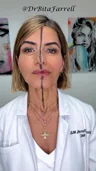
Lauren Montemayor’s selected April 2025 practice clip shows a two-week animated comparison. Bita Farrell’s selected July 2026 self-comparison also describes two weeks after DAO and jawline platysma treatment. Neither supplies later durability. Ask whether filler, other toxin areas or another treatment contributed.
Afters’ Botox photo route is a general collection, not a Nefertiti-only gallery. ASDS’s illustrated example combines full-face Sculptra with masseter/jaw Botox; Richard Swift’s practice describes frequent cheek/chin filler additions. Combined pictures cannot isolate toxin’s neck effect.
Ask to see a result in someone with a similar concern and enough detail to identify what was treated. A picture after several services cannot isolate platysma injections. The July 2026 repeat paper explicitly left resting aesthetic concerns unmeasured; a trial citation beside a resting skin photograph does not fill that gap. The general Botox gallery linked here may help you frame questions, but it is not a Nefertiti-only collection or proof of a typical neck outcome.
“Can you show comparable neck photographs at rest and in contraction, with timing and every treatment identified?”
Your consultation
What should I ask before a Nefertiti neck lift?
ASPS and AAD recommend discussing goals, medical history, actual injector, alternatives, cost and reasonable results before a Nefertiti neck lift, so leave with a specific treatment plan and contact instructions. The brand name and quoted total alone are not enough to compare proposals. Record what you want changed, what remains untreated and how the clinician will judge whether the first visit helped. You can decide against treatment if the likely change does not match your priorities.
Keep the proposed treatment specific
The October 2024 label’s 26/31/36-Unit totals describe its regimen, not your quote or a compulsory repeat purchase. The cost guide keeps product, units, areas and posted-price scopes attached; ASPS’s general toxin average is not a Nefertiti price. Ask whether assessment, follow-up and any proposed touch-up have separate charges, and what happens if the response is uneven or disappointing. No universal correction or refund policy was established in this research. Have any medication plan agreed with your prescriber.
“Can you write down the expected change, limits, product, injector, follow-up terms and problem-contact plan before I decide?”
Your consultation questions
Keep the questions that match your concerns.
Nothing saved yet. Tap Save to my list under any question.
Start with a short intake, pick your top 3 practices, and get Interactive Quotes back.
Bring a specific goal to the consultation
Ask what comes from muscle activity, what would remain and how the clinician will assess your response.
Sources and how to read the evidence
Clinical statements use the corrected research checked October 16, 2026. FDA documents and product labeling control approval and safety wording. Trials retain their populations, dates, endpoints and exposure periods; society advice is identified as education.
A response needs a definition
One-grade band improvement, a joint two-rater endpoint and satisfaction answer different questions. We do not combine their percentages or turn selected trial results into personal odds.
Stories have limits
The selected clips are clinician explanations or practice-published short-term results. They are not independent long-term diaries. The voices research is incomplete and clinician-heavy; counts describe sources, not people or outcome rates.
What remains uncertain
The packet establishes no clean pooled US-only complication rate, controlled surgical comparison, universal repeat schedule or independent multiyear maintenance outcome. Conflicting review denominators are shown rather than silently repaired.
Sources
- BOTOX Cosmetic (onabotulinumtoxinA) US prescribing informationAbbVie · Accessed Oct 16, 2026
- Popular plastic surgery procedures for neck contouring | ASPSASPS · Accessed Oct 16, 2026
- Novel uses for Botox and filler | American Society of Plastic SurgeonsASPS · Accessed Oct 16, 2026
- » Nefertiti Lift Dr. Richard Swift, MD – Plastic Surgery in Manhattan, NYCRichard Swift MD, New York practice · Accessed Oct 16, 2026
- The ’Nefertiti lift’: a new technique for specific re-contouring of the jawline.Journal of cosmetic and laser therapy : official publication of the European Society for Laser Dermatology · 2007
- Anatomical Proposal for Botulinum Neurotoxin Injection Targeting the Platysma Muscle for Treating Platysmal Band and Jawline Lifting: A Review.Toxins · 2022
- Anatomy of the Platysma Muscle.The Journal of craniofacial surgery · 2017
- Platysma Prominence: Review and Expert Analysis of Clinical Presentation, Burden, and Treatment Considerations.Plastic and reconstructive surgery. Global open · 2025
- Nefertiti neck lift candidacy: Dr. Mike NayakYouTube/Dr. Mike Nayak · 2019
- BOTOX Cosmetic FDA prescribing information, October 2024FDA · Accessed Oct 16, 2026
- Platysma Prominence: Review and Expert Analysis of Clinical Presentation, Burden, and Treatment Considerations - PMCPlastic and Reconstructive Surgery · Accessed Oct 16, 2026
- Neck Lift | American Society of Plastic SurgeonsASPS · Accessed Oct 16, 2026
- Liposuction | American Society of Plastic SurgeonsASPS · Accessed Oct 16, 2026
- OnabotulinumtoxinA for Platysma Prominence: Safety and Efficacy Results from a Phase 3 Open-Label Repeat Treatment Study - PMCPlastic and Reconstructive Surgery · Accessed Oct 16, 2026
- Nonsurgical treatment of platysmal bands with injection of botulinum toxin A.Plastic and Reconstructive Surgery / PubMed · 1999
- Approval Letter_103000Orig1s5331,5319,5316,5323,5326ltr.pdfFDA · 2024
- BOTOX application BLA103000 submission historyFDA openFDA · Accessed Oct 16, 2026
- DailyMed - DYSPORT- botulinum toxin type a injection, powder, lyophilized, for solutionDailyMed / manufacturer · 2024
- DailyMed - XEOMIN- incobotulinumtoxina injection, powder, lyophilized, for solutionDailyMed / manufacturer · 2026
- DailyMed - DAXXIFY- botulinum toxin type a injection, powder, lyophilized, for solutionRevance / DailyMed · 2026
- Understanding Unapproved Use of Approved Drugs "Off Label" | FDAFDA · Accessed Oct 16, 2026
- Development & Approval Process | Drugs | FDAFDA · Accessed Oct 16, 2026
- Efficacy and Safety of OnabotulinumtoxinA for the Treatment of Platysma Prominence: A Randomized Phase 2 Dose-Ranging Study - PMCPeer-reviewed full text via PMC · Accessed Oct 16, 2026
- Botulinum toxin therapy: PreparationAmerican Academy of Dermatology · Accessed Oct 16, 2026
- Botox injections - Mayo ClinicMayo Clinic · 2024
- Efficacy and Safety of OnabotulinumtoxinA for the Treatment of Platysma Prominence: A Randomized Phase 2 Dose-Ranging Study.Plastic and reconstructive surgery · 2025
- Improving Neck and Jawline Aesthetics With OnabotulinumtoxinA by Minimizing Platysma Muscle Contraction Effects: Efficacy and Safety Results in a Phase 3 Randomized, Placebo-Controlled Study - PMCPeer-reviewed full text via PMC · Accessed Oct 16, 2026
- Improving Neck and Jawline Aesthetics With OnabotulinumtoxinA by Minimizing Platysma Muscle Contraction Effects: Efficacy and Safety Results in a Phase 3 Randomized, Placebo-Controlled Study.Aesthetic surgery journal · 2025
- Improvement of platysma prominence with onabotulinumtoxinA: Safety and efficacy results from a randomized, double-blinded, placebo-controlled phase 3 trial.Journal of the American Academy of Dermatology · 2025
- A Phase 3 Multicenter, Randomized, Double-blind, Placebo-controlled Study to Evaluate the Safety and Efficacy of BOTOX® (Botulinum Toxin Type A) Purified Neurotoxin Complex for the Treatment of Platysma ProminenceClinicalTrials.gov · 2024
- A Phase 3 Multicenter, Randomized, Double-blind, Placebo-controlled Study to Evaluate the Safety and Efficacy of BOTOX® (Botulinum Toxin Type A) Purified Neurotoxin Complex for the Treatment of Platysma ProminenceClinicalTrials.gov · 2024
- Treatment Satisfaction, Improvements in Jawline Definition, and Psychosocial Impact With OnabotulinumtoxinA for Platysma Prominence: Patient-Reported Outcomes From 2 Multicenter, Randomized, Placebo-Controlled Phase 3 Studies.Aesthetic surgery journal · 2026
- Patient-Reported Outcomes After Treatment With OnabotulinumtoxinA for Platysma Prominence: Results From a Phase 2 Dose-Ranging Study.Journal of cosmetic dermatology · 2026
- Patient‐Reported Outcomes After Treatment With OnabotulinumtoxinA for Platysma Prominence: Results From a Phase 2 Dose‐Ranging Study - PMCPeer-reviewed full text via PMC · Accessed Oct 16, 2026
- Development and validation of patient-reported outcome measures for platysma prominence.Current medical research and opinion · 2025
- Nefertiti neck lift recovery: drbitafarrellTikTok · @drbitafarrell · Jul 10, 2026
- OnabotulinumtoxinA for Platysma Prominence: Safety and Efficacy Results from a Phase 3 Open-Label Repeat Treatment Study.Plastic and reconstructive surgery · 2026
- Efficacy and Safety of OnabotulinumtoxinA for the Treatment of Platysma Prominence: A Systematic Review and Meta-Analysis of Randomized Controlled Trials.Journal of cosmetic dermatology · 2026
- Efficacy and safety of onabotulinumtoxin A in the treatment of platysma prominence: A systematic review and meta-analysis of randomized clinical trials.Journal of plastic, reconstructive & aesthetic surgery : JPRAS · 2025
- Use of AbobotulinumtoxinA for Cosmetic Treatments in the Neck, and Middle and Lower Areas of the Face: A Systematic Review.Toxins · 2021
- Current Use of Cosmetic Toxins to Improve Facial Aesthetics.Plastic and reconstructive surgery · 2021
- Botulinum Toxin Treatment for Mild to Moderate Platysma Bands: A Systematic Review of Efficacy, Safety, and Injection TechniqueAesthetic Surgery Journal · 2019
- Botulinum Toxin Type A for the Management of Lower Face and Neck Lifting: A Systematic Review.Journal of Craniofacial Surgery / PubMed · 2026
- Efficacy and Safety of OnabotulinumtoxinA for the Treatment of Platysma Prominence: A Systematic Review and Meta-Analysis of Randomized Controlled TrialsJournal of Cosmetic Dermatology · 2026
- Botulinum Toxin Procedure Steps | American Society of Plastic SurgeonsAmerican Society of Plastic Surgeons · Accessed Oct 16, 2026
- Botulinum Toxin Recovery | American Society of Plastic SurgeonsAmerican Society of Plastic Surgeons · Accessed Oct 16, 2026
- Botulinum Toxin Results | American Society of Plastic SurgeonsAmerican Society of Plastic Surgeons · Accessed Oct 16, 2026
- Botulinum toxin therapy: OverviewAmerican Academy of Dermatology · Accessed Oct 16, 2026
- Botulinum toxin therapy: FAQsAmerican Academy of Dermatology · Accessed Oct 16, 2026
- Neuromodulators for Sagging SkinAmerican Society for Dermatologic Surgery · Accessed Oct 16, 2026
- Botox (Botulinum Toxin): What It Is, Results & Side EffectsCleveland Clinic · 2022
- Botox Near Me, Salt Lake City | University of Utah HealthUniversity of Utah Health · Accessed Oct 16, 2026
- Office‐based facial plastics procedures: Neuromodulators - PMCWorld Journal of Otorhinolaryngology - Head and Neck Surgery · 2023
- Botulinum Toxin Questions | American Society of Plastic SurgeonsAmerican Society of Plastic Surgeons · Accessed Oct 16, 2026
- Counterfeit Version of Botox Found in Multiple States | FDAFDA · Accessed Oct 16, 2026
- Harmful Reactions Linked to Counterfeit "Botox" or Mishandled Botulinum Toxin Injections | Botulism | CDCCDC · Accessed Oct 16, 2026
- Notes from the Field: Illnesses After Administration of Presumed Counterfeit Botulinum Toxin in Nonmedical Settings — Tennessee and New York City, March 2024 | MMWRCDC · Accessed Oct 16, 2026
- Symptoms of Botulism | Botulism | CDCCDC · Accessed Oct 16, 2026
- ABPlasticSurgery.orgAmerican Board of Plastic Surgery · Accessed Oct 16, 2026
- Appling for Certification - American Board of Facial Plastic and Reconstructive SurgeryAmerican Board of Facial Plastic and Reconstructive Surgery · Accessed Oct 16, 2026
- PublicAmerican Board of Dermatology · Accessed Oct 16, 2026
- What is ABMS Board Certification? | American Board of Medical SpecialtiesAmerican Board of Medical Specialties · Accessed Oct 16, 2026
- Certification Matters | American Board of Medical SpecialtiesAmerican Board of Medical Specialties · Accessed Oct 16, 2026
- Contact a State Medical Board | FSMBFederation of State Medical Boards · Accessed Oct 16, 2026
- What is a dermatologist?American Academy of Dermatology · Accessed Oct 16, 2026
- Choosing a Plastic Surgeon for Botulinum Toxin Injections | ASPSAmerican Society of Plastic Surgeons · Accessed Oct 16, 2026
- Recent Adverse Incidents Prompt ASDSA to Call on States to Step Up and Protect PatientsAmerican Society for Dermatologic Surgery Association · 2024
- Nefertiti neck lift candidacy: drjessicawuTikTok · @drjessicawu · Feb 17, 2025
- Nefertiti neck lift result: laurenmontemayor_paTikTok · @laurenmontemayor_pa · Apr 15, 2025
- Botulinum Toxin Consultation | American Society of Plastic SurgeonsAmerican Society of Plastic Surgeons · Accessed Oct 16, 2026
- Best questions to ask when considering a cosmetic treatmentAmerican Academy of Dermatology · Accessed Oct 16, 2026
- OnabotulinumtoxinA Injection: MedlinePlus Drug InformationNational Library of Medicine · Accessed Oct 16, 2026
- Botulinum Toxin Cost | American Society of Plastic SurgeonsAmerican Society of Plastic Surgeons · Accessed Oct 16, 2026