
Arm lift candidacy: Arm Lift: What Is Brachioplasty?
 Felipe LeeCo-founder, Afters · Updated October 18, 2026
Compare the skin you want removed with the scar you would accept. Start with the anatomy, then weigh timing, risks and practical help.
- Different areas of skin removal
- Full, mini, extended
- Placement and quality vary
- A lasting scar
- Source-specific timing
- Stable weight
Questions before choosing an arm lift
These questions follow concerns in the patient-source research. Study rates, guidance and individual experiences remain separate.
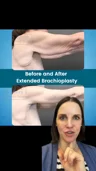 What is an arm lift or brachioplasty?An arm lift, also called brachioplasty, removes excess sagging upper-arm skin and reshapes the area between the armpit and elbow, according to the American Society of Plastic Surgeons (ASPS).
- Who is a candidate for an arm lift?An arm lift can fit adults with substantial loose upper-arm skin after weight loss or aging who have relatively stable weight, suitable health and realistic expectations, according to ASPS.
- When can I get an arm lift after weight loss?Arm lift after weight loss usually waits for a weight plateau, but the sources give different intervals, including UT Southwestern’s three to six months of stable weight and The Aesthetic Society’s six months in education checked October 17, 2026.
- Can I get an arm lift after Ozempic or GLP-1s?Arm lift after Ozempic or other GLP-1 treatment requires a stable-weight plan and individualized anesthesia assessment, according to UT Southwestern’s weight-loss education and the 2024 multisociety guidance supported by the American Society of Anesthesiologists (ASA).
- What could delay my arm lift surgery?Arm lift readiness after major weight loss includes nutrition assessment, medical evaluation and a smoking plan, according to ASPS and UT Southwestern; a 2010 Pittsburgh study of 100 post-bariatric contouring candidates found 18% had intake below recommended daily protein.
- What is a full vs mini vs extended arm lift?A full arm lift treats skin excess along the upper arm, a mini arm lift treats limited excess near the armpit, and an extended arm lift continues onto the chest side, according to The Aesthetic Society.
- Can a mini arm lift remove my loose skin?A mini arm lift is an axillary or limited-incision operation for a small amount of loose skin near the armpit, according to The Aesthetic Society and Johns Hopkins.
- Do I need an arm lift or liposuction?Arm liposuction alone may fit fat excess when the skin can retract, while an arm lift removes loose skin that cannot, according to The Aesthetic Society.
 Where will my arm lift scar be?An arm lift scar may sit along the inner or back of the arm, according to ASPS, and the available evidence does not establish one placement as superior for every patient.
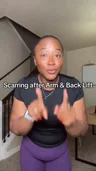 How do arm lift scars and results change?An arm lift scar remains even when the contour improves, and the 2022 brachioplasty meta-analysis estimated aberrant scarring at 9.9% across 29 observational studies containing 1,578 patients overall.
- What are the risks of an arm lift?Arm lift risks include wound separation, infection, fluid collections and scarring; Vanderbilt’s 2026 report recorded a defined complication in 13 of 109 arm-lift patients, or 11.9%, within 90 days.
- Can an arm lift cause nerve injury or lymphedema?Arm lift surgery can injure sensory nerves or lymphatic tissue, and Mayo’s 2006 series reported medial antebrachial cutaneous nerve injury in two of 40 women with bilateral brachioplasty.
- Can I combine an arm lift with other surgery?Combining an arm lift with other contouring can make recovery more demanding, and the 2016 CosmetAssure study of 2,294 arm-lift patients reported 30-day major complications of 4.4% with combined procedures versus 1.3% with brachioplasty alone.
- Does insurance cover an arm lift?Arm lift insurance coverage depends on the exact payer and benefit contract, with Cigna 0470 and Anthem ANC.00009 describing conditional functional criteria while Aetna CPB 0031 and PEHP’s cosmetic policy list brachioplasty as cosmetic.
- What should arm lift before and after photos show?Arm lift before and after photos help compare contour and scars when the starting anatomy, operation and follow-up match your situation, according to ASPS and The Aesthetic Society’s consultation guidance.
 Who performs an arm lift and what should I ask?An arm lift consultation should include verification of the plastic surgeon’s credentials, facility, anesthesia and complication follow-up, according to ASPS and the American Board of Plastic Surgery (ABPS).
Understanding arm lift surgery
What is an arm lift or brachioplasty?
An arm lift, also called brachioplasty, removes excess sagging upper-arm skin and reshapes the area between the armpit and elbow, according to the American Society of Plastic Surgeons (ASPS). Fat removal and internal supporting sutures may be part of the operation. The central trade is less hanging skin in exchange for an incision scar. Which skin needs removal determines how far that scar extends.
Separate what the operation changes
Brachioplasty removes hanging skin along the underside of the upper arm. Exercise can strengthen muscle while this skin remains.
ASPS describes direct removal or liposuction when fat also contributes. The amount and location belong in your operative plan.
ASPS describes internal sutures to tighten supporting tissue. Closing the skin leaves an incision scar; the drawing is a map, not a predicted result.
Before you decide
Cleveland Clinic says exercise can tone muscle but does not shrink excess arm skin. That distinction matters if you have become stronger or lost weight and still see a hanging fold. Ask the surgeon to point out skin, fat and underlying contour separately. A skin-removal discussion should explain the change you can reasonably expect with the arm at rest and while raised.
ASPS’s results page says swelling and bruising obscure the early contour and an incision scar remains. Its education, checked October 17, 2026, has no outcome-study denominator. A written plan should identify the tissue removed, any liposuction, the supporting sutures and the scar you are agreeing to. A smaller-looking arm in a selected photograph cannot establish how much change the operation will produce for you.
“Which part of my arm is loose skin, which is fat, and what will your proposed operation change?”
Understanding arm lift surgery
Who is a candidate for an arm lift?
An arm lift can fit adults with substantial loose upper-arm skin after weight loss or aging who have relatively stable weight, suitable health and realistic expectations, according to ASPS. There is no single age or universal BMI cutoff in its candidacy page. The Aesthetic Society includes aging, major weight loss and weight fluctuations among the reasons skin may stop fitting the arm beneath it.
Match the reason for surgery to candidacy
Before you decide
The Aesthetic Society’s education, checked October 17, 2026, describes skin changes with aging without an age-based eligibility rule or a patient cohort denominator. Someone with a small proximal fold has a different problem from someone with skin extending to the elbow and chest, even at the same age. Ask for the proposed correction to be tied to your anatomy and priorities.
University of Utah lists friction, hygiene problems and rash among reasons people seek arm skin removal. Describe what happens during daily activities and which treatments you have tried. Insurance has separate criteria later in this guide. In CosmetAssure’s 2016 report of 2,294 arm-lift patients, BMI at least 30 was associated with major complications. That association does not create a universal cutoff or determine one person’s eligibility.
“What makes my skin, health and expectations a fit for this arm lift?”
Understanding arm lift surgery
When can I get an arm lift after weight loss?
Arm lift after weight loss usually waits for a weight plateau, but the sources give different intervals, including UT Southwestern’s three to six months of stable weight and The Aesthetic Society’s six months in education checked October 17, 2026. Neither is an arm-lift timing trial. Your team should explain which interval applies to your weight trajectory, nutrition and planned operation rather than treating every published clock as the same rule.
Weight stability has several different clocks
Before you decide
The Aesthetic Society’s approximately two years from the start of dramatic weight loss is separate from its six months of stable weight. An ASPS feature published in 2024 describes at least 12–18 months of stability, while the general ASPS body-contouring candidate page supplies no fixed month count. These are educational recommendations without a surgical comparison denominator. They should remain attributed rather than averaged into a new waiting rule.
Johns Hopkins says later weight loss can create new sagging and weight gain can stretch weakened skin. Utah advises against surgery during major ongoing loss or large fluctuations. The Aesthetic Society suggests the aesthetic and bariatric surgeons confer about the final plateau. Bring your weight history and future treatment plans so the discussion addresses likely changes, instead of requiring you to guess whether the most recent weigh-in proves readiness.
“Which weight-stability interval are you using for me, and how will we document readiness?”
Understanding arm lift surgery
Can I get an arm lift after Ozempic or GLP-1s?
Arm lift after Ozempic or other GLP-1 treatment requires a stable-weight plan and individualized anesthesia assessment, according to UT Southwestern’s weight-loss education and the 2024 multisociety guidance supported by the American Society of Anesthesiologists (ASA). The guidance says most patients can continue these drugs, while some higher-risk patients need changes or deferral. It does not establish one medicine schedule or a drug-specific arm-lift complication rate.
Do not turn a study protocol into a medicine schedule
Before you decide
Vanderbilt’s 2026 retrospective cohort included 1,002 selected adults and 109 arm-lift patients. Its lack of a significant complication difference by weight-loss method does not establish equivalence. The US TriNetX report in a 2025 issue examined mixed contouring operations, with 4,157 matched patients per group, and found an association with more wound separation at 30 days. Different selection, operations and windows prevent assigning either finding as your arm-lift risk.
ASA’s patient page reviewed October 22, 2025 asks about GLP-1/GIP medicines, other prescriptions and supplements. The primary October 2024 guidance calls for shared decisions, including review of escalation and digestive symptoms. Vanderbilt’s seven-day hold was its institutional study protocol, not a universal instruction. Do not change treatment based on this guide. Ask your own teams to document a coordinated plan for the medicine, nutrition, weight stability and anesthesia.
“How will you, my prescriber and my anesthesia team coordinate weight stability and my GLP-1 plan?”
Understanding arm lift surgery
What could delay my arm lift surgery?
Arm lift readiness after major weight loss includes nutrition assessment, medical evaluation and a smoking plan, according to ASPS and UT Southwestern; a 2010 Pittsburgh study of 100 post-bariatric contouring candidates found 18% had intake below recommended daily protein. That study was not an arm-only cohort. Bring your dietary history, previous bariatric operation, medicines and supplements so the team can identify problems before choosing an operation date.
Readiness includes food, medicines and nicotine
ASMBS’s February 2021 education describes lifelong individualized vitamin/mineral care. Bring your bariatric follow-up records and current supplements; this guide supplies no supplement prescription.
A 2010 Pittsburgh study assessed 100 post-bariatric contouring candidates. Eighteen percent had intake below recommended daily protein; nearly 40% had evidence of iron deficiency. Laboratory-evaluable denominators were not separately supplied.
Utah says at least six weeks before arm surgery; Cleveland Clinic’s arm page says at least two. ACS’s general-surgery advice says four to six weeks before and four after. These are guidance intervals, not an arm-lift randomized comparison.
ASPS includes medical evaluation, possible laboratory testing and review of medicines. UT Southwestern includes specialized nutrition testing when needed. Tell the team about conditions affecting healing.
Before you decide
The 2010 Pittsburgh assessment of 100 post-bariatric contouring candidates also found evidence of iron deficiency in nearly 40%, without separately supplying laboratory-evaluable counts. The authors supported dietary, clinical and laboratory assessment together. A 2026 nutritional review discusses reduced intake during GLP-1 treatment and individualized optimization. Neither gives one protein target or supplement regimen that is appropriate for every person preparing for an arm lift.
Utah’s six-week preoperative smoking interval differs from Cleveland Clinic’s arm-page two-week interval and ACS’s general-surgery advice. These sources were checked October 17, 2026 and do not provide an arm-lift trial comparing those schedules. Tell the team what you use, including nicotine products, and follow its written requirements. ASPS includes conditions affecting healing, medical evaluation and medication review in preparation; a calendar interval alone does not establish that those risks have been addressed.
“Which medical, nutrition and nicotine issues must we address before setting my surgery date?”
SourcesAmerican Society for Metabolic and Bariatric SurgeryASPSUT Southwestern Medical CenterAmerican College of SurgeonsAmerican Society of Plastic SurgeonsAmerican Society of Plastic SurgeonsUniversity of Utah HealthCleveland ClinicPlastic and reconstructive surgeryPlastic and reconstructive surgery
Understanding arm lift surgery
What is a full vs mini vs extended arm lift?
A full arm lift treats skin excess along the upper arm, a mini arm lift treats limited excess near the armpit, and an extended arm lift continues onto the chest side, according to The Aesthetic Society. These are different treatment footprints. The name alone does not tell you whether liposuction is included, how the incision crosses the armpit or where the finished scar will sit.
Axillary / limited
The Aesthetic Society describes limited incisions for excess near the armpit; this does not treat the entire upper arm.
Full upper arm
The Aesthetic Society describes excess skin from armpit to elbow. The drawing shows front and back orientation on the same arm.
Extended to chest
The Society describes a scar extending through the armpit onto the chest side. This is a different scope from a full arm alone.
Schematics explain incision extent, scar orientation and structures at risk. They do not predict a scar, define dissection depth or prescribe recovery.
The Aesthetic SocietyThe Aesthetic SocietyUT Southwestern Medical Center
The scar follows the area being treated
Before you decide
The Aesthetic Society’s standard description runs along the inner arm from the armpit to just above the elbow. ASPS allows inner or back positioning. An extended operation continues through the armpit onto the chest side; Johns Hopkins notes that removing additional lateral-chest tissue produces a longer scar. Ask the surgeon to draw where each end sits with your arms down and raised, including any chest component.
A 2018 current-concepts review bases the approach on fat, skin and whether the deformity involves the proximal arm, the whole arm or arm and chest. Its abstract has no pooled patient denominator and establishes no superior technique. Full, mini, extended and liposuction combinations should remain separate in your plan and quote. Choosing the shortest incision before establishing what needs removal can leave you comparing operations that aim at different areas.
“Can you draw the entire incision and explain what skin remains outside it?”
Understanding arm lift surgery
Can a mini arm lift remove my loose skin?
A mini arm lift is an axillary or limited-incision operation for a small amount of loose skin near the armpit, according to The Aesthetic Society and Johns Hopkins. It is not an established equivalent substitute when loose skin extends down the arm. Pinsky’s July 14, 2026 ASPS interview describes a narrow indication for very minimal proximal excess, without providing a patient denominator or comparative success rate.
A smaller scar has a smaller anatomical reach
Before you decide
A limited axillary operation should be demonstrated on your own arm. The Aesthetic Society describes little excess fat with its limited-incision indication, while other technical descriptions include liposuction assistance. Lee’s ASPS interview describes a localized proximal-third problem. These sources describe selected anatomy, not a percentage of people who qualify. Ask what would remain near the elbow and whether that remaining skin would still bother you.
The Aesthetic Society’s post-weight-loss page reserves mini brachioplasty for a small amount of excess skin. Cornell’s 2014 review warns that massive-weight-loss patients may not meet its criteria, and its assertion of equal results in comparable cases has no controlled comparison in the abstract. The 2007 technical description also lacks a cohort size and follow-up distribution. None establishes a reliable small-scar route to full correction or a fixed mini recovery advantage.
“What loose skin would remain after a mini arm lift compared with a full operation on my arms?”
Understanding arm lift surgery
Do I need an arm lift or liposuction?
Arm liposuction alone may fit fat excess when the skin can retract, while an arm lift removes loose skin that cannot, according to The Aesthetic Society. Its guidance warns that poor elasticity can leave sagging more pronounced after fat removal. A consultation should separate the amount of fat from the amount and location of redundant skin before you compare prices, devices or incision lengths.
Fat removal and skin removal answer different problems
Before you decide
In Pittsburgh’s 2013 comparison, the liposuction was outside the excision region. Its 144 patients were divided into 64 with concurrent liposuction and 80 with excision alone. The absence of significant differences does not prove equivalence, and the abstract does not give event-specific evaluable denominators. Do not transfer its findings to every circumferential, excision-site or device-assisted technique, or claim that adding liposuction prevents complications.
Basu’s July 14, 2026 ASPS interview describes energy-based tightening for selected mild or moderate laxity, while the 2018 current-concepts review calls for higher-quality evidence. A clinician’s device preference is not a measured comparison with excisional surgery. If you would still want a fold removed afterward, discuss that possibility before paying for a less extensive treatment. The separate liposuction guide explains that procedure; here the key question is whether it can address the skin you want changed.
“Is my skin elastic enough for liposuction alone, and exactly where would you use it?”
Understanding arm lift surgery
Where will my arm lift scar be?
An arm lift scar may sit along the inner or back of the arm, according to ASPS, and the available evidence does not establish one placement as superior for every patient. A 2013 Yale survey preferred simulated chronic medial straight scars over posterior straight scars, while anatomical and observational papers raise different safety considerations. Those findings answer different questions and cannot select your incision without examining your arm.
Medial / inner arm
Scar preference in Yale simulated images differs from anatomical and observational risk evidence. Placement is individualized.
Posterior / back of arm
Louisville authors propose posterior placement on anatomical grounds. This is not a randomized safety comparison or an invisible-scar promise.
Schematics explain incision extent, scar orientation and structures at risk. They do not predict a scar, define dissection depth or prescribe recovery.
Annals of plastic surgeryPlastic and reconstructive surgeryEplastyClinics in plastic surgery
Preference, anatomy and complication studies differ
Before you decide
Ask for inner, front and back views with the arm resting, raised and reaching. The 2013 Yale survey used digital simulations, not actual postoperative scars. Its 58.8% preference for a longer scar over residual deformity belongs to that survey population of 117 public respondents, 10 surgeons/trainees and nine patients or consultation patients. It cannot tell you which trade you will prefer on your own body.
Louisville’s eight-cadaver-arm anatomy study in 2010 proposed posterior placement for nerve considerations. The 2022 meta-analysis associated medial placement with more complications at study level. The 2025 review of 15 heterogeneous studies favored posteromedial surgery but lacked reliable patient-reported confirmation of concealment advantages. Ask the surgeon how the proposed placement balances skin removal, tension, anatomy and visibility, and which evidence supports that choice in an arm like yours.
“Why do you recommend this scar position for my anatomy, and can I see it with my arm down and raised?”
Understanding arm lift surgery
How do arm lift scars and results change?
An arm lift scar remains even when the contour improves, and the 2022 brachioplasty meta-analysis estimated aberrant scarring at 9.9% across 29 observational studies containing 1,578 patients overall. The abstract does not provide endpoint-specific denominators or a common follow-up, so that estimate is not a personal prediction. Johns Hopkins warns scars may remain thick and visible; scar acceptance belongs in the decision before surgery.
Contour satisfaction and scar satisfaction can differ
Before you decide
The Aesthetic Society’s at-least-nine-to-twelve-month flattening/lightening guidance and StatPearls’ up-to-12–18-month remodeling estimate describe different bounds. Neither predicts when your scar will fade. Hopkins’ dedicated brachioplasty page warns of a large visible scar, despite more reassuring wording on its general contouring page. ASPS distinguishes raised scars at the wound from keloids extending beyond it and describes contracture as tightening that restricts movement. Bring your own previous-scar history.
ASPS says scar revision cannot erase a scar and another operation may be needed for the result. In Emory’s 2010 series of 31 bilateral patients, overall satisfaction averaged 4.3/5 and scar appearance 3.9/5 at mean 16-month follow-up; questionnaire responder counts were not separately stated. The abstract’s 94% willing to repeat surgery is not a verified national satisfaction rate. Discuss residual contour, recurrent looseness, scar care and revision fees before consenting. The existing one-year scar article offers a separate patient perspective.
“How could my scar heal, and what care, correction and fees would apply if I dislike it?”
SourcesASPSAmerican Academy of DermatologyStatPearls / NCBI BookshelfAmerican Society of Plastic SurgeonsThe Aesthetic SocietyThe Aesthetic SocietyThe Aesthetic SocietyJohns Hopkins MedicineJohns Hopkins MedicineOhio State University Wexner Medical CenterPlastic and reconstructive surgeryPlastic and reconstructive surgeryAnnals of plastic surgery
Understanding arm lift surgery
What are the risks of an arm lift?
Arm lift risks include wound separation, infection, fluid collections and scarring; Vanderbilt’s 2026 report recorded a defined complication in 13 of 109 arm-lift patients, or 11.9%, within 90 days. Other studies count different events and time periods. A major-event registry can report fewer complications because it leaves minor wound care and later scar concerns outside its definition, rather than because it proves an operation safer.
Keep event definitions beside the rates
Before you decide
The 2016 CosmetAssure endpoint required an emergency visit, admission or reoperation within 30 days. Vanderbilt’s 2026 arm subgroup used a 90-day defined-complication window. The 2022 meta-analysis pooled heterogeneous reports without endpoint-specific counts or a common follow-up in its abstract. None can answer how likely you are to need weeks of minor wound care, a later scar correction or treatment for a specific combination by simply quoting its headline rate.
CDC’s April 11, 2024 education lists redness or pain, cloudy drainage and fever as infection symptoms. Johns Hopkins says to contact the team promptly for severe drainage, redness or fever and immediately report sudden breathlessness or chest pain. The Aesthetic Society says a significant pain increase after the initial 48 hours warrants calling the surgeon. Call your surgeon right away for concerning symptoms and follow the team’s urgent-care instructions; a video or risk percentage cannot assess a new symptom.
“What complications do you count in your own arm-lift patients, over what follow-up, and how do you treat them?”
Understanding arm lift surgery
Can an arm lift cause nerve injury or lymphedema?
Arm lift surgery can injure sensory nerves or lymphatic tissue, and Mayo’s 2006 series reported medial antebrachial cutaneous nerve injury in two of 40 women with bilateral brachioplasty. Johns Hopkins also warns lymphatic injury can cause permanent swelling, without supplying an incidence. Numbness, nerve pain, a lymphocele and lasting lymphedema are different outcomes; ask the surgeon to explain which risk each quoted number measures.
Cutaneous sensory nerves
Mayo cadaver work locates the medial antebrachial cutaneous nerve in the standard dissection plane. Louisville distinguishes it from the medial brachial cutaneous nerve.
Lymphatic tissue
Johns Hopkins warns that damage to lymphatic tissue may cause permanent swelling. Lines show a schematic tissue network, not a surgical dissection map.
Schematics explain incision extent, scar orientation and structures at risk. They do not predict a scar, define dissection depth or prescribe recovery.
Plastic and reconstructive surgeryEplastyJohns Hopkins Medicine
Sensory branches and fluid drainage need separate discussion
Before you decide
The 2010 Louisville anatomy work distinguishes medial brachial cutaneous from medial antebrachial cutaneous nerves. Mayo’s 2006 series of 40 women had mean follow-up of 50 months and identified two medial antebrachial cutaneous injuries. That clinical event is different from an unspecified patch of numbness in a diary. Johns Hopkins says sensory loss may be temporary or permanent. Report new or worsening sensory symptoms, pain or weakness to the surgical team for assessment rather than diagnosing the nerve yourself.
The 2022 pooled 2.46% combines lymphedema and lymphocele and does not establish permanent-only lymphedema risk. Pittsburgh’s 2013 comparison of 144 patients reported 3.2% versus 1.3% lymphedema with versus without outside-excision liposuction, with no significant difference and no endpoint-specific counts. Ordinary postoperative swelling is another endpoint. Ask how your team distinguishes these problems and assesses persistent or increasing swelling; Johns Hopkins calls for prompt contact for redness, fever or severe drainage and immediate reporting of breathlessness or chest pain.
“How do you protect the sensory nerves and lymphatics, and how would you assess new symptoms?”
Understanding arm lift surgery
Can I combine an arm lift with other surgery?
Combining an arm lift with other contouring can make recovery more demanding, and the 2016 CosmetAssure study of 2,294 arm-lift patients reported 30-day major complications of 4.4% with combined procedures versus 1.3% with brachioplasty alone. This was observational, with no randomized choice of combinations. The specific operations, operating time, medical risks and help available at home should shape the discussion about staging.
One recovery can demand more help
Before you decide
The 2010 Pittsburgh staging study counted 609 patients, 661 operative cases and 1,070 procedures. Patients, cases and procedures are different denominators. More simultaneous procedures were associated with more seroma and wound separation; selected patients did not show an increase in major events. The study was not randomized and does not cancel CosmetAssure’s different finding or establish a universally safer sequence. Link the separate body lift, thigh lift and tummy tuck discussions to your actual proposed combination.
ASPS asks for transport and an adult for the first postoperative night; that is a minimum arrangement in its education, not proof you will need no later help. The Aesthetic Society recommends supplies at counter height. Utah restricts lifting over 10 pounds and overhead reach for two to three weeks in its protocol, checked October 17, 2026. If another operation affects getting out of bed, ask how you will transfer without relying on the arms. Arrange personal care, garments, children and work around your own written restrictions.
“Would staging make my specific combination and home-care needs more manageable?”
Understanding arm lift surgery
Does insurance cover an arm lift?
Arm lift insurance coverage depends on the exact payer and benefit contract, with Cigna 0470 and Anthem ANC.00009 describing conditional functional criteria while Aetna CPB 0031 and PEHP’s cosmetic policy list brachioplasty as cosmetic. Weight loss, rashes or a billing code alone do not establish coverage. The policies below have different dates, products and exclusions; a general hospital statement cannot replace your plan’s written determination.
Read the policy for your exact plan
Before you decide
Cigna 0470, effective September 15, 2026, requires ALL applicable functional, photographic, daily-activity and nonfacial skin-disease criteria when the service is a benefit. Disease must resist at least three months of medical management including ALL applicable hygiene, antifungals, topical/systemic corticosteroids and antibiotics. After significant weight loss, preceding six-month stability PLUS a modality branch applies. Bariatric loss adds at least 18 months since surgery; GLP-1 loss permits stability on treatment or following discontinuation when applicable; other loss requires provider-documented stability. The policy does not tell every patient to stop GLP-1 treatment.
Anthem’s functional criteria differ from Cigna’s; exclusions in Aetna, PEHP and the UUHP individual EPO require their own reading. Regence’s code listing and Medicare’s general reconstructive exceptions are not arm-specific approval routes. SelectHealth’s complete current criteria remain unverified. Ask your insurer about your product, proposed procedure and any prior authorization, including responsibility for complications and revisions. Policy text is not a coverage guarantee. The cost guide keeps posted fees, bill components and insurance budgeting together without converting policy language into an expected payment.
“Which current policy and benefit exclusions apply to my exact plan, and what written determination should I obtain?”
Understanding arm lift surgery
What should arm lift before and after photos show?
Arm lift before and after photos help compare contour and scars when the starting anatomy, operation and follow-up match your situation, according to ASPS and The Aesthetic Society’s consultation guidance. Browse /photos/arm-lift, then request comparable cases from the surgeon you are considering. Cleveland Clinic’s examples labeled one month after surgery are early images, not evidence of mature scar appearance.
Compare the starting arm and the whole operation
Look for comparable loose skin, fat distribution and chest involvement. The Aesthetic Society recommends examples similar to you; a selected image is an illustration rather than a probability of success.
Ask whether the person had mini, full or extended surgery and liposuction or other contouring. A combined result cannot establish what an isolated arm lift would change.
Request front, back and inner-arm views with arms down and raised. Compare the scar as well as the contour; a single flattering angle leaves an important part of the choice unseen.
Cleveland Clinic labels some examples at one month, an early stage. Emory’s 2010 series had 31 patients with mean 16-month follow-up; its questionnaire response denominator was not separately supplied. Neither makes one selected image a mature-outcome forecast.
Before you decide
ASPS says swelling and bruising obscure early results. A one-month image labeled by Cleveland Clinic can illustrate an early contour but cannot establish a mature scar or long-term durability. The Aesthetic Society’s consultation advice, checked October 17, 2026, recommends comparable examples without a patient-outcome denominator. Ask for the date, operation details and any later revision rather than assuming the gallery caption answers all of those questions.
A person may like the arm shape while feeling differently about the scar. Emory’s 2010 report of 31 bilateral patients separated those satisfaction scores and did not separately state its questionnaire response count. Likewise, a practice-selected video or gallery cannot establish how often a result occurs. Compare starting tissue, scar placement, skin tone, views and chest work, then ask what might remain uneven in your case. Bring examples of both changes you want and scars you would find hard to accept.
“Can you show comparable arms with the operation, follow-up date, scar views and any revisions identified?”
Understanding arm lift surgery
Who performs an arm lift and what should I ask?
An arm lift consultation should include verification of the plastic surgeon’s credentials, facility, anesthesia and complication follow-up, according to ASPS and the American Board of Plastic Surgery (ABPS). Check ABPS certification through its public lookup and check state licensure separately. Then ask about experience with your particular scope, including post-weight-loss skin, chest extension or limited axillary work, rather than relying on the procedure name alone.
Verify the person, setting and follow-up plan
Use the American Board of Plastic Surgery public lookup and your state medical board. ABPS certification is voluntary; licensure is a separate check. Do not infer either from a marketing phrase.
ASPS describes accredited office facilities, ambulatory centers and hospitals, with intravenous sedation or general anesthesia. The Aesthetic Society also describes local with sedation. Ask who supplies and monitors it.
Utah describes about three hours; Duke describes one to two. These are institutional education estimates without a patient denominator, checked October 17, 2026, not a comparative efficiency or safety measure.
ASPS’s checklist asks how complications and unsatisfactory results are handled. Get the contact plan, follow-up arrangements and possible surgeon, facility and anesthesia charges for corrections in writing.
Before you decide
ASPS distinguishes ABPS certification from similarly named credentials and notes no ABMS-recognized certifying board has cosmetic surgery in its name. Check the individual’s current record and licensure rather than inferring a credential from a clinic name. Ask who will operate, who provides anesthesia, where surgery occurs and who examines you afterward. ASPS describes accredited office facilities, ambulatory centers and hospitals; the setting label alone does not establish how an unexpected problem will be handled.
Utah’s approximately three-hour description and Duke’s one-to-two-hour description are institutional education estimates checked October 17, 2026, without cohort denominators. They do not establish a safer duration or apply to every combination. ASPS’s checklist includes complications, unsatisfactory results and before-and-after photographs. Ask for the proposed incision, untreated areas, anesthesia, expected help, restrictions, urgent contact, follow-up and revision charges in writing. Take unresolved questions home before deciding whether the likely contour change is worth the scar and recovery for you.
“Can you give me the operative, anesthesia, aftercare and revision-fee plan in writing before I decide?”
My arm lift consultation questions
Save the questions you want answered before deciding.
Nothing saved yet. Tap Save to my list under any question.
Start with a short intake, pick your top 3 practices, and get Interactive Quotes back.
Near you
Practices that publish arm lift results, and arm lift pages for the cities and states Afters covers.
Bring a clear question list
Ask for an operation you can describe, a scar you understand and a recovery plan you can arrange.
How we researched arm lift candidacy
We compared society and hospital guidance, clinical studies and named payer documents checked October 17–18, 2026. Study populations and follow-up stay beside their results; international pooled literature is identified as research rather than a US outcome forecast.
Patient questions shape the outline
The voices packet was checked October 17, 2026. It remains incomplete for full original Reddit comment-tree reading. Repeated diaries and practice-selected material cannot establish prevalence or independent-patient counts.
Different studies count different outcomes
We preserve study populations, dates and follow-up. Major events, minor wound care, scar dissatisfaction and later revisions are not interchangeable, and overlapping series are not added together.
Media has limits
Surgeon explanations and a preoperative patient account illustrate the decisions involved. Individual descriptions of scars, recovery and anesthesia choices do not predict your result or replace instructions from your own team.
Education supports a consultation; it does not determine candidacy, treatment, insurance benefits or the result of an individual operation.
Sources
- Arm Lift | American Society of Plastic SurgeonsAmerican Society of Plastic Surgeons · Accessed Oct 17, 2026
- Arm Lift Procedure Steps | American Society of Plastic SurgeonsAmerican Society of Plastic Surgeons · Accessed Oct 17, 2026
- Arm Lift Results | American Society of Plastic SurgeonsAmerican Society of Plastic Surgeons · Accessed Oct 17, 2026
- Arm LiftCleveland Clinic · Accessed Oct 17, 2026
- Arm Lift Candidates | American Society of Plastic SurgeonsAmerican Society of Plastic Surgeons · Accessed Oct 17, 2026
- Upper Arm Lift Surgery (Brachioplasty) | The Aesthetic SocietyThe Aesthetic Society · Accessed Oct 17, 2026
- Upper Arm Lift - Selecting a SurgeonThe Aesthetic Society · Accessed Oct 17, 2026
- Brachioplasty (Arm Lift) | University of Utah HealthUniversity of Utah Health · Accessed Oct 17, 2026
- Incidence and Risk Factors of Major Complications in Brachioplasty: Analysis of 2,294 Patients.Aesthetic surgery journal · 2016
- Body Contouring Candidates | American Society of Plastic SurgeonsASPS · Accessed Oct 17, 2026
- Post-Bariatric Surgery | Plastic Surgery After Weight LossThe Aesthetic Society · Accessed Oct 17, 2026
- Preparing for Post-Bariatric Surgery | The Aesthetic SocietyThe Aesthetic Society · Accessed Oct 17, 2026
- How to treat ‘Ozempic face’ and other effects of significant weight lossUT Southwestern Medical Center · Accessed Oct 17, 2026
- Brachioplasty | Johns Hopkins MedicineJohns Hopkins Medicine · Accessed Oct 17, 2026
- Bat wings begone: How an arm lift can help you look your bestASPS · 2024
- New Multi-Society GLP-1 Clinical Practice Guidance ReleasedAmerican Society of Anesthesiologists · Accessed Oct 17, 2026
- Drugs for Diabetes or Weight Loss: What To Know Before SurgeryAmerican Society of Anesthesiologists · Accessed Oct 17, 2026
- Post Weight Loss Body Contouring Surgery: Complication Rates Following Bariatric Surgery, Injectable Glucagon-like Peptide-1 Receptor Agonist Pharmacotherapy, Combination Therapy, and Lifestyle Modification - PMCAesthetic Surgery Journal · Accessed Oct 17, 2026
- Semaglutide and Postoperative Outcomes in Nondiabetic Patients Following Body Contouring Surgery - PMCAesthetic Surgery Journal · Accessed Oct 17, 2026
- Post Weight Loss Body Contouring Surgery: Complication Rates Following Bariatric Surgery, Injectable Glucagon-like Peptide-1 Receptor Agonist Pharmacotherapy, Combination Therapy, and Lifestyle Modification.Aesthetic surgery journal · 2026
- Multi-society clinical practice guidance for the safe use of glucagon-like peptide-1 receptor agonists in the perioperative periodSurgical Endoscopy / issuing societies · 2024
- Life After Bariatric Surgery - American Society for Metabolic and Bariatric SurgeryAmerican Society for Metabolic and Bariatric Surgery · Accessed Oct 17, 2026
- Body Contouring Preparation | American Society of Plastic SurgeonsASPS · Accessed Oct 17, 2026
- Plastic Surgery After Weight LossUT Southwestern Medical Center · Accessed Oct 17, 2026
- Quit Smoking before Your Operation | ACSAmerican College of Surgeons · Accessed Oct 17, 2026
- Arm Lift Consultation | American Society of Plastic SurgeonsAmerican Society of Plastic Surgeons · Accessed Oct 17, 2026
- Arm Lift Preparation | American Society of Plastic SurgeonsAmerican Society of Plastic Surgeons · Accessed Oct 17, 2026
- Nutritional assessment of bariatric surgery patients presenting for plastic surgery: a prospective analysis.Plastic and reconstructive surgery · 2010
- Nutritional Challenges in Post-Massive Weight Loss Body Contouring: Guidance for Plastic Surgeons on GLP-1 Agonists and Sleeve Gastrectomy.Plastic and reconstructive surgery · 2026
- Tailoring the dress or suit: The benefits of skin removal surgery after major weight lossUT Southwestern Medical Center · Accessed Oct 17, 2026
- Arm Lift Procedure Overview | The Aesthetic SocietyThe Aesthetic Society · Accessed Oct 17, 2026
- Upper Arm Lift - Incisions and ScarsThe Aesthetic Society · Accessed Oct 17, 2026
- Arm Contouring: Review and Current Concepts.Aesthetic surgery journal · 2018
- Post-Bariatric Procedure Overview | The Aesthetic SocietyThe Aesthetic Society · Accessed Oct 17, 2026
- Sleeveless season: Arm lift vs liposuction for the upper arms | ASPSASPS / Ariel Frankeny · 2026
- Body Contouring Procedures | Johns Hopkins MedicineJohns Hopkins Medicine · Accessed Oct 17, 2026
- Solutions for toning the upper arms: Arm lifts, skin tightening and more | ASPSASPS · 2024
- Minimal incision brachioplasty: refining transaxillary arm rejuvenation.Aesthetic surgery journal · 2007
- Brachioplasty with limited scar.Clinics in plastic surgery · 2014
- Liposuction-Assisted Short-Scar Brachioplasty: Technical Highlights.Plastic and reconstructive surgery · 2016
- Don’t be scared to battle the bat wings: Arm lift options to consider | ASPSASPS · Accessed Oct 17, 2026
- Liposuction of the arm concurrent with brachioplasty in the massive weight loss patient: is it safe?Plastic and reconstructive surgery · 2013
- Brachioplasty outcomes: a review of a multipractice cohort.Plastic and reconstructive surgery · 2013
- Complications in Brachioplasty: A Systematic Review and Meta-Analysis.Plastic and reconstructive surgery · 2022
- Optimal placement of a brachioplasty scar: a survey evaluation.Annals of plastic surgery · 2013
- Avoiding the medial brachial cutaneous nerve in brachioplasty: an anatomical study.Eplasty · 2010
- Arm Contouring in Patients With Massive Weight Loss: A Literature ReviewPRS Global Open · 2025
- Scar Revision | American Society of Plastic SurgeonsASPS · Accessed Oct 17, 2026
- Minimize a scar: Proper wound care tips from dermatologistsAmerican Academy of Dermatology · Accessed Oct 17, 2026
- BrachioplastyStatPearls / NCBI Bookshelf · Accessed Oct 17, 2026
- Upper Arm Lift (Brachioplasty) Recovery | The Aesthetic SocietyThe Aesthetic Society · Accessed Oct 17, 2026
- Upper Arm Lift (Brachioplasty) Results | The Aesthetic SocietyThe Aesthetic Society · Accessed Oct 17, 2026
- Arm Lift | Ohio State Medical CenterOhio State University Wexner Medical Center · Accessed Oct 17, 2026
- An outcome analysis of brachioplasty techniques following massive weight loss.Annals of plastic surgery · 2010
- Surgical Site Infection Basics | SSIs | CDCCDC · 2024
- Arm LiftASPS · Accessed Oct 17, 2026
- Avoiding the Medial Brachial Cutaneous Nerve in Brachioplasty: An Anatomical Study - PMCEplasty · 2010
- Long-term outcomes and complications associated with brachioplasty: a retrospective review and cadaveric study.Plastic and reconstructive surgery · 2006
- Body Contouring — American Society of Plastic SurgeonsASPS · Accessed Oct 17, 2026
- Post-Bariatric Surgery Recovery | The Aesthetic SocietyThe Aesthetic Society · Accessed Oct 17, 2026
- Preparing for Upper Arm Lift Surgery | The Aesthetic SocietyThe Aesthetic Society · Accessed Oct 17, 2026
- Surgery After Significant Weight LossCleveland Clinic · Accessed Oct 17, 2026
- Multiple procedures and staging in the massive weight loss population.Plastic and reconstructive surgery · 2010
- Brachioplasty and concomitant procedures after massive weight loss: a statistical analysis from a prospective registry.Plastic and reconstructive surgery · 2008
- Redundant Skin Surgery — Medical Coverage Policy 0470Cigna · Accessed Oct 17, 2026
- ANC.00009 Cosmetic and Reconstructive Services of the Trunk, Groin, and ExtremitiesAnthem · Accessed Oct 17, 2026
- Cosmetic Surgery and Procedures - Medical Clinical Policy Bulletins | AetnaAetna · Accessed Oct 17, 2026
- Cosmetic and Reconstructive Procedures — Surgery Policy 12Regence · Accessed Oct 17, 2026
- Cosmetic Surgery — Clinical Services Policy and ProceduresPEHP · Accessed Oct 17, 2026
- State of Utah Medical Master Policy 2026–2027PEHP · Accessed Oct 17, 2026
- Individual EPO Exchange Benefit Plan Medical Policy 2026University of Utah Health Plans · Accessed Oct 17, 2026
- General Surgery Policies — archived booklet, Policy 463 Panniculectomy/AbdominoplastySelectHealth · Accessed Oct 17, 2026
- October 2026 Policy UpdatesSelectHealth · Accessed Oct 17, 2026
- Provider policies: medical , coding, bulletins & FAQS | Select HealthSelectHealth · Accessed Oct 17, 2026
- Cosmetic Surgery CoverageMedicare · Accessed Oct 17, 2026
- Cosmetic and Reconstructive SurgeryBlue Cross NC · Accessed Oct 17, 2026
- ASPS Recommended Insurance Coverage Criteria for Third-Party Payers: Surgical Treatment of Skin Redundancy for Obese and Massive Weight Loss PatientsAmerican Society of Plastic Surgeons · Accessed Oct 17, 2026
- Plastic Surgery (L35163)CMS / Noridian · Accessed Oct 17, 2026
- Arm Lift Questions | American Society of Plastic SurgeonsAmerican Society of Plastic Surgeons · Accessed Oct 17, 2026
- A Personal Approach to Brachioplasty.Annals of plastic surgery · 2022
- Is your Surgeon Certified? — ABPS public certification searchAmerican Board of Plastic Surgery · Accessed Oct 17, 2026
- Choosing a Plastic Surgeon for Arm Lift Surgery | ASPSAmerican Society of Plastic Surgeons · Accessed Oct 17, 2026
- Arm Lift (Brachioplasty) | Brachioplasty | Duke HealthDuke Health · Accessed Oct 17, 2026
- Arm lift candidacy: @greerplasticsTikTok · @greerplastics · Mar 22, 2023
- Arm lift candidacy: @docmoliverTikTok · @docmoliver · Mar 1, 2023
- Arm lift candidacy: @janeelivingleanTikTok · @janeelivinglean · Jul 13, 2025
- Arm lift candidacy: @drjefflisieckiTikTok · @drjefflisiecki · Aug 7, 2025