
The revision took four years to reach.
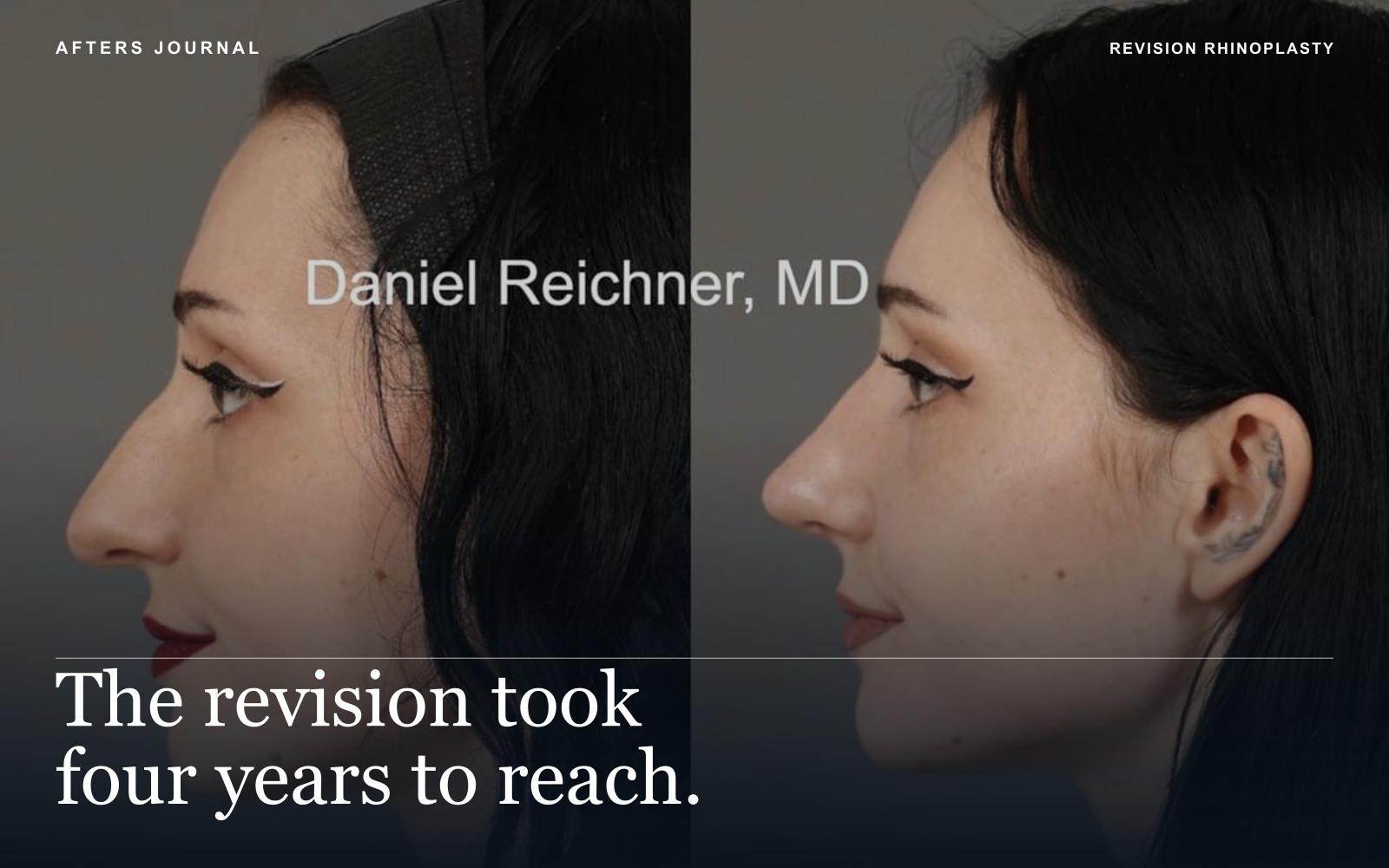
The Reddit post looks like an overnight transformation: three polished comparison panels and an excited six-week update. In the comments, the patient filled in the missing years. She healed from a first rhinoplasty that barely changed her nose, researched a revision specialist, and saved for another operation.
AI-assisted editorial analysis based on the linked patient discussion and named sources.Educational only—not medical advice. How we write
The search moment
When the first nose job barely did the agreed work, how do you trust a second plan?
Primary result
Barely changed
Revision search
Four years
Current photos
Six weeks
Photos from the original post
Labels follow the poster's own description.
Compare real results
Compare revisions by the structural problem
Under-resection, asymmetry, collapse, airway trouble, and support loss are different revision cases.
See rhinoplasty results6 wk
Photo date
4 yr
Time finding surgeon
3
Gallery
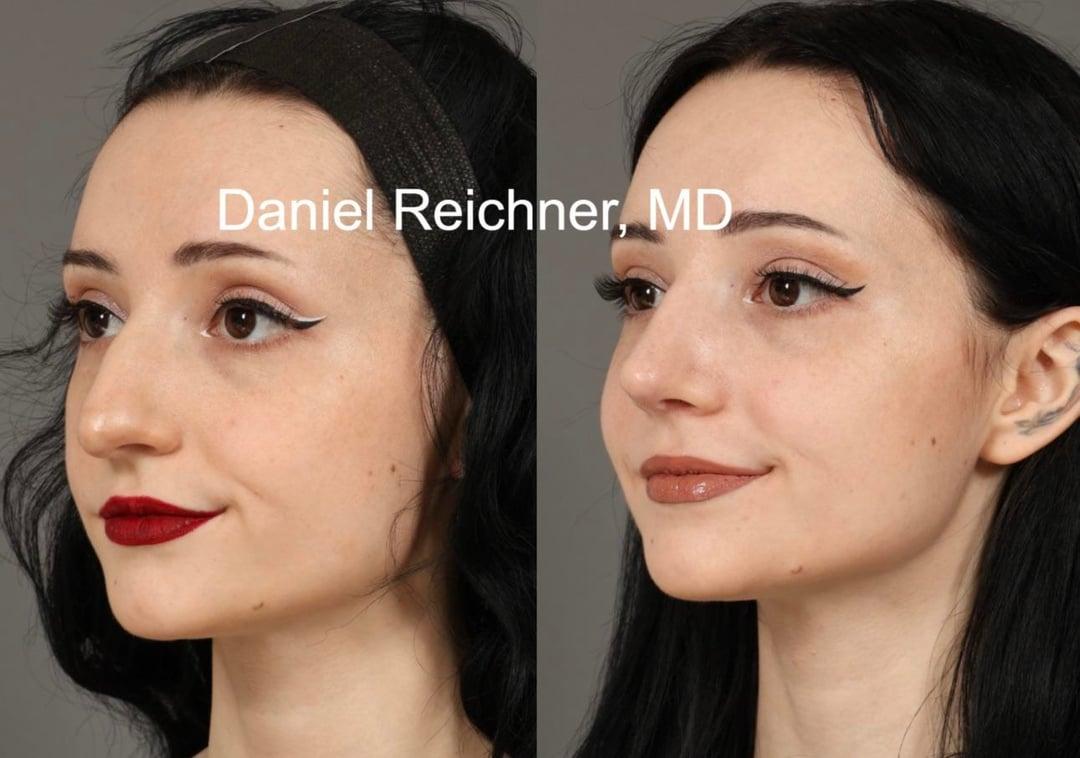
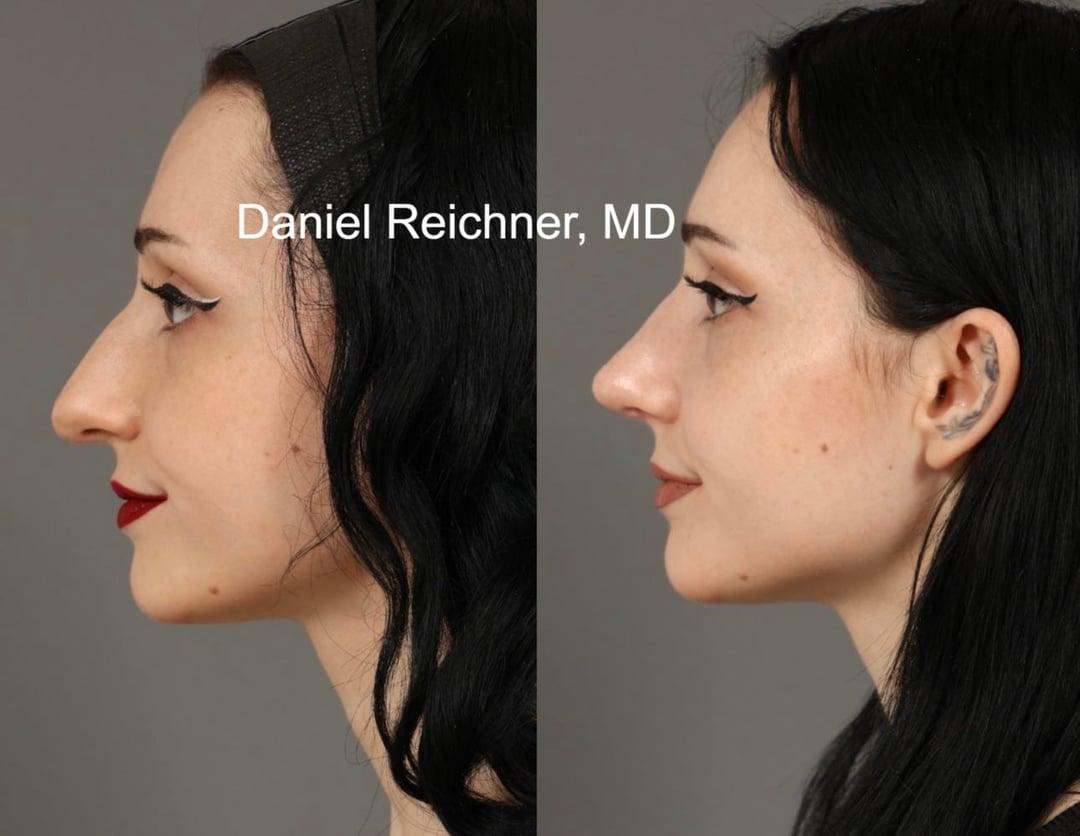
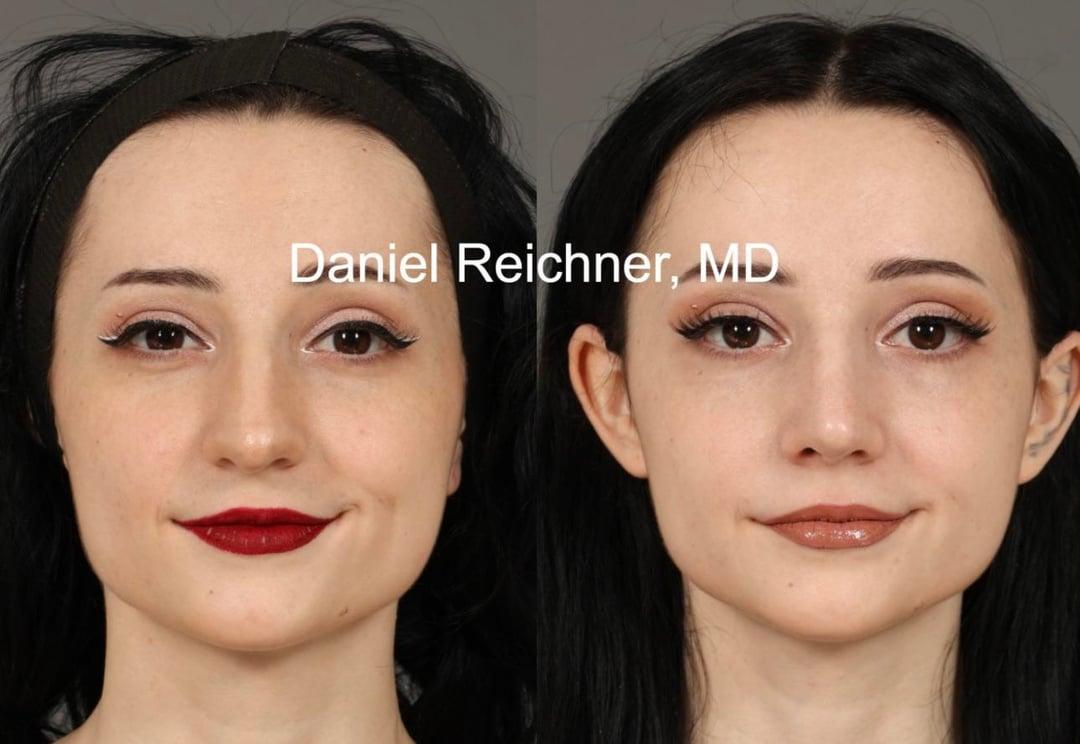
The panels carry the revision surgeon’s watermark. The poster confirmed in comments that the left-side “before” images show the result after her first rhinoplasty; the right-side images show the revision at six weeks.
Here is what the original post actually said.
At six weeks
"I’m already so happy with the results."
The first operation
"My primary surgeon barely shaved my dorsal hump and didn’t do what we discussed."
The interval
"It took me 4 years to find my surgeon and save."
The left side is already postoperative.
That detail changes how the gallery reads. These are not untouched-nose versus first surgery images. They compare a disappointing primary result with an early revision result. Scar tissue, altered cartilage, and any removed support shaped the second operation.
The panels show a lower dorsal line, a different tip relationship, and a straighter profile. They also use different makeup and small expression changes. They document the poster’s current satisfaction; they do not isolate every surgical maneuver.
Six weeks answers “do I like the direction?”
ASPS patient guidance says initial swelling falls over weeks while nasal contour can keep refining for up to a year. Swelling may fluctuate, including morning swelling, during that period. At six weeks the patient can be delighted and still lack a final result.
Revision tissue may heal less predictably than untouched tissue. Tip definition, asymmetry, stiffness, and breathing deserve follow-up beyond the social-media reveal. A surgeon’s revision gallery should include one-year or later views.
The four-year interval rebuilt more than cartilage.
The poster had time to heal, identify what the first operation left unresolved, research surgeons, and finance the next procedure. That pause can also separate a stable complaint from the distress of early swelling.
A revision consultation should recover the first operative report and pre-primary photos when possible. The surgeon needs to examine the airway, skin envelope, scar tissue, remaining septal cartilage, tip support, and any collapse. A review of revision grafting describes lost landmarks and the frequent need to restore support with the patient’s own cartilage.
Trust becomes a document.
The first surgeon allegedly did less than the agreed plan. The revision response should be unusually specific: annotated photographs, functional findings, proposed graft sources, realistic limits, and a written record of priorities.
Morphs can test communication, but they are not promises. Ask the surgeon to name which requested changes are achievable, which are risky, and which they recommend leaving alone. The most credible answer may contain a firm no.
What to document before a revision rhinoplasty
Revision planning improves when the history, airway, structural deficit, and cosmetic priorities are all explicit.
Can you review my original operative report and pre-primary photos?
What support or cartilage appears missing now?
How is my breathing being evaluated?
Would graft material come from septum, ear, or rib?
Which change is least predictable in my scarred nose?
Show me your comparable revisions at six weeks and after one year.
Reddit: three panels and the four-year backstory
The patient’s early result, confirmation that the “before” was after her first surgery, and the time spent finding and funding revision.
ASPS: rhinoplasty recovery
Patient guidance on early swelling, gradual refinement, and changes that can continue during the first year.
PubMed Central: grafting in revision rhinoplasty
A review of scarred anatomy, structural support, examination, and common autologous graft sources in secondary surgery.
The questions that usually come next
Is six weeks too early to like a revision result?
No. A patient can like the direction at six weeks. She should still expect swelling and contour changes before calling it final.
Why is revision rhinoplasty more complex?
The first operation may leave scar tissue, missing support, altered landmarks, limited septal cartilage, or airway problems. The plan has to account for all of them.
How long should someone wait before revision?
Timing depends on healing, the problem, and urgency. Many cosmetic revisions wait for substantial maturation; the treating surgeons should set the timeline.
Does a strong six-week photo predict the one-year result?
No. It is encouraging evidence from an early checkpoint. Swelling, scar contraction, and tip refinement can still change the nose.
Compare revisions by the structural problem
Under-resection, asymmetry, collapse, airway trouble, and support loss are different revision cases.
See rhinoplasty results