
A reverse tummy tuck at four weeks
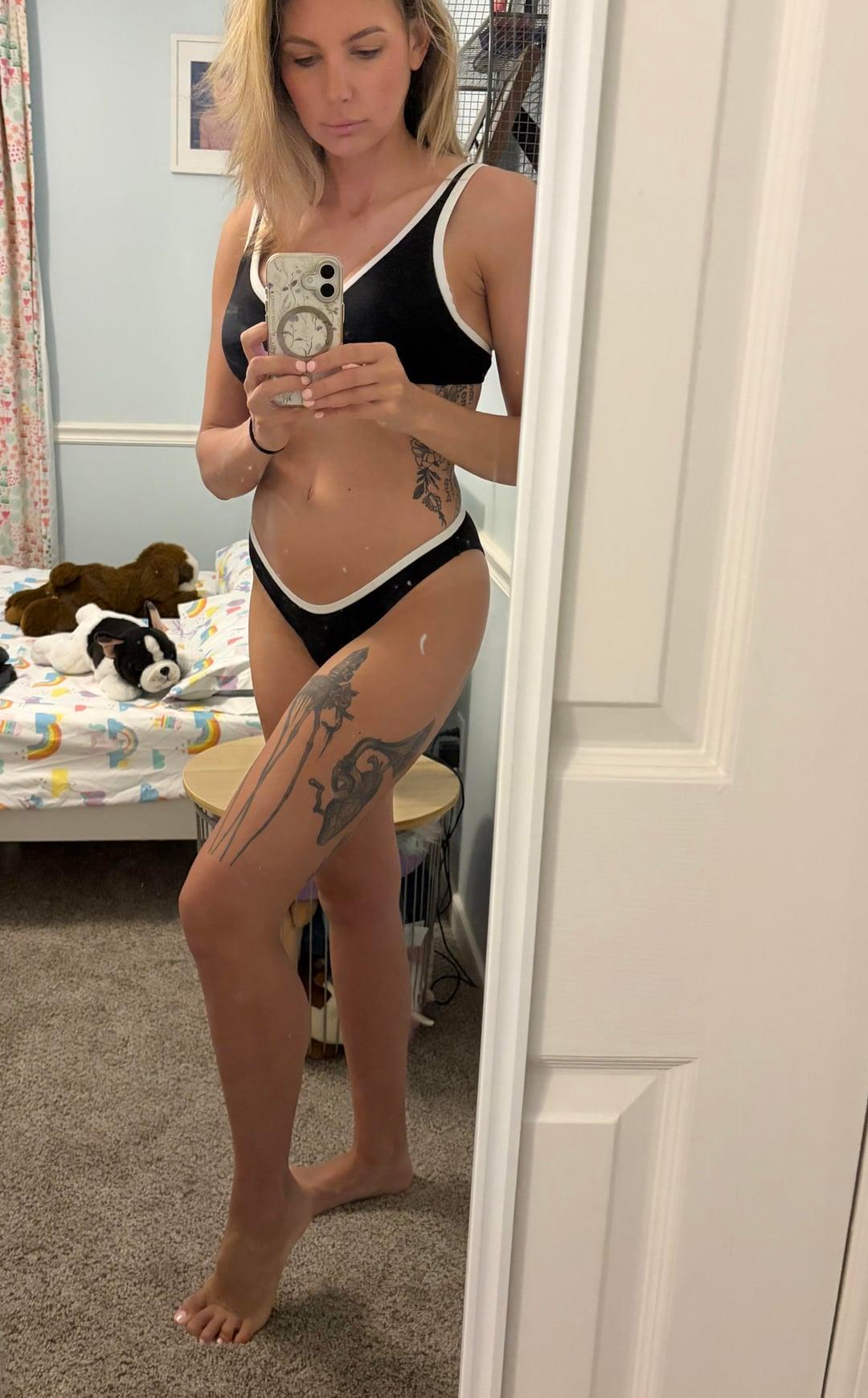
The poster had upper-abdominal skin removed through the breast-fold area along with muscle repair. At four weeks she celebrated losing the “frowning” shape above her belly button. She also described the back pain, hunching, binder, and scar tape that came first.
AI-assisted editorial analysis based on the linked patient discussion and named sources.Educational only—not medical advice. How we write

The search moment
What if the loose skin sits above the belly button instead of below it?
Photos from the original post
Labels follow the poster's own description.

Compare real results
Match the location of loose skin
A relevant case begins with upper-abdominal laxity and shows the breast-fold scars after they mature.
See tummy-tuck results4 wk
Photo date
$9.7K
Quoted cost
1 wk
Desk-job leave
The poster reported a reverse tummy tuck with muscle repair in Richmond, Virginia. She wore a binder for three weeks and planned to return to the gym at six weeks under her own care plan.
Here is what the original post actually said.
The change she noticed
"No more frowning belly button."
The hardest days
"The first 3 days were the worst from the back pain, hunching and swelling."
Her timeline
"I was off pain meds and the muscle relaxer after 5 days."
The direction of pull defines the operation.
A standard abdominoplasty generally removes lower-abdominal skin and pulls remaining tissue downward. A reverse abdominoplasty places the excision high, often along the inframammary folds, and advances upper-abdominal skin upward.
That direction fits a narrow pattern: laxity concentrated above the belly button, with a patient willing to accept long scars near or within the breast folds. It does not automatically address lower-abdominal excess.
The early photo shows contour, not durability.
At four weeks the after image shows a flatter upper abdomen and a different navel surround. Pose, clothing, distance, and angle differ, and the postoperative picture is early. Swelling, scar behavior, and tissue relaxation still have time to change.
The thread is strongest as a recovery record. A week away from desk work was enough for this patient; the first three days still involved significant discomfort from flexed posture and swelling. Her quick exit from pain medication is reassuring for her and cannot be promised to anyone else.
Published evidence is small and highly selected.
A 2009 report described 18 tensioned reverse abdominoplasties for laxity concentrated in the upper abdomen. A 2010 retrospective series described 88 procedures within single or staged total-body lifts after massive weight loss. Both papers support the anatomical concept, while their designs and patient groups limit broad comparisons with standard tummy tuck surgery.
Ask a surgeon how many isolated reverse procedures they perform, how they protect the inframammary fold, and how often the high scar widens, migrates, or needs revision. A large general abdominoplasty gallery does not answer those questions.
Muscle repair adds another recovery variable.
The poster also reported muscle repair. That can affect tightness, posture, exercise restrictions, and pain independently of the skin excision. The consultation should separate the reason for plication from the reason for a reverse skin removal.
If future breast surgery is possible, discuss how the scars and fold reconstruction interact with it. The upper abdominal flap and breast fold share territory; planning them as unrelated procedures can create avoidable surprises.
Confirm that the laxity points upward
The surgeon should show why a high excision serves the skin pattern better than a standard, mini, or circumferential abdominoplasty.
Location of excess skin while standing and bending
Expected change above and below the navel
Exact scar path through each breast fold
Method for securing or rebuilding the inframammary fold
Separate indication for muscle repair
Revision plan for scar migration or recurrent laxity
Reddit: before, four-week result, cost, and recovery
The patient’s images and account of binder use, pain medication, work leave, walking, massage, and exercise plans.
PubMed: tensioned reverse abdominoplasty
An 18-procedure report describing indications, incision strategy, progressive tension, and minor complications.
PubMed: reverse abdominoplasty after massive weight loss
A retrospective series of 88 combined or staged procedures with inframammary-fold reconstruction.
The questions that usually come next
Where is a reverse tummy tuck scar?
It usually runs high on the torso along or near the breast folds. The exact length and center connection depend on the technique and amount of skin removed.
Does it tighten the lower abdomen?
Its main skin pull is upward from the upper abdomen. Lower-abdominal laxity may need a different or additional operation.
Is four weeks a final result?
No. The picture documents early contour. Swelling, scars, and tissue settling continue after four weeks.
Does every reverse tummy tuck include muscle repair?
No. Plication addresses abdominal-wall laxity when present. It is a separate decision from where skin is removed.
Match the location of loose skin
A relevant case begins with upper-abdominal laxity and shows the breast-fold scars after they mature.
See tummy-tuck results