
Lower bleph: move fat or add it?
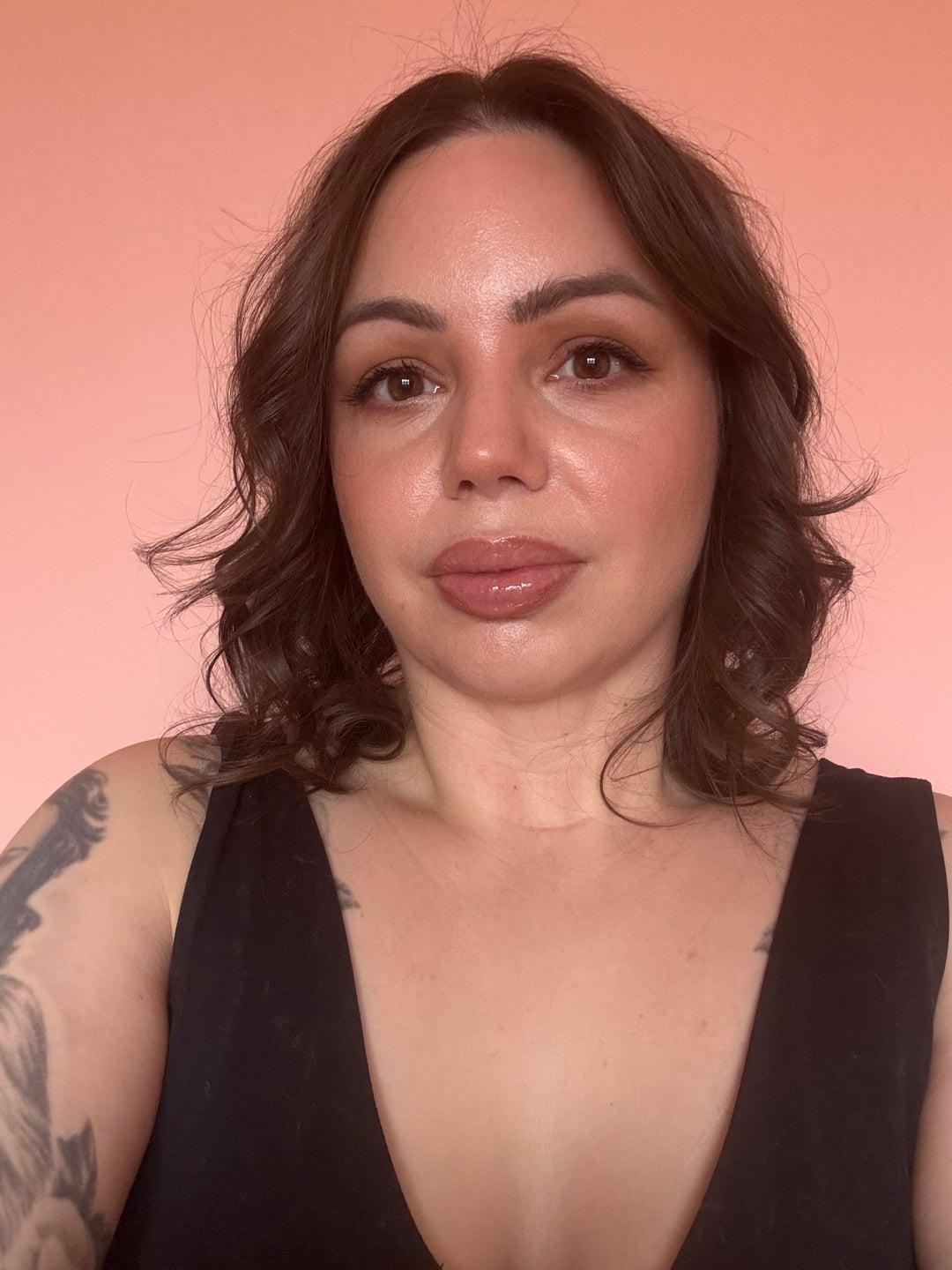
This patient chose lower blepharoplasty with fat repositioning and a lower-eye chemical peel. At 3 weeks and 5 days, she posted current and pre-op views with and without makeup. She also explained why she had declined fat transfer.
AI-assisted editorial analysis based on the linked patient discussion and named sources.Educational only—not medical advice. How we write
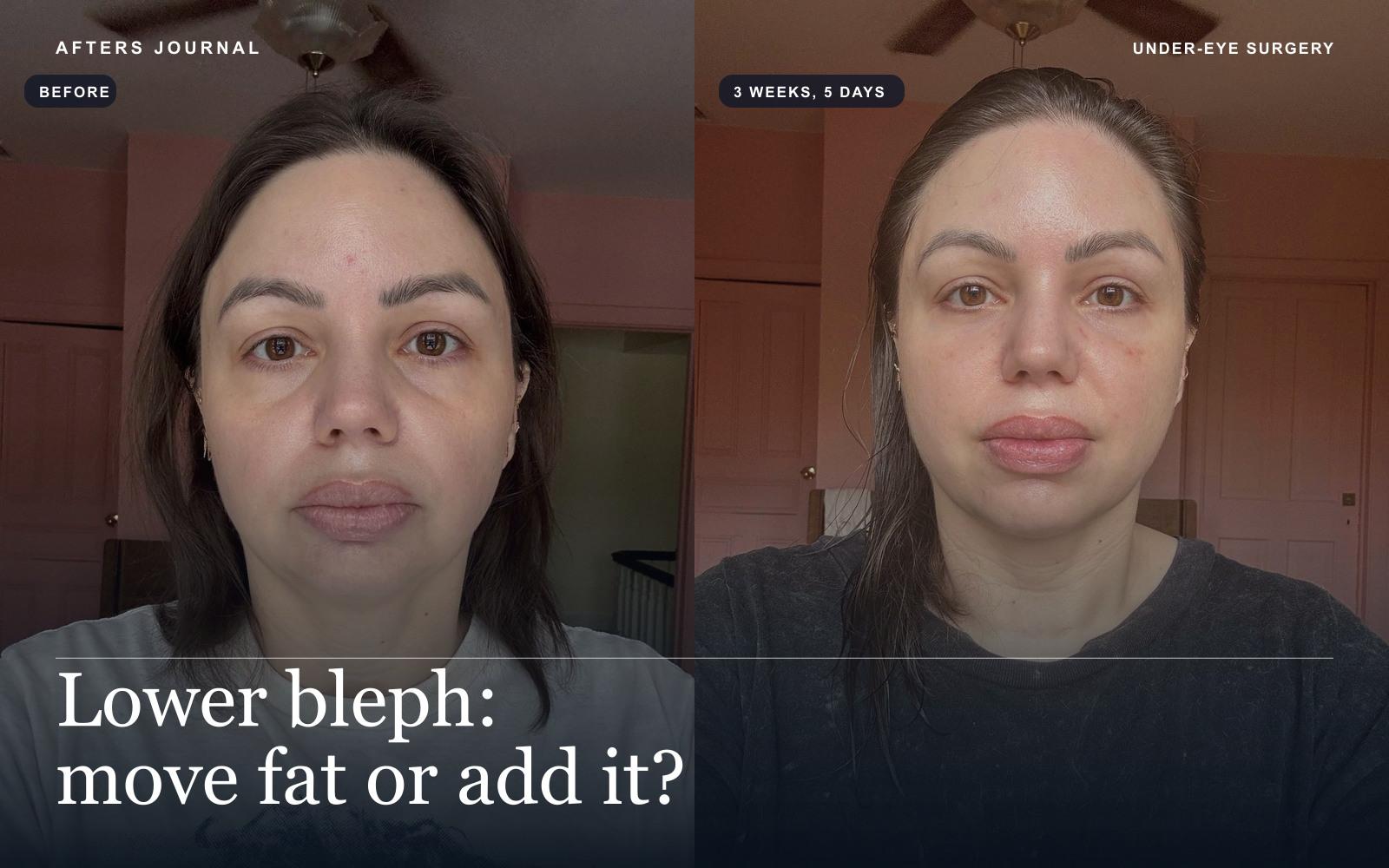
The search moment
If I have bags beside hollows, should the surgeon move orbital fat or add new fat?
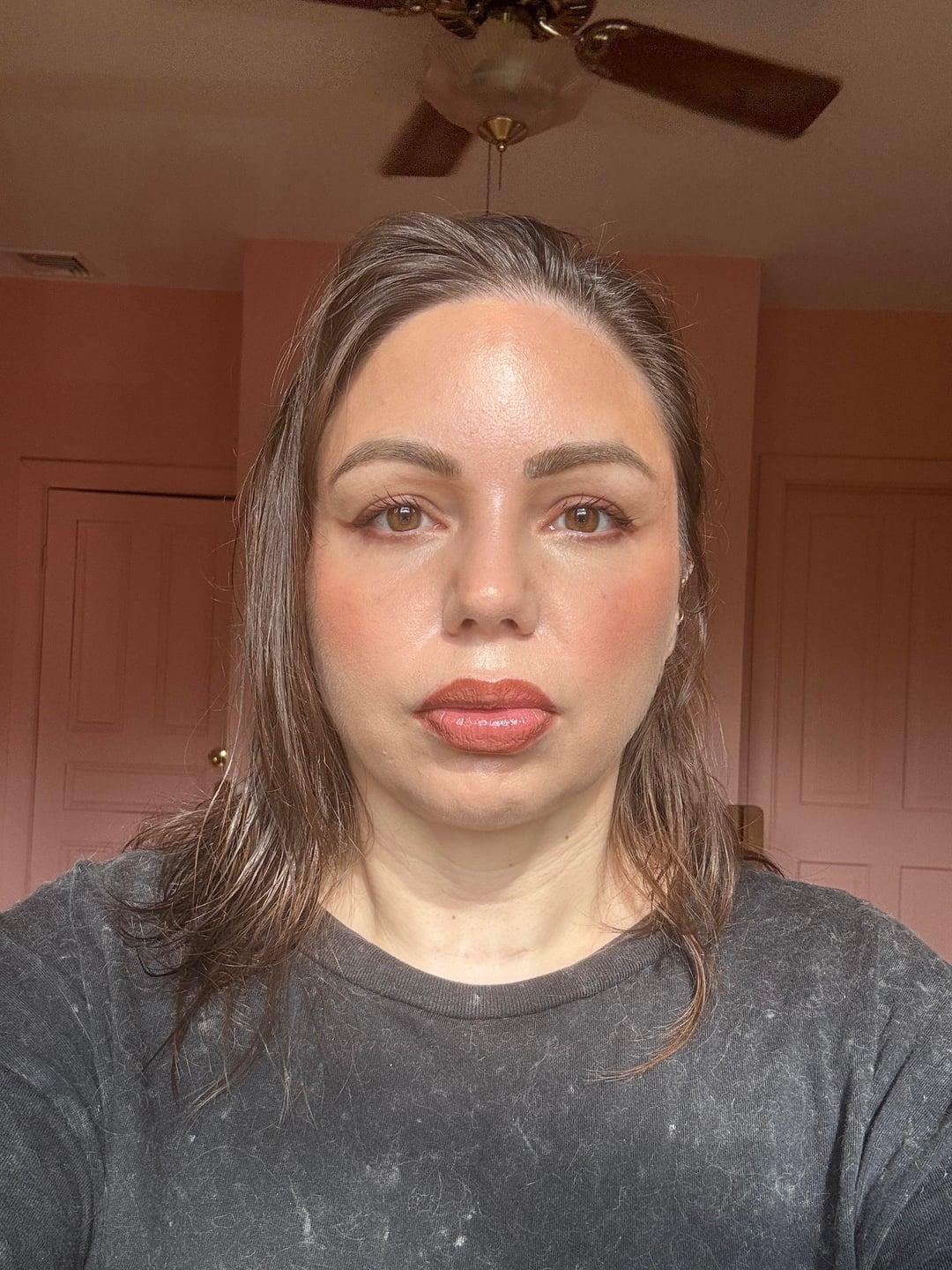
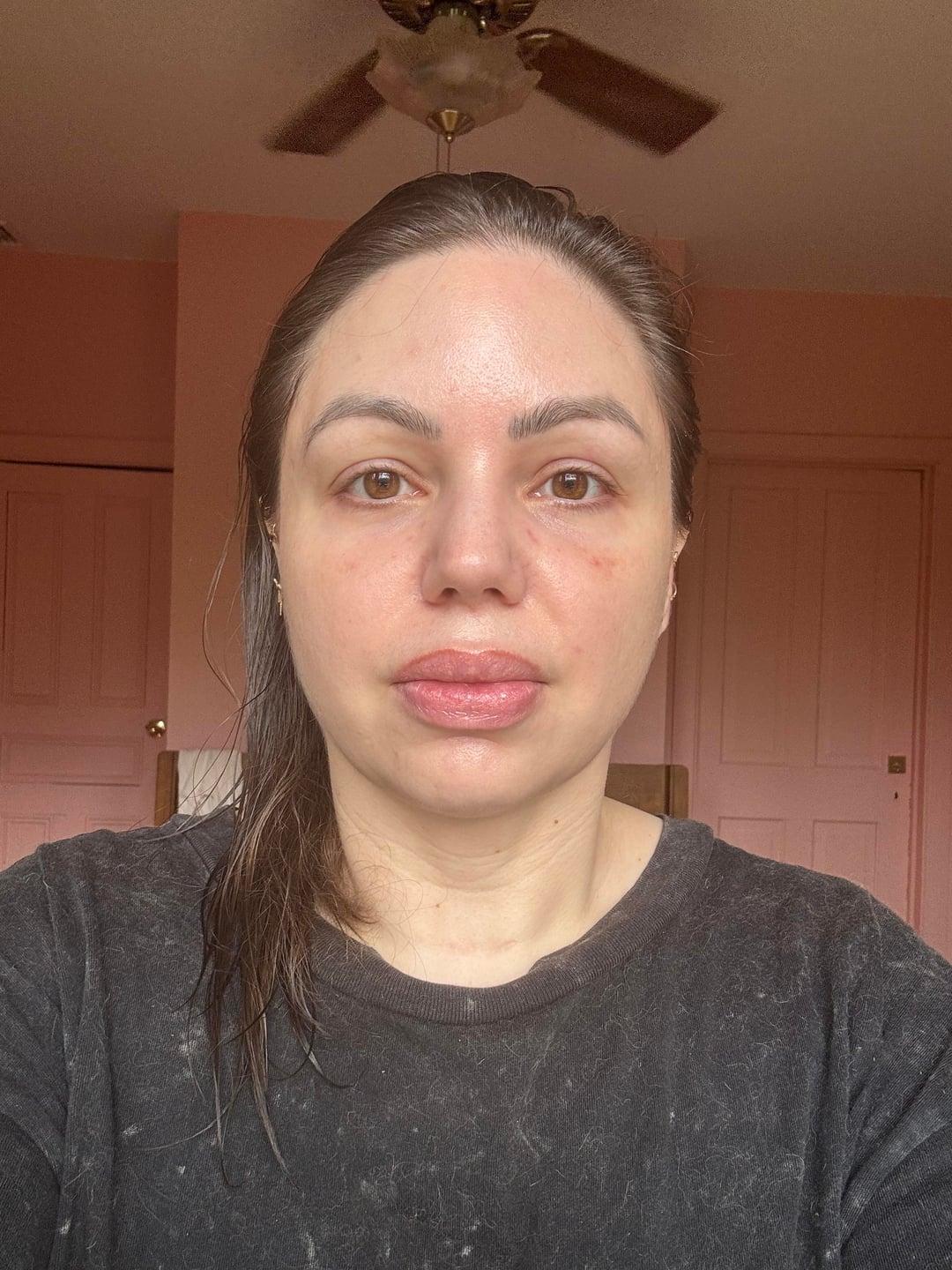
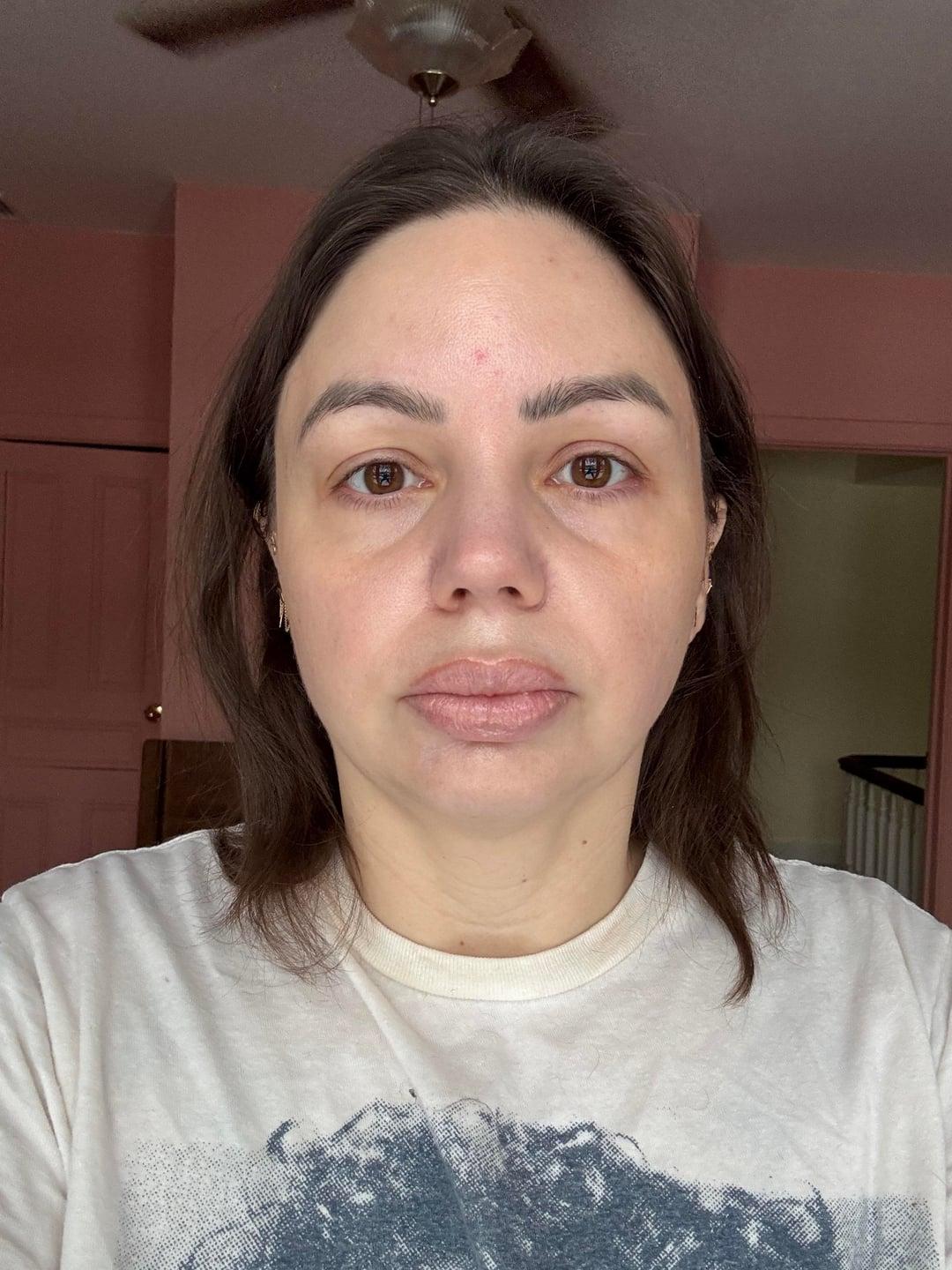
Photos from the original post
Labels follow the poster's own description.
Compare real results
Compare the lid-cheek junction
Match the starting combination of bags, hollows, skin, cheek volume, and lid support.
See eyelid results3w 5d
Update
4
Photos
None
Pain meds
The poster described an easy recovery, a flight home the next day, a week away from the gym, and a return to full exercise. That is her experience, not a standard recovery promise.
Here is what the original post actually said.
The result she wanted
"I feel rested and youthful but still like myself."
Her starting point
"My hollows were deep so I didn’t expect them to be perfectly smooth."
Why she chose repositioning
"I was concerned about revisions and the long-term result from fat grafting."
Her photos contain two problems beside each other.
The pre-op images show lower-lid fullness above a darker lid-cheek groove. A surgeon can remove bulging fat, move pedicled orbital fat across the rim, add free fat grafts, or combine methods. Skin, lid support, cheek position, and pigment also affect the result.
The current no-makeup photo gives the cleanest early comparison. The transition looks smoother, while some hollow and color remain. That fits the poster’s stated goal better than the phrase “perfectly smooth.”
Repositioned fat stays attached; grafted fat changes addresses.
In repositioning, the surgeon mobilizes orbital fat and lays it across the tear-trough region while preserving its tissue connection. Fat transfer harvests fat elsewhere, processes it, and injects it as small grafts. A patient with accessible orbital fat may suit repositioning; another may need added volume beyond what can be moved.
A 2017 review describes excision, repositioning, and several augmentation options as tools chosen after evaluating fat position, lid laxity, skin, and the lid-cheek junction. The procedure name alone does not reveal the plan.
Four weeks is informative and unfinished.
The poster’s improvement is visible, but swelling, firmness, peel-related color, and tissue settling can still change. Her return to exercise and lack of pain medication should be read as biography. Another surgeon, technique, or complication can produce a different schedule.
The 2024 systematic review of 33 studies and 4,671 patients pooled fat grafting and repositioning literature. It estimated an 11.2% overall complication rate and 2.4% reoperation rate, with contour dissatisfaction or irregularity among the issues tracked. The mixed techniques and studies prevent those figures from predicting one patient’s risk exactly.
The consult should map volume, skin, and support separately.
Ask the surgeon to point to true fat prolapse, the tear trough, any cheek-volume deficit, skin excess, lower-lid laxity, and pigment. Then ask which finding each proposed maneuver addresses.
If a chemical peel, skin pinch, canthopexy, laser, or cheek treatment is added, get its expected benefit and recovery in a separate sentence. Combined procedures can improve several features while making it harder to know which step created which risk.
Questions that expose the actual lower-lid plan
Bring your unedited, makeup-free photos. Ask the surgeon to draw the volume movement directly on them.
Is my shadow caused by a bag, a hollow, pigment, skin, or more than one?
How much orbital fat is available to reposition?
Why add grafted fat in my case, or why avoid it?
How are you testing lower-lid laxity and eye-surface risk?
Which change comes from the peel or skin treatment?
Show me results after a year, including contour irregularities and revisions.
Reddit: four photos and the recovery account
Current and pre-op images with and without makeup, plus the poster’s choice of repositioning and early recovery.
PubMed Central: review of lower-lid blepharoplasty
An anatomical review of preoperative evaluation, surgical approaches, fat excision, repositioning, augmentation, and complications.
PubMed: 2024 systematic review of complications
A meta-analysis of 33 studies involving fat grafting or repositioning for lower-lid bags and tear-trough deformity.
The questions that usually come next
Is fat repositioning the same as fat transfer?
No. Repositioning moves orbital fat while keeping a tissue connection. Transfer harvests and injects free fat grafts from another body area.
Do the photos show the final result?
No. They document an encouraging result at 3 weeks and 5 days. Lower-lid tissues continue settling after that.
Can either technique fix dark circles?
They may soften a shadow caused by contour. Pigment, visible vessels, thin skin, and allergy-related color need separate assessment.
Why might a surgeon combine the methods?
Repositioned orbital fat may fill the tear trough while grafted fat adds volume in areas the pedicle cannot reach. Anatomy determines whether that is useful.
Compare the lid-cheek junction
Match the starting combination of bags, hollows, skin, cheek volume, and lid support.
See eyelid results