
Two front teeth veneers: when no one notices, that can be the win
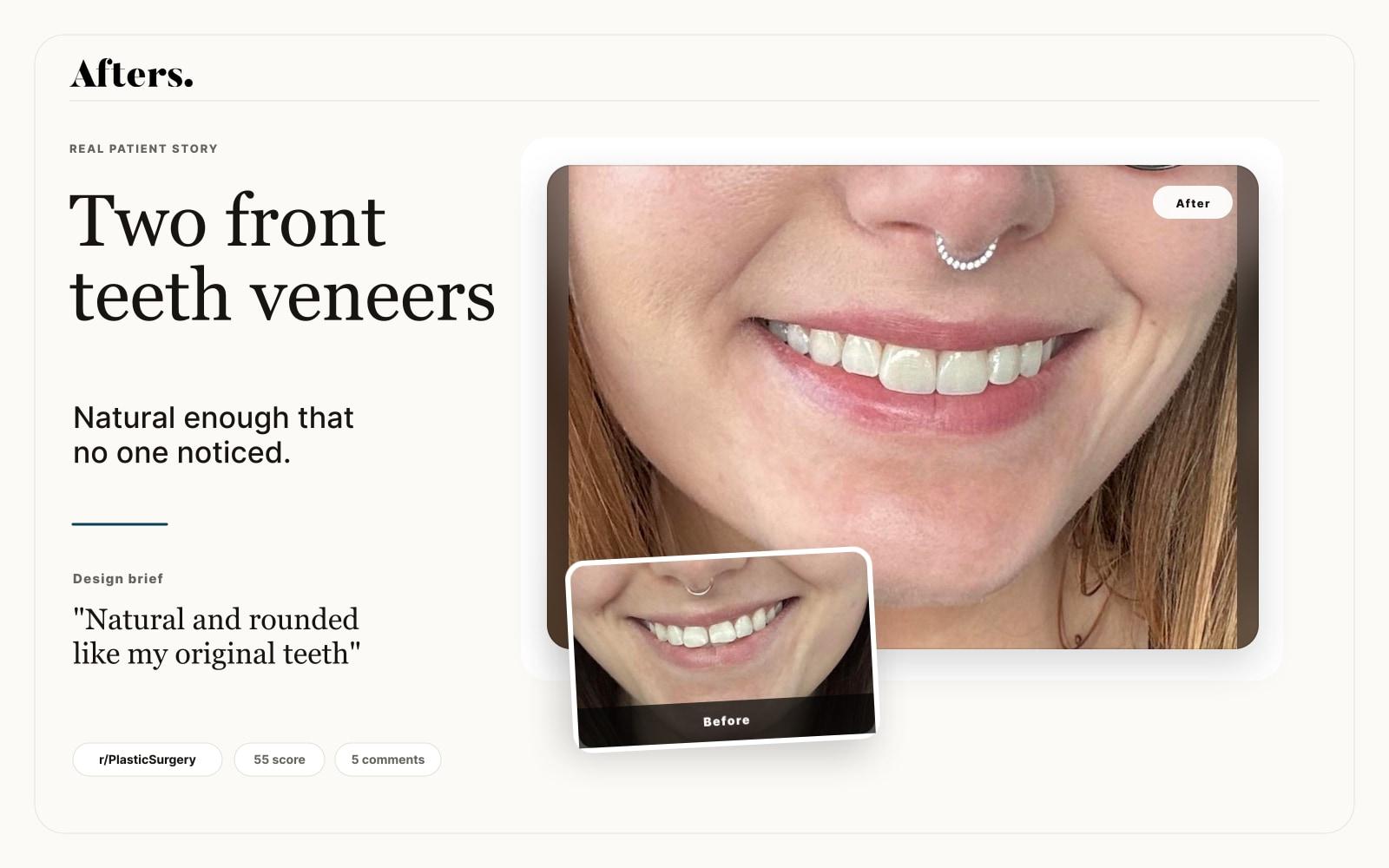
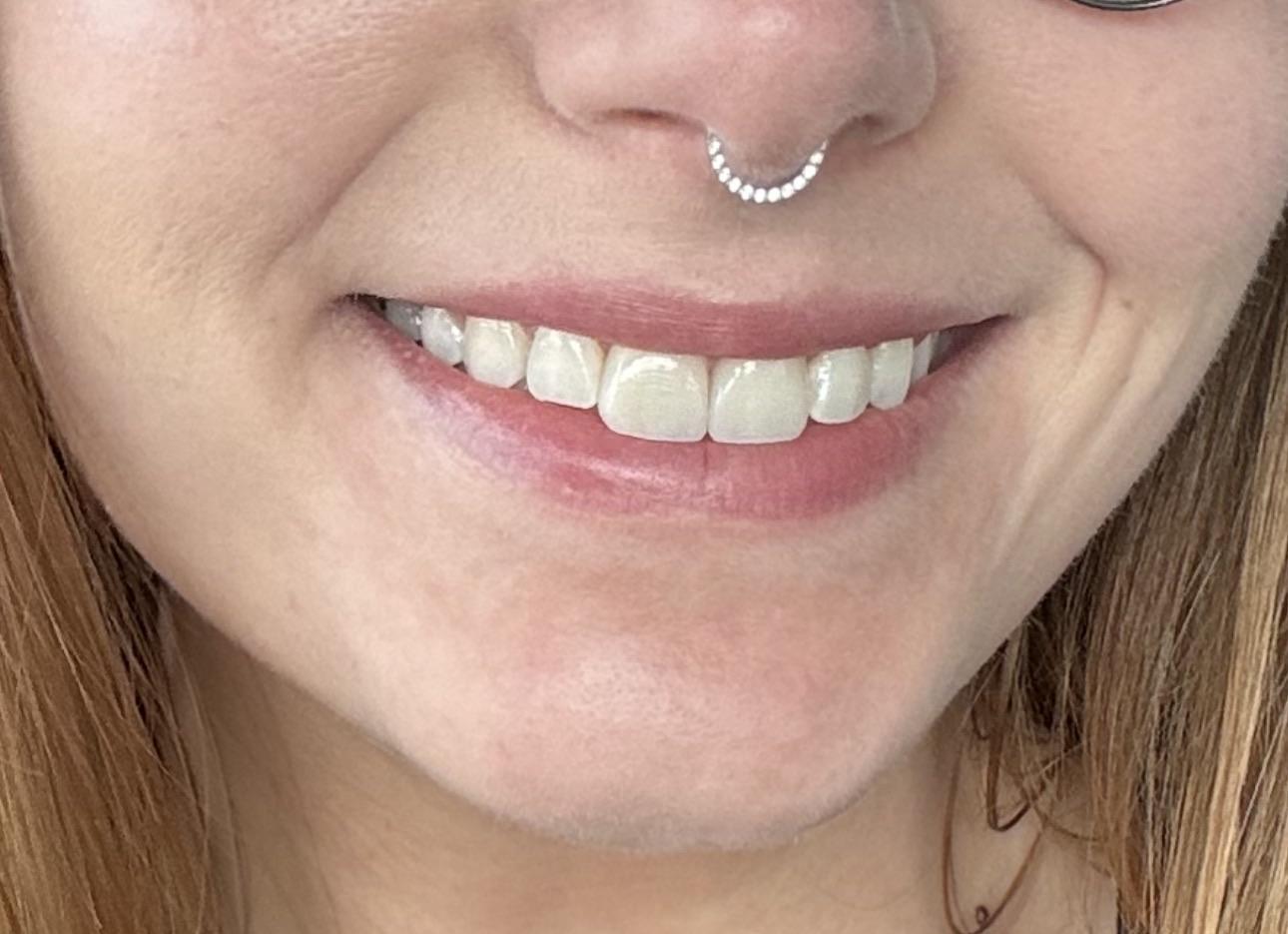
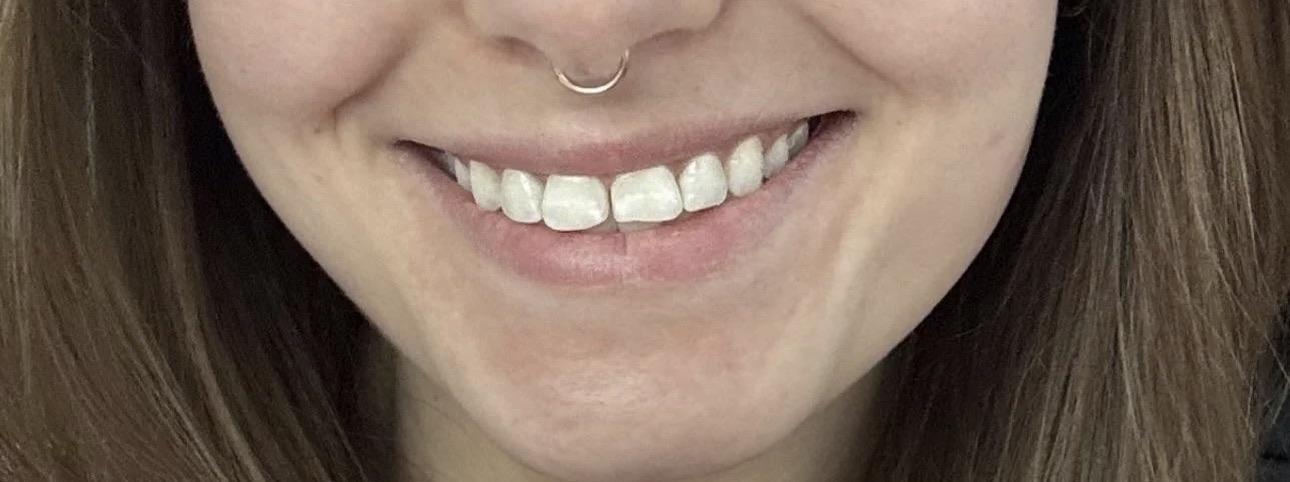
The thread was not about getting the brightest possible smile. It was about fixing two front teeth without losing the shape, softness, and normalness that made the result feel like hers.
AI-assisted editorial analysis based on the linked patient discussion and named sources.Educational only—not medical advice. How we write
Procedure
Two front teeth veneers
Core question
Natural or too perfect?
Result goal
Rounded like original teeth
Patient relief
Comfort biting into food
Compare real results
Compare veneer results before you commit
Look for smiles that match your goal: repaired, brighter, softer, more symmetrical, or deliberately subtle.
See veneer results55
score
5
comments
A same-day update about two front teeth veneers where the discussion focused on natural shape, shade restraint, and the relief of eating without sensitivity.
Also helpful
Temporary veneers too big
A patient-friendly guide to spotting shape and proportion issues before approving the final restorations.
Veneers cost guide
What affects veneer pricing, from material to location to how many teeth are included.
Browse veneer results
Compare smile changes by shade, shape, starting point, and how natural the final result looks.
The useful question was not "will veneers look perfect?" It was "will they still look like my teeth?"
Front teeth are high-stakes because they sit in every smile, every photo, and every bite. The best part of this thread was how specific the goal became: not brighter, bigger, or more uniform by default, but natural enough that people saw the person before they saw the dental work.
The comments are where people got honest.
The design brief
"natural and rounded like my original teeth"
That is the phrase to bring into a consult. It gives the dentist permission to preserve character instead of chasing a template.
The quiet win
"IRL, literally no one has noticed a difference."
For cosmetic dentistry, invisibility can be a positive outcome. The change solved the problem without announcing itself.
The shade check
"never get them more white than the whites of your eyes"
Reddit comments often turn aesthetic taste into plain rules of thumb. Shade is one place where restraint can protect the result.
Two front teeth can change the whole smile without changing the whole person.
The patient had been deciding whether to fix two front teeth, including one that had been chipped years earlier. What made the update useful was not just that she liked the result. It was that she could name what she asked for: natural, rounded, close to her original teeth.
That is a different consult than walking in with only a celebrity smile photo. With veneers, the shape of the edge, the translucency, the width, and the shade all decide whether the result feels integrated or pasted on.
Ask whether two teeth can be treated without making the rest of the smile look mismatched.
Look at mockups or temporaries from normal conversation distance, not only in close-up photos.
Tell the dentist whether your goal is repair, brightness, symmetry, or a complete smile-style change.
The shade decision is where a lot of veneer anxiety starts.
A veneer can be technically beautiful and still feel wrong if the color is too flat, too opaque, or too white for the rest of the face. That is why the comment about not out-whitening the eyes is memorable. It is not a clinical rule. It is a patient-friendly way to notice when brightness is starting to look separate from the person.
For front teeth especially, ask how the new material will match nearby teeth in daylight, indoor light, selfies, and video. Teeth are not a single color. Natural enamel has depth, edge translucency, and tiny variations that keep a smile from looking manufactured.
Friendly consult script
Say: "I want these to look repaired and natural, not obviously whiter than my other teeth. Can we compare shades in different lighting before I approve the final?"
Comfort is part of the cosmetic result.
The update also mentioned something less glamorous but very real: biting into food without severe heat or cold sensitivity. That is the part patients sometimes underplay when they talk about cosmetic dentistry. A beautiful front tooth still has to feel usable.
Before approving veneers, ask what will happen to bite contact, sensitivity, maintenance, and future replacement. The result should photograph well, but it also has to survive meals, flossing, and the normal pressure of living with it every day.
Ask whether the veneer plan changes your bite or contact points.
Ask what sensitivity is normal during the temporary and final stages.
Ask how much tooth structure must be changed and what is reversible versus permanent.
Ask these before approving front-tooth veneers
Bring inspiration photos, but make the final conversation about your own teeth, face, and bite.
Can we treat only the teeth that bother me, or will adjacent teeth need work to make the result blend?
How will you keep the edges rounded and natural instead of too square or too perfect?
Can I see the proposed shade next to my natural teeth in daylight?
How much enamel has to be removed, and is this plan reversible?
What should I expect from temporaries, sensitivity, and bite adjustment?
How long do you expect these veneers to last, and what would replacement involve later?
ADA MouthHealthy: veneers
Patient-friendly context on veneer materials, use cases like chipped or misshapen teeth, and why treatment planning with a licensed dentist matters.
Original Reddit thread
The source discussion included the patient update, Reddit-hosted patient photos, comments about natural-looking veneers, and the original thread context.
The questions that usually come next
Can you get veneers on only two front teeth?
Sometimes, yes. It depends on how well the new veneers can match the color, shape, and proportions of the surrounding natural teeth.
How do I avoid veneers that look too white?
Ask to compare shades against your natural teeth, skin tone, and the whites of your eyes in different lighting before approving the final shade.
Are veneers reversible?
Many veneer plans require some enamel removal, which makes the treatment permanent. Ask your dentist exactly how much tooth structure will be changed.
What should natural veneers look like?
Natural-looking veneers usually preserve believable shape, edge detail, translucency, and shade variation instead of making every tooth identical.
Compare veneer results before you commit
Look for smiles that match your goal: repaired, brighter, softer, more symmetrical, or deliberately subtle.
See veneer results