
Otoplasty for prominent ears: the quiet confidence people search for
Prominent ears sound like such a small thing, right up until they’re the thing you think about in every photo, every haircut, every side profile. Otoplasty (ear-pinning surgery) is rarely about drama. It’s about quietly getting that mental space back.
Real patient story
The change is small only if you were not the one living with it.
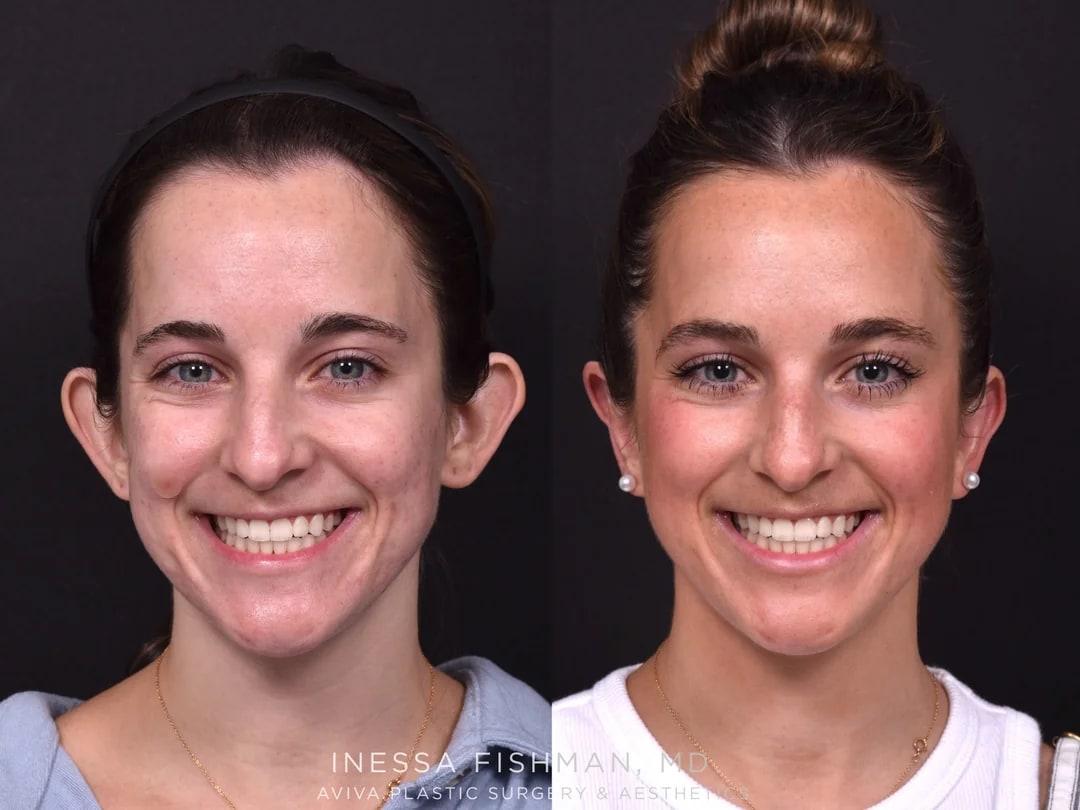
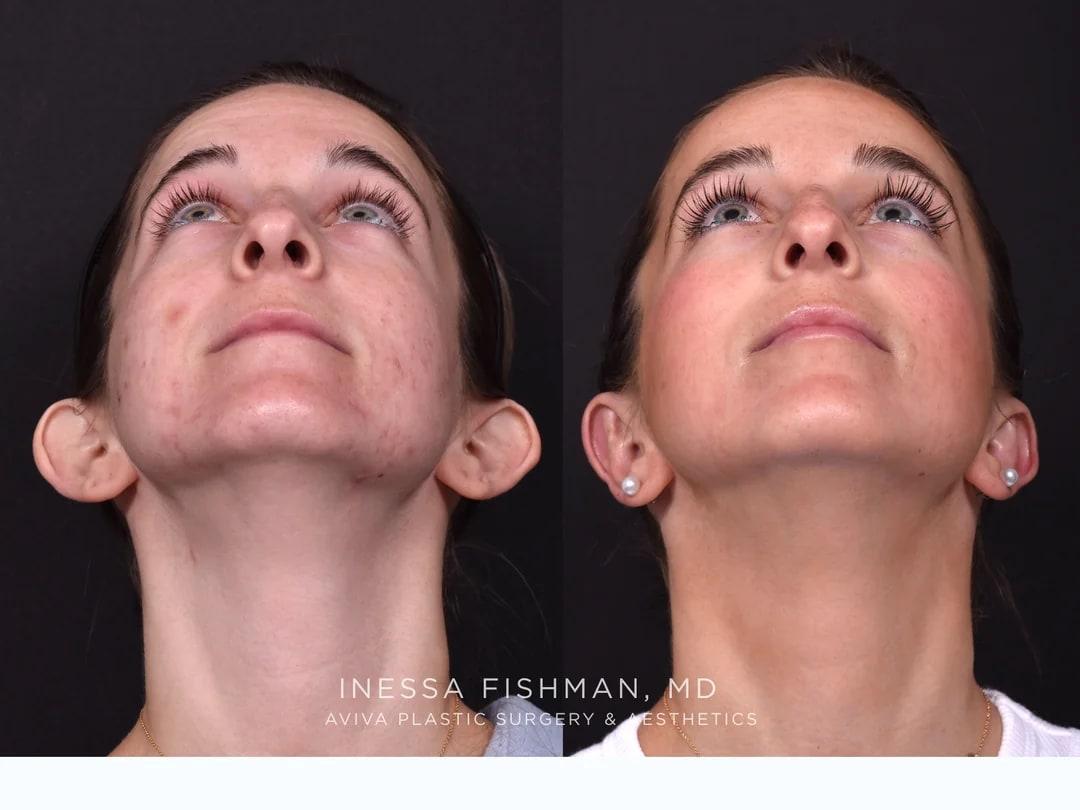
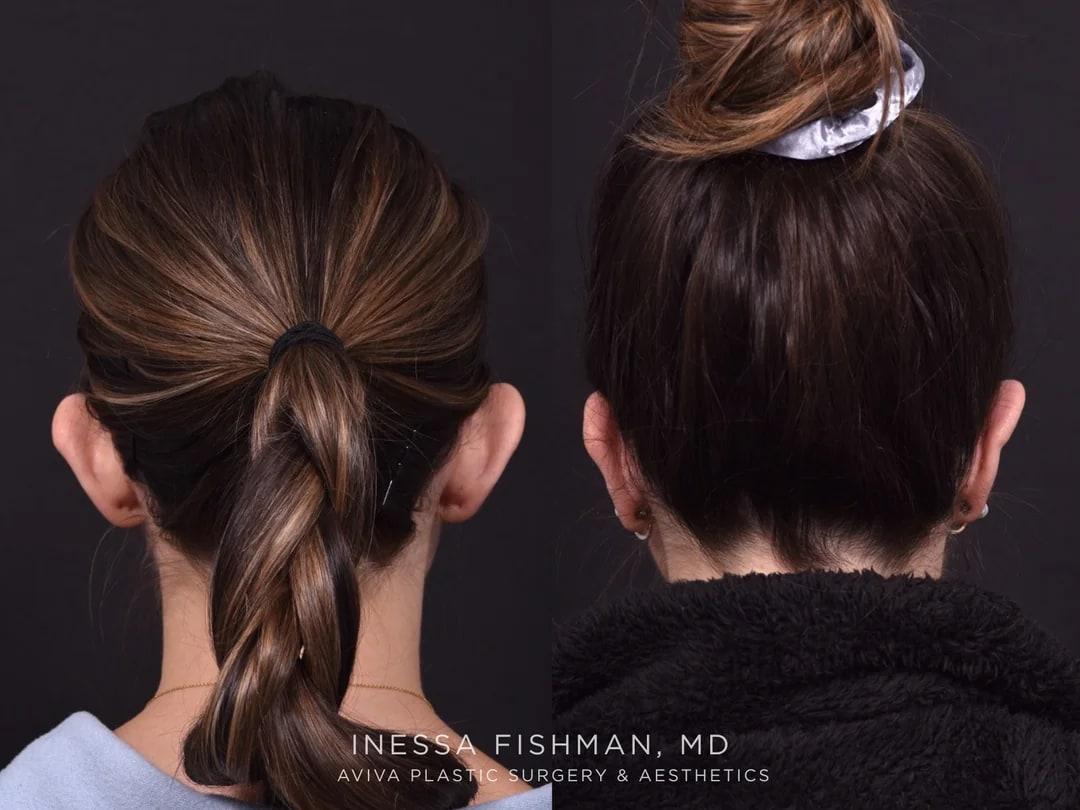
A surgeon-shared otoplasty result for a 24-year-old woman who wanted her ears to look softer, less prominent, and not obviously pinned back.
Patient
24-year-old woman
Timeline
5 months after surgery
Setting
Office procedure
Goal
Less projection, still natural
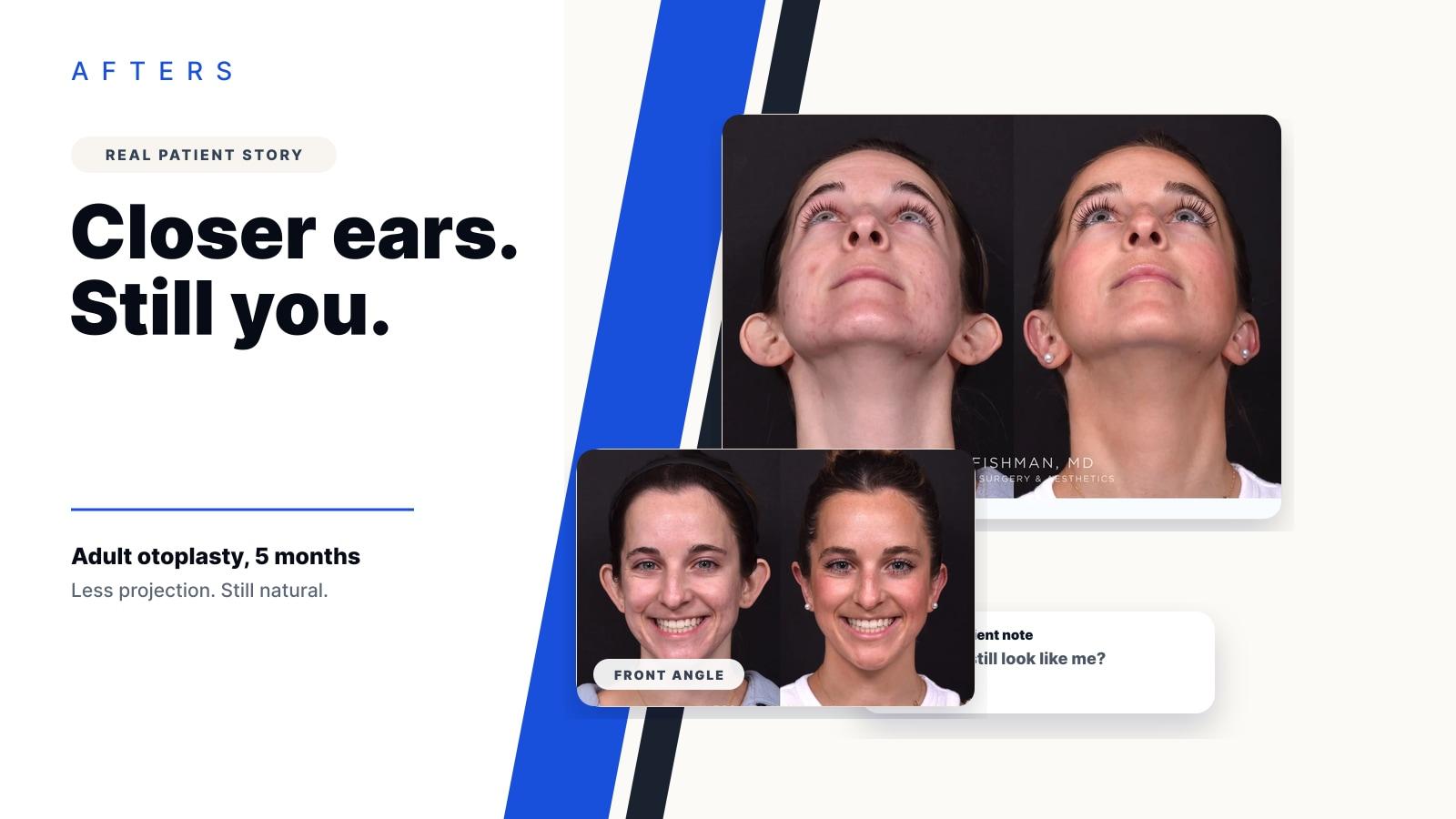
Compare real results
Look for subtle, not just smaller
As you research, compare practice-published photos from several angles and ask who treated the patient. Use them to form questions, not as a promise of your outcome.
Compare otoplasty results78
score
7
comments
A surgeon-shared otoplasty result for a 24-year-old woman who wanted her ears to look softer, less prominent, and not obviously pinned back.
You’re not only asking “can you pin ears back?” You’re asking “will I still look like me?”
That’s the real worry under the search, and it deserves a real answer. You want to know if the change can stay subtle, whether grown adults actually do this, whether it can be done while you’re awake, and what happens if an old ear surgery needs to be fixed.
The comments are where people got honest.
The emotional read
"She has an even more beautiful glistening in her eyes."
Here’s something tender about a good result like this. People often notice it in your whole face before they ever notice your ears. When you finally stop quietly monitoring yourself, that relief tends to show up as ease, right there in the eyes.
Surgeon response
"More comfortable in her body"
Three words, and they hold the whole thing. The win here was never about perfect ears. It was about her ears finally going quiet, so they stopped taking up so much room in her head. If that’s the feeling you’re after, you’re not asking for too much.
Revision question
"I do revision otoplasty"
Even in a tiny thread, someone asked about fixing earlier work. If you’re carrying an old ear surgery that healed too tight, too visible, or a little uneven, that’s yours to bring up in the consult. You’re allowed to want a do-over done right.
A quiet procedure, carrying years of feeling.
The surgeon wrote that a lot of people think prominent ears are no big deal. That one lands, because you have probably heard some version of it your whole life. It’s not that bad. Nobody notices. Just wear your hair differently.
But if you’re the one arranging your hair to cover them, dodging certain angles, scanning every photo before anyone else can see it, then it was never a small thing. It’s a quiet little tax you’ve been paying all day, every day.
What this helps name
Most adults here aren’t chasing a dramatic new look. You’re just tired of planning your photos, your hair, and your confidence around your ears, and you want that energy back.
It works because it doesn’t look overcorrected.
The best ear results usually aren’t the flattest ones. They’re the ears that sit a little closer to your head, with folds that still look believable and a face that stays balanced from the front, the side, and the back.
That’s why “not pinned back” matters so much. The fear, and it’s a fair one, is trading one insecurity for another: ears that used to stick out suddenly looking surgically flattened against your head.
Look for a natural-looking fold along the rim (the antihelical fold), not a sharp, forced crease.
Check both ears from the back, where small differences between them are easiest to spot.
Ask whether your surgeon does adult ears often, not just children.
Office surgery can sound casual. It still deserves real planning.
The surgeon said this one was done right in the office, with the patient awake and relaxed on oral medication plus some injected numbing. If the thought of general anesthesia makes you nervous, that detail can feel like a real relief.
Just don’t let “office procedure” trick you into treating it like a minor decision. You still deserve to understand the comfort, the timing, where the incision sits, the dressing afterward, what you can and can’t do, and how revisions get handled if your cartilage has other ideas while it heals.
You don’t need a dramatic reason to want this.
You might be waiting for some big, technical justification before you let yourself want this. You don’t need one. Look at her: already beautiful before, and then visibly more at ease once the one thing that nagged at her was softened.
That can be reason enough. Sometimes the hardest part is just putting words to a feeling you’ve never quite managed to type into a search bar. If you’ve read this far, you already have the words. You just needed permission to use them.
Ask these if you’re considering otoplasty as an adult
A good consult should leave you feeling clearer, not more self-conscious. Lean on questions about natural shape, comfort, and revision planning, and let yourself take up the time you need.
How do you decide how close the ears should sit without making them look pinned?
Can I see front, side, and back photos of adult otoplasty patients?
Where will the incision sit, and how visible is it once healed?
Will this be done awake, under sedation, or under general anesthesia?
What is the dressing or headband timeline after surgery?
How often do you do revision otoplasty, and what usually needs revision?
What changes would you recommend for my ears specifically, and what would you leave alone?
The questions that usually come next
Can adults get otoplasty?
Yes, absolutely. You hear about it for kids the most, but plenty of adults choose it too, especially when prominent ears have quietly bothered them for years. It’s not too late.
Should ears be pinned flat during otoplasty?
Usually not. A natural result brings your ears into better balance without making them look flattened or stuck to your head. That softer, believable look is exactly what you want.
Can otoplasty be done while awake?
Often, yes. Some cases can be done right in the office with local numbing and medication to keep you relaxed. The right setting really depends on you, your surgeon, and the plan you make together.
What should I look for in otoplasty before-and-after photos?
Look at the front, side, and back views together. Check whether the ears look balanced, whether the folds look natural, and whether the change feels gentle instead of overdone.
Look for subtle, not just smaller
As you research, compare practice-published photos from several angles and ask who treated the patient. Use them to form questions, not as a promise of your outcome.
Compare otoplasty results