
Full-face fat graft at 10 days: the subtle result people wanted mapped
If you want more volume but the thought of looking puffy and pillow-faced makes you hesitate, you’re exactly who this story is for. The result here looked softer and fresher, not filled. And here’s where it gets useful for you: instead of just admiring the after photo, you can borrow the questions that tell you where the fat went, how much will stay, and whether the comparison was even fair.
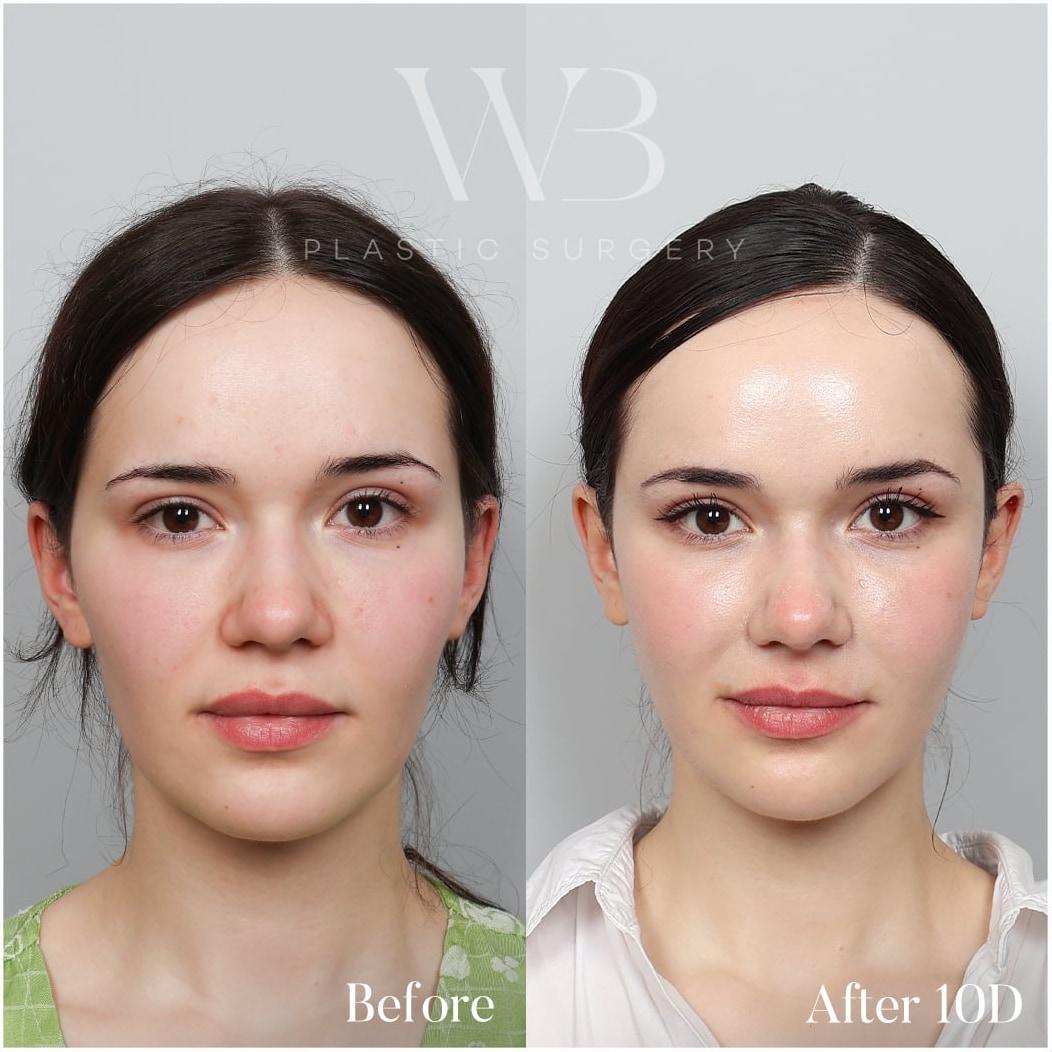
What people saw
Soft volume, not a filled face.
The surgeon described the goal as natural volume, using the patient’s own fat from the donor site — where they take the fat, usually the belly or inner thigh.
Timeline
10 days post-op
Location
Seoul, South Korea
Procedure
Full-face fat graft
Comments
74 questions and reactions
Explore on Afters
Use this story to compare real facial volume changes, healing stages, and whether the after still looks like the same person you started as.
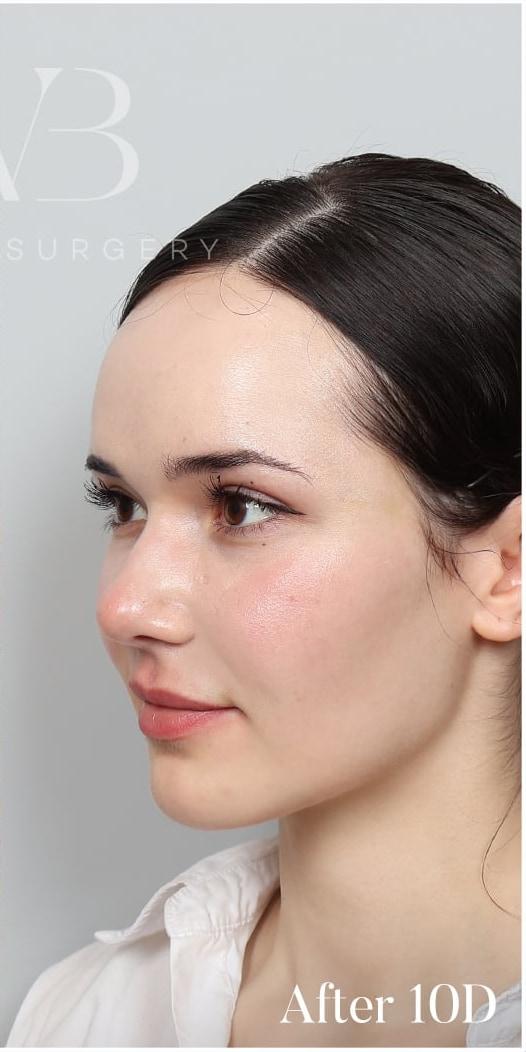
Facial volume
Compare subtle volume changes
Source story
r/cosmeticsurgery
Full-face fat graft by Dr. Junyoung Kim in Seoul, shared with front and profile photos at 10 days.
View sourceAlso helpful
Browse fat transfer results
Compare facial volume, donor areas, and subtle before-and-after changes.
Lower bleph and fat transfer at 3 weeks
Another real patient story about tiny volume changes around the eyes.
How to choose a plastic surgeon
Use credentials, photos, consult language, and red flags to narrow the list.
The best question came first: where was the fat placed?
A pretty result can make you pause. A mapped result can help you decide. The first thing people asked wasn’t whether she looked better. They wanted to know exactly which areas had been treated.
That’s the question worth bringing to your own consult. Full-face fat grafting isn’t one dot of volume. It can touch the forehead, temples, under-eyes, cheeks, folds, and the small transition points that change how light moves across your face.
Reddit comment
r/cosmeticsurgery
"Looks really great, where was the fat placed?"
This is the one to steal for yourself. Not just whether it looks good, but what changed, and where.
Reddit comment
r/cosmeticsurgery
"I would be interested in seeing a mapping of placement."
A placement map turns a pretty before-and-after into something you can actually learn from.
Reddit comment
r/cosmeticsurgery
"The results already look surprisingly natural for only 10 days post-op."
This wasn’t about looking filled. It was about looking softer and fresher this early.
Reddit comment
r/cosmeticsurgery
"It looks like the photos were taken at different distances."
Someone caught the comparison problem you should always watch for too.
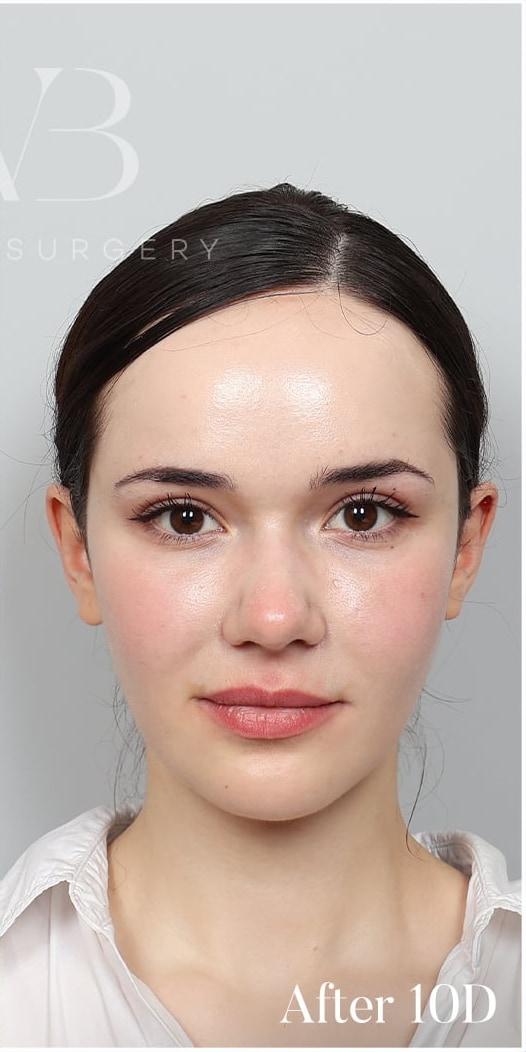
Ask for the map
The placement plan matters more than the procedure name.
Forehead and temples
Placed carefully, fat can soften flatness or hollowing without making your face look round.
Under-eye and upper cheek
It can smooth that tired shadow where your lower lid meets your cheek.
Midface
When volume loss is creating heaviness or shadow, a little fat here can make you look more rested.
Jawline transition
Even when the goal is refinement rather than size, it can make surface changes look smoother.
Why adding volume can make a face look smaller
One of the more surprising reactions was that the after photo looked slimmer. A few people noticed less unevenness near the cheeks and wondered how that could happen after fat was added.
The surgeon explained that placing fat precisely in sunken areas can make the surface smoother and the whole face line look more refined. He called it "bone contouring without cutting the bone." It’s a memorable line, but keep your filter up: it only works when your anatomy, the placement, and the amount all line up.
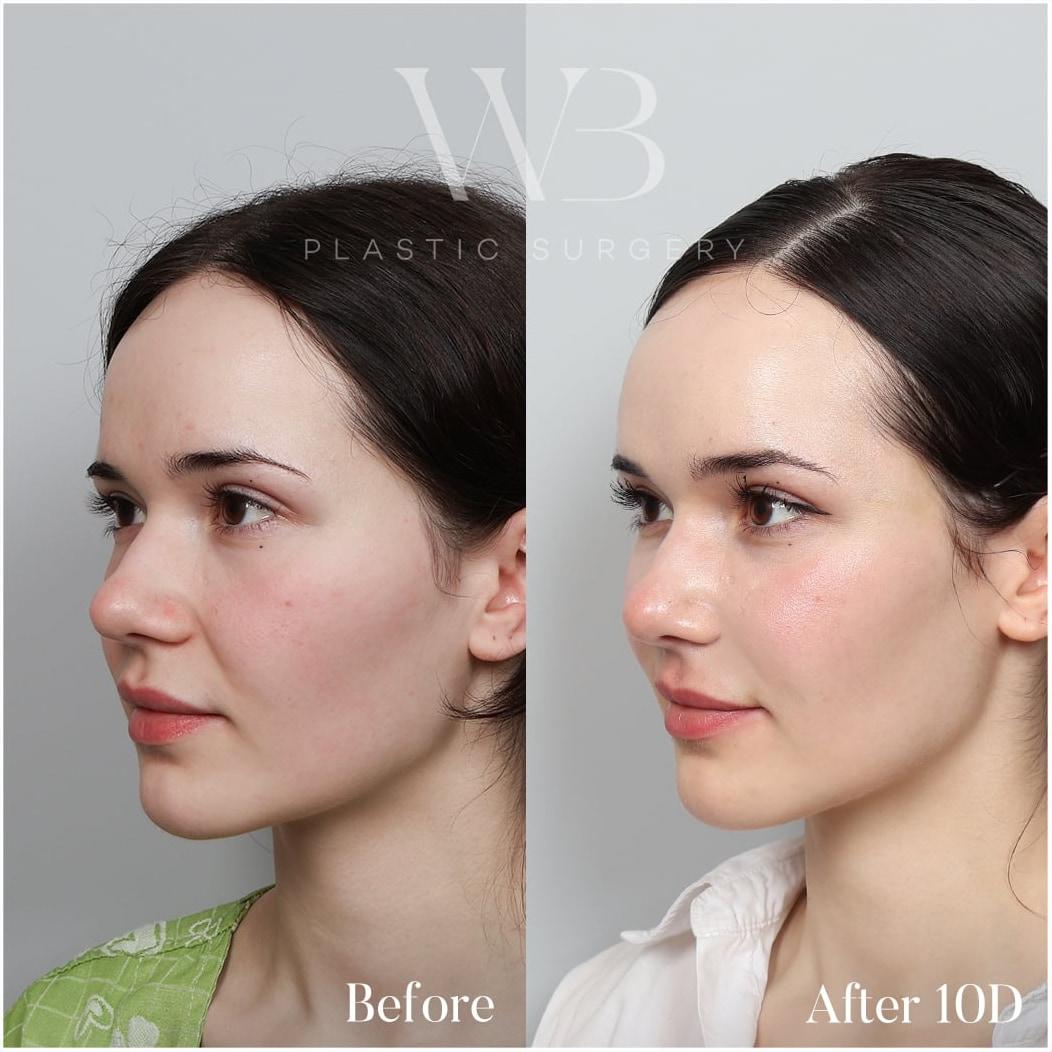
What to notice
The goal is smoother transitions, not obvious fullness.
A slimmer-looking face can come from less shadow and less uneven contour.
This same effect won’t happen on every face. Your anatomy decides a lot.
The photo-distance question is worth raising
People also flagged something you should always watch for: the before and after photos don’t look perfectly matched in distance. That doesn’t mean the result is fake. It means your eye is doing exactly what it should when you compare medical photos.
How to compare without fooling your eye
Use this before you trust any face before-and-after.
Compare the same angle first: front to front, profile to profile.
Look at camera distance. A closer face can look wider even when nothing actually changed.
Check the lighting on cheeks, under-eyes, and forehead, because shine and shadow can fake volume.
Ask whether the person is smiling, relaxed, or just holding their face differently.
Notice the timeline. A 10-day result isn’t the same as a 3-month or 6-month one.
Ask for several views, not one perfect angle.
Ten days is impressive, but it’s still early
At 10 days, you’re looking at the direction of the result, not the settled endpoint. If you’re worried about looking overdone, this is the reassuring part: a lot of early fullness is swelling that hasn’t gone down yet. Cleveland Clinic notes that swelling after fat transfer can take weeks, and that the final look depends on how much transferred fat survives. ASPS describes facial fat grafting as something that takes several months to judge.
10 days
You’re seeing the early shape, but swelling and shine can still make areas look more polished, fuller, or tighter than they’ll end up.
1 month
Many people look more settled, though how much fat survives is still personal to you. The surgeon described this as the point where his results usually start looking more natural.
3 to 6 months
This is the window to actually judge by, because swelling and fat survival have had more time to settle into the real you.
Clinical context
Cleveland Clinic explains that fat transfer involves liposuction, purification, and injection, and that not all transferred fat survives.
ASPS describes facial fat grafting as a several-month process and notes that lasting volume depends on how much fat survives.
ASPS notes that swelling after facial fat grafting can last about two weeks for many patients, with continued settling after that.
Stanford describes common facial fat grafting areas including cheeks, around the nostrils, forehead, lips, and under-eye hollows.
The retention question belongs in your consult
Someone asked what retention — how much of the transferred fat your body keeps — usually looks like once swelling settles. It’s one of the smartest questions in the whole thread, and one you’ll want to ask too.
The surgeon replied that survival varies by patient and fat quality, then described his own experience as roughly at least 70% after a month. That’s useful context from one surgeon, not a universal promise. Broader clinical sources tend to describe retention as variable, with some fat not surviving the transfer at all.
The question
How much stays?
A good surgeon can walk you through their expected range, how they plan for some of the fat being reabsorbed, and whether a touch-up is sometimes needed. If the answer sounds suspiciously exact, it’s fair to ask what their number is actually based on.
Fat grafting isn’t filler, especially around the lips
The lip conversation was a small moment, but it tells you a lot about good planning. The surgeon said he usually doesn’t recommend lip fat grafting, because lips move constantly and fat tends to disappear there more easily. He finds filler easier for lip shape.
That’s the kind of honesty you want from a consult. You’re not really choosing "fat or filler" in the abstract — you’re choosing which tool fits each part of your face.
Questions to bring if this result feels like your goal
Take these straight into the room with you. You’re not asking a surgeon to copy someone else’s face. You’re asking whether soft, natural volume is realistic for your anatomy, and how they’ll keep you from ending up puffy and pillow-faced.
Where exactly would you place fat on my face?
Can you mark the planned areas on my photos before surgery?
Are you using macrofat, microfat, nanofat, PRP, or a combination?
How much overcorrection do you usually plan, and why?
What fat survival range do you usually see in your own patients?
What happens if too much or too little fat survives?
How do you standardize before-and-after photos?
Which donor site would you use, and what is recovery like there?
Which areas would you treat with filler instead of fat?
The bottom line
So here’s what you can actually do with all of this. Bring photos of a result you like and ask your surgeon to mark a placement map right on your own pictures. Ask for their honest fat-survival range in their own patients, not a tidy guarantee. And give yourself permission to wait: judge the real result at 3 to 6 months, once swelling has gone and the fat has settled. Soft, natural volume is the goal here, and you have every right to ask exactly how they’ll keep you from looking overfilled.
Questions this story answers
Is 10 days after full-face fat grafting the final result?
No, and it’s a relief to hear that if you’re scared of looking puffy. Ten days shows you the direction things are heading, but you’re still early. Swelling keeps shifting for weeks, and your real volume is usually something you judge months later.
Why can a face look slimmer after adding fat?
Because filling a hollow can smooth the transitions and make the whole face line look more balanced, even though fat was added. Photo distance, lighting, swelling, and angle all change how slim a face looks too, so don’t over-read a single shot.
How much facial fat graft survives?
There’s no universal number, and anyone who gives you one should make you pause. The surgeon in this thread described his own experience as at least 70% after a month, while broader clinical sources often describe lower or variable survival. Ask your own surgeon for their honest range and their touch-up policy.
What areas can be treated with facial fat grafting?
Common spots are the cheeks, under-eyes, temples, forehead, the folds beside your nose, and other hollows. The plan should be mapped to your face, because a small change in placement can shift the whole result.
Is facial fat grafting the same as filler?
No. Fat grafting uses your own fat, usually taken by liposuction, processed, then injected into your face. Filler is an injectable product. Fat can last longer once it survives, but it’s also more involved and less instantly adjustable than filler.
Should lips be treated with fat grafting?
Not always. In this thread, the surgeon said he usually doesn’t recommend lip fat grafting because lips move constantly and fat can disappear more easily there. It’s a good reminder that every area deserves its own plan.