
Lower bleph and fat transfer at 3 weeks: smoother under-eyes, still herself
If your under-eyes are the first thing you see in every photo, you already get why someone does this. She wanted smoother under-eyes and better symmetry, and she was scared of waking up looking like a different person. If that’s you, read on.
Timeline
3 weeks
Cost shared
$7,500
Research time
2+ years
Location named
Tampa
"I really feel like a new person!"
That was her own line at three weeks. The photos are why the thread took off. The way she talked about it is why it felt like the truth.
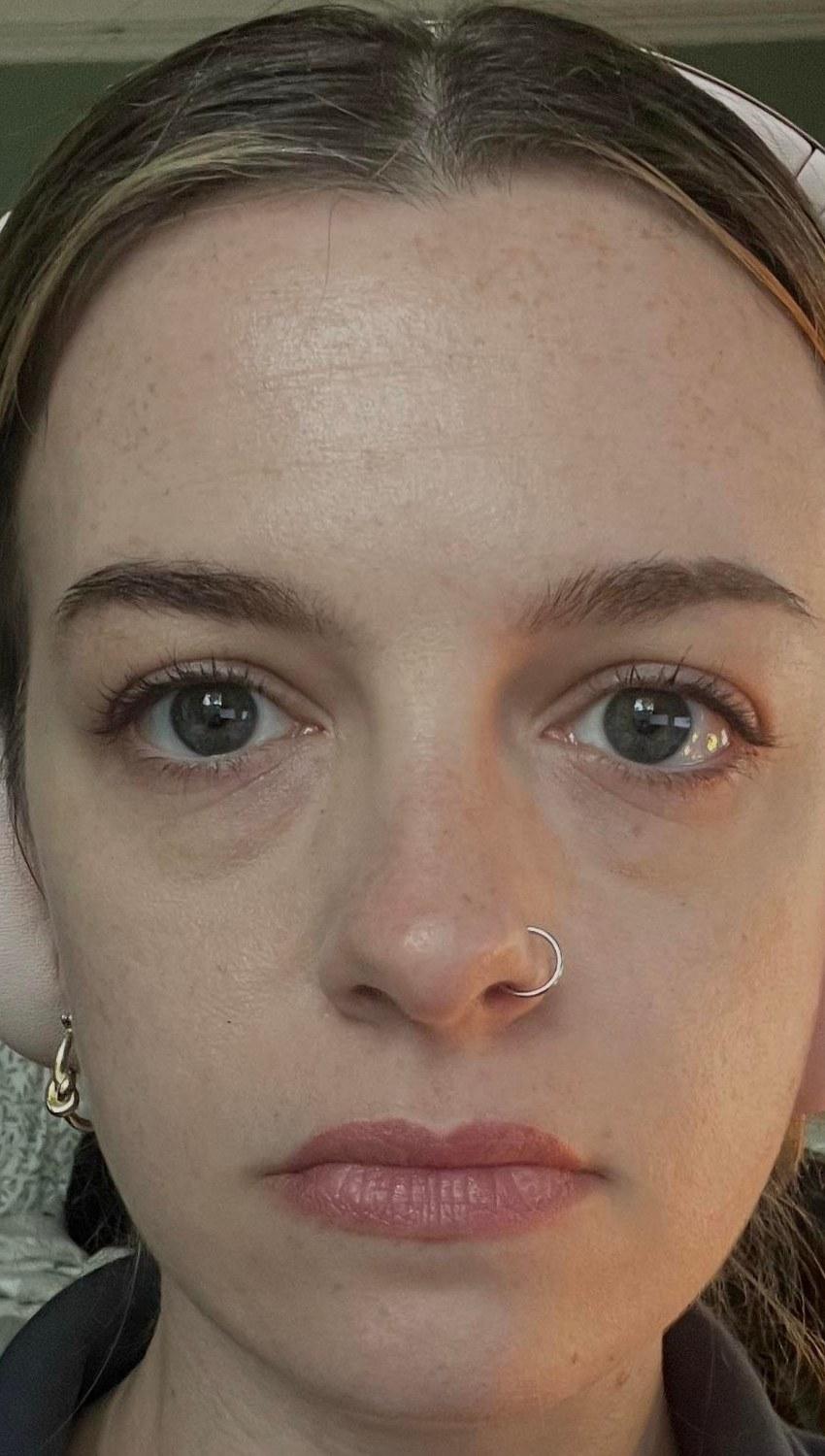
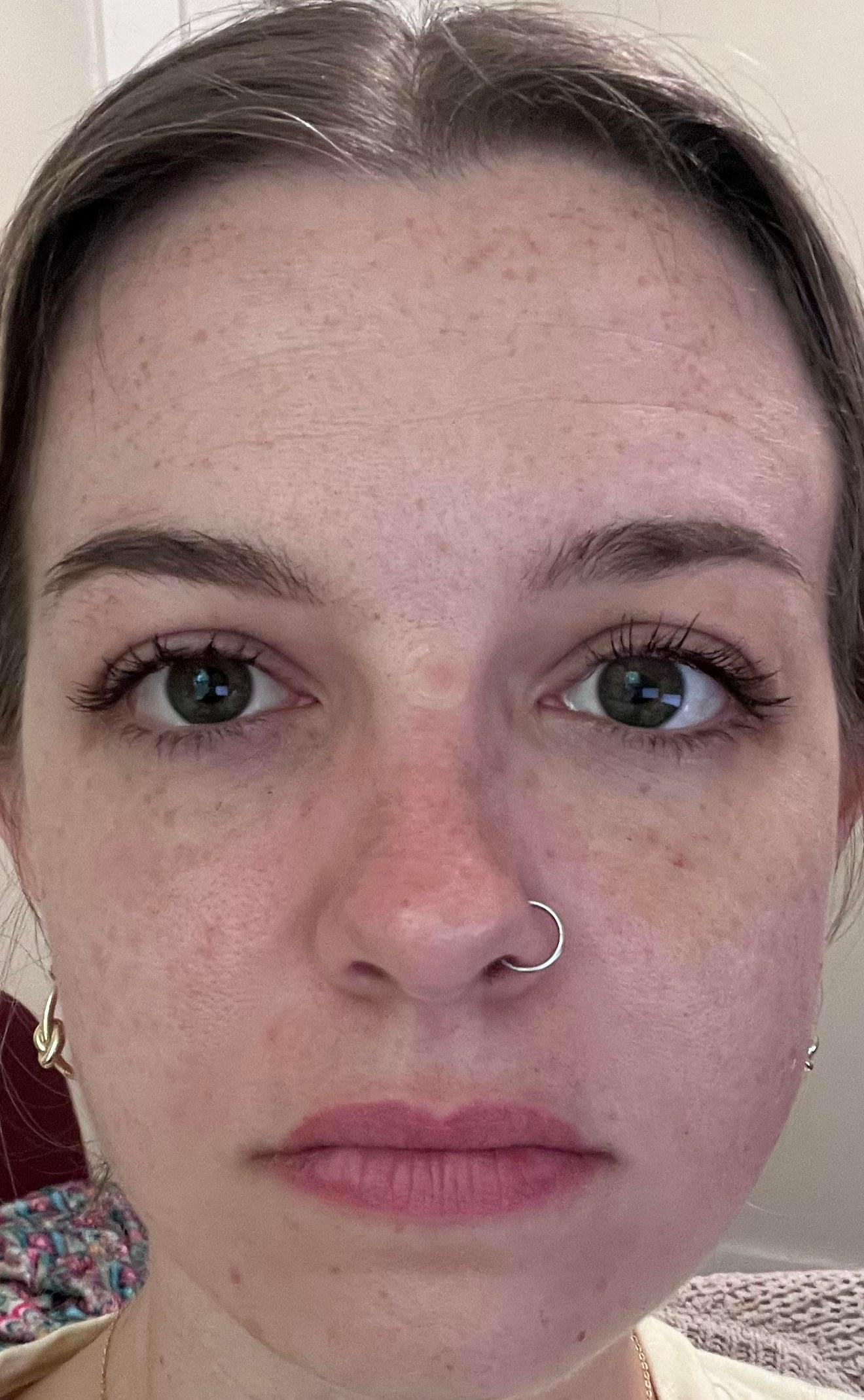
What she wanted
Smoother under-eyes and better symmetry without a dramatic change.
What people asked
Cost, surgeon choice, and whether the eye corner was subtly lifted.
What to remember
At this scale, millimeters can change the whole feeling of the result.
Explore on Afters
Let this story tell you what to compare around the eyes: smoothness, symmetry, lid support, and timing.
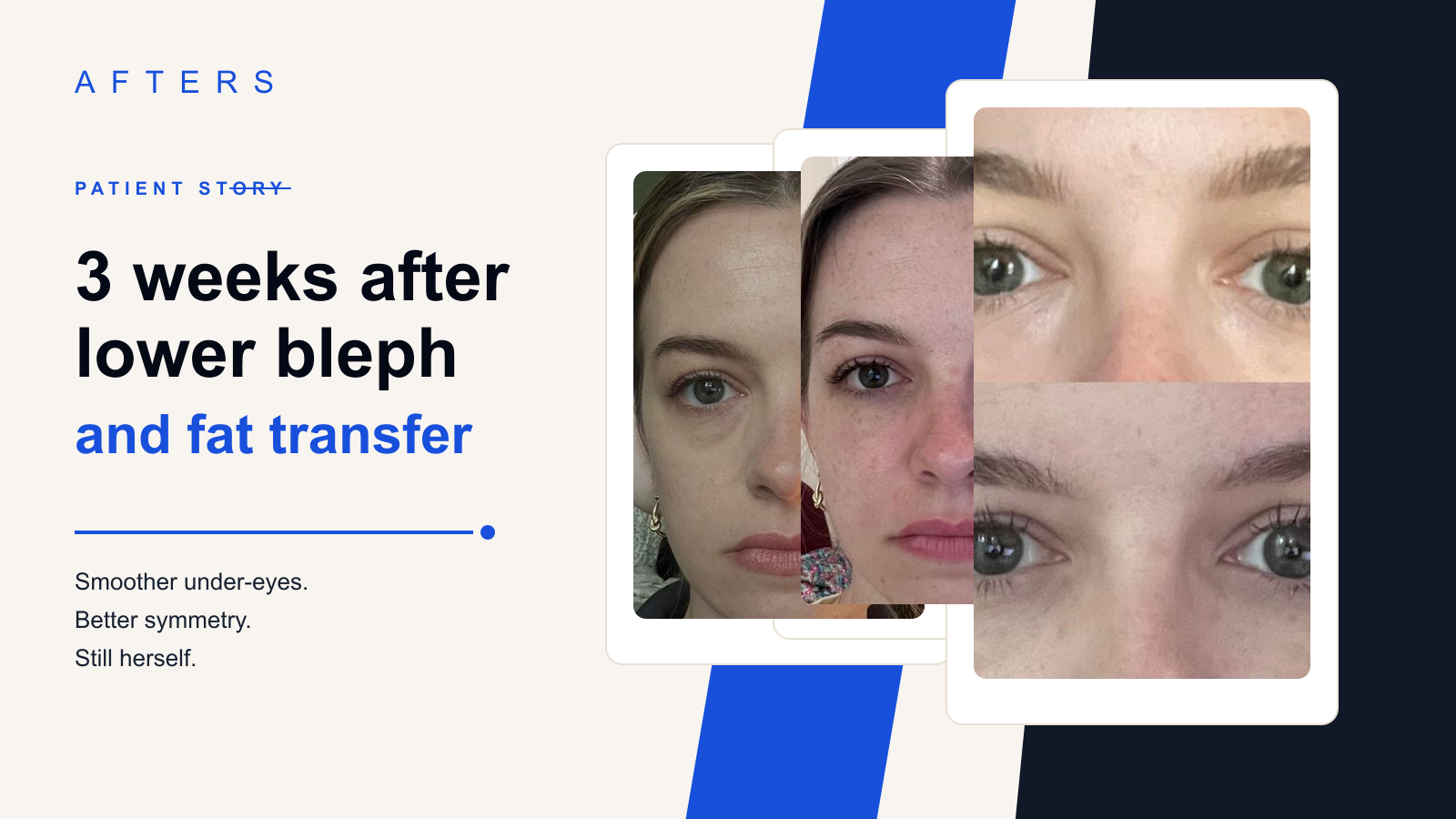
Blepharoplasty
Compare the details around the eyes
Also helpful
Browse eyelid surgery results
Compare under-eye smoothness, eyelid shape, and early versus healed results.
How to choose a plastic surgeon
A practical guide to credentials, red flags, consultations, and photo review.
Questions patients ask online
The private research questions people often ask before they feel ready to book.
She wasn’t trying to erase her face
The most telling line in the post wasn’t the procedure list or the price. It was how she described what she asked for: better symmetry, smoother under-eyes, and nothing dramatic.
That’s the quiet thing most people carry into lower eyelid surgery, and probably what brought you here. You don’t want to look like a different person. You just want the tired shadow, the bag, the asymmetry to stop being the first thing anyone sees.
A good phrase to borrow
"I want the area to look smoother, but I still want my eyes to look like mine." That’s clear, human, and specific enough to start a much better consult.
What she actually had done
In the post she named four parts of the plan: lower blepharoplasty (surgery on the lower eyelid), fat transfer, canthoplasty, and canthopexy. That’s worth sitting with, because a smooth under-eye result often doesn’t come from a single move.
Lower blepharoplasty
Surgery on the lower eyelid, often to address bags, extra skin, or the transition between the lid and cheek. Sometimes done through an incision inside the lid (transconjunctival), so there’s no outside scar.
Fat transfer
Moving a little of your own fat to fill hollows or shadowing that make the under-eyes look tired.
Canthoplasty
One way a surgeon tightens or supports the outer corner of the eye when the lid needs more structural support.
Canthopexy
A gentler way to support that same outer corner without making the eye look overdone.
She also named her surgeon, Dr. Norberto Mancera in Tampa, and said she spent more than two years researching before she chose him. We’re sharing that as a public patient statement from the thread, not as a medical endorsement or a promise you’d get the same result.
The comment that says the quiet part out loud
Someone replied that it was encouraging to see a good outcome from this procedure. She wrote back that she’d had a lot of anxiety before surgery and hoped her post might help someone else stuck on the fence. If that someone is you, that’s exactly who she meant.
The emotional part
"I cannot explain how happy I am right now."
You can hear the relief in that. It wasn’t just that the result looked better, it’s that she felt like herself again.
The brief
"Without changing my appearance too drastically."
This is the heart of it, and probably what you want too: smoother under-eyes, better symmetry, still the same face.
The decision
"I spent over 2 years researching surgeons."
A result like this rarely starts in the operating room. It starts with you doing your homework and finding the right surgeon.
The detail
"It is a matter of millimeters."
Around the eyes, a millimeter is the difference between looking natural and looking noticeably done.
That’s the part a gallery can’t give you. Polished photos show the change. A thread like this tells you how scared she was before any of it felt possible, which is usually the part you’re really sitting with at midnight.
Three weeks is encouraging, not final
At three weeks you can usually see where the result is heading. But it’s still early, especially with fat transfer in the mix. Cleveland Clinic notes that under-eye fat transfer can look puffy and done-looking at first, then keep changing as your body absorbs some of the fat over the next several months. So if an early result looks a little full, that doesn’t mean it’s the final one.
Honesty matters here too. The lower lid can pull down or look slightly rounded while it heals, dryness and watering are common at first, and some people end up needing a small touch-up. Mayo Clinic lists swelling, bruising, pain, watery eyes, dry eyes, and blurred vision as possible side effects. ASPS describes eyelid surgery as something that can address the upper lids, lower lids, or both. This story is encouraging, but your own timeline has to come from your surgeon, not from her post.
Clinical context
ASPS describes eyelid surgery as a procedure that can improve the appearance of upper lids, lower lids, or both.
Mayo Clinic lists swelling, bruising, watery eyes, dry eyes, pain, and temporary vision changes among possible eyelid surgery side effects.
Cleveland Clinic notes that under-eye fat transfer can look overly full early on and may settle over the following months.
How to read these photos
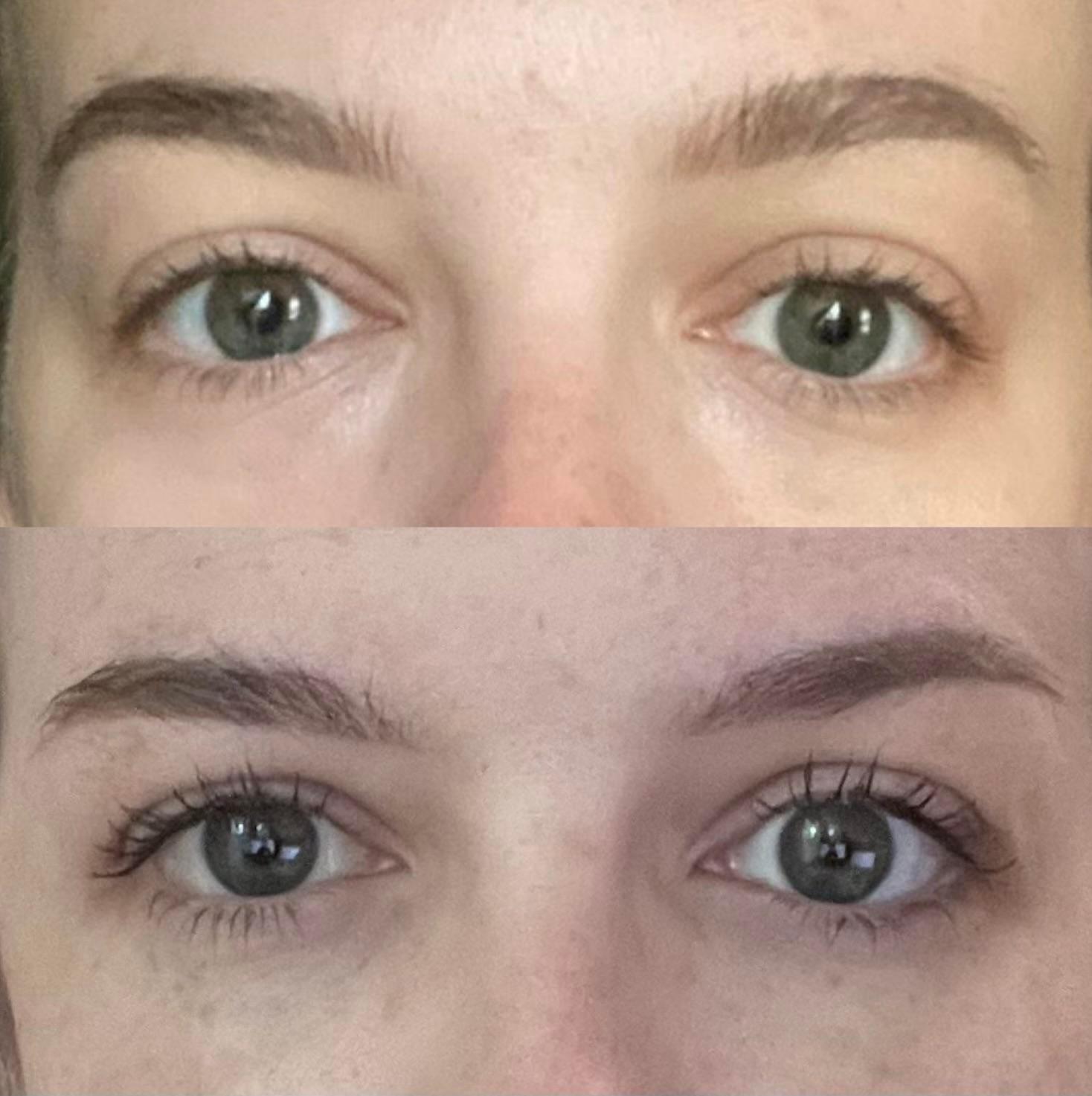
The before-and-after close-up lands because it shows the exact spot you probably obsess over in the mirror: the crease under the lower lid, the shadow sliding into the cheek, and the little differences between your two eyes.
Look at the lower-lid to cheek transition, not just how much of the bag is gone.
Notice whether the eyes still look like the same person from the front.
Compare shadow, hollowness, and puffiness on their own, because they’re different problems with different fixes.
Ask whether fat was removed, repositioned, transferred, or paired with a support technique.
Look at the asymmetry before surgery. Sometimes the goal is improvement, not a perfect match.
The cost answer you’re probably scrolling for
After someone asked, she edited the post to add that the total was $7,500 including IV sedation. That’s a helpful real-world number to hold onto, but it isn’t a quote for you. Lower eyelid surgery can swing a lot depending on surgeon training, city, anesthesia, whether fat transfer is included, and whether structural eyelid support is part of the plan.
Cost context
Shared total
$7,500
Included
IV sedation
Procedure mix
4 parts
What to ask if this is the result you want
Use the story as language, not as a template for your face. Bring your surgeon the exact thing that bothers you: smoother under-eyes, asymmetry, hollowness, puffiness, or lower-lid support. They’re related, but they’re not the same ask, and naming the right one changes the answer you get.
Am I a better candidate for fat removal, fat repositioning, fat transfer, or a combination?
How do you avoid making the under-eye look hollow?
Would my eye shape need canthopexy or canthoplasty, or is lower bleph alone enough?
What should I expect at 3 weeks, 3 months, and 6 months?
Can I see close-up healed examples with similar under-eye anatomy?
What training and experience do you have with lower eyelid surgery specifically?
The bottom line
This one stays with you because she wasn’t asking for a new face. She wanted her eyes to look smoother and more balanced while still feeling like hers. At three weeks she was happy enough to share the photos, the cost, the procedure mix, and the one thing she wished anxious patients knew sooner: find someone with real eyelid expertise, and give yourself permission to take your time finding them.
Questions this story answers
Is three weeks after lower bleph and fat transfer the final result?
No, so try not to judge your own outcome at this stage. Three weeks can be far enough along to see real change, but the under-eye keeps settling. Swelling, bruising, and fullness can all keep shifting, especially when fat transfer is part of the plan.
What procedures did this patient say she had?
She said her surgeon did a lower blepharoplasty (surgery on the lower eyelid), a fat transfer, a canthoplasty, and a canthopexy. She wanted smoother under-eyes and better symmetry without changing her appearance too drastically.
How much did this lower bleph and fat transfer story cost?
She edited her post to say the total was $7,500 including IV sedation. That’s one person’s real number, not a price for everyone. Surgeon training, anesthesia, facility, city, and procedure mix can all move it.
Why would canthoplasty or canthopexy be added to lower blepharoplasty?
Canthoplasty and canthopexy are two ways a surgeon tightens or supports the outer corner of the eye. In the comments she said her surgeon made a very small corner change for asymmetry and a slight downward tilt. Whether it’s right for you depends on your anatomy and your surgeon’s read.
What are the real risks of lower eyelid surgery?
It’s worth knowing the honest version. The lower lid can pull down or look slightly rounded while it heals, dryness and watering are common early on, and some people need a small touch-up later. Most of this settles, but it’s a real part of the conversation, not a footnote.
Who should I see for lower eyelid surgery?
Look for a qualified surgeon who does eyelid surgery routinely and can walk you through their approach to lower lids, fat, symmetry, eye shape, and safety. A lot of people specifically seek out an oculoplastic surgeon or a plastic surgeon with strong eyelid experience.