
Deep plane facelift and fat grafting at 2 months: lift, volume, and what comes next
At two months, the jawline was already clearer and the face looked softer. The comments went exactly where a good consult should go: where was fat placed, what about under-eyes, and how young is too young?
AI-assisted editorial analysis based on the linked patient discussion and named sources.Educational only—not medical advice. How we write
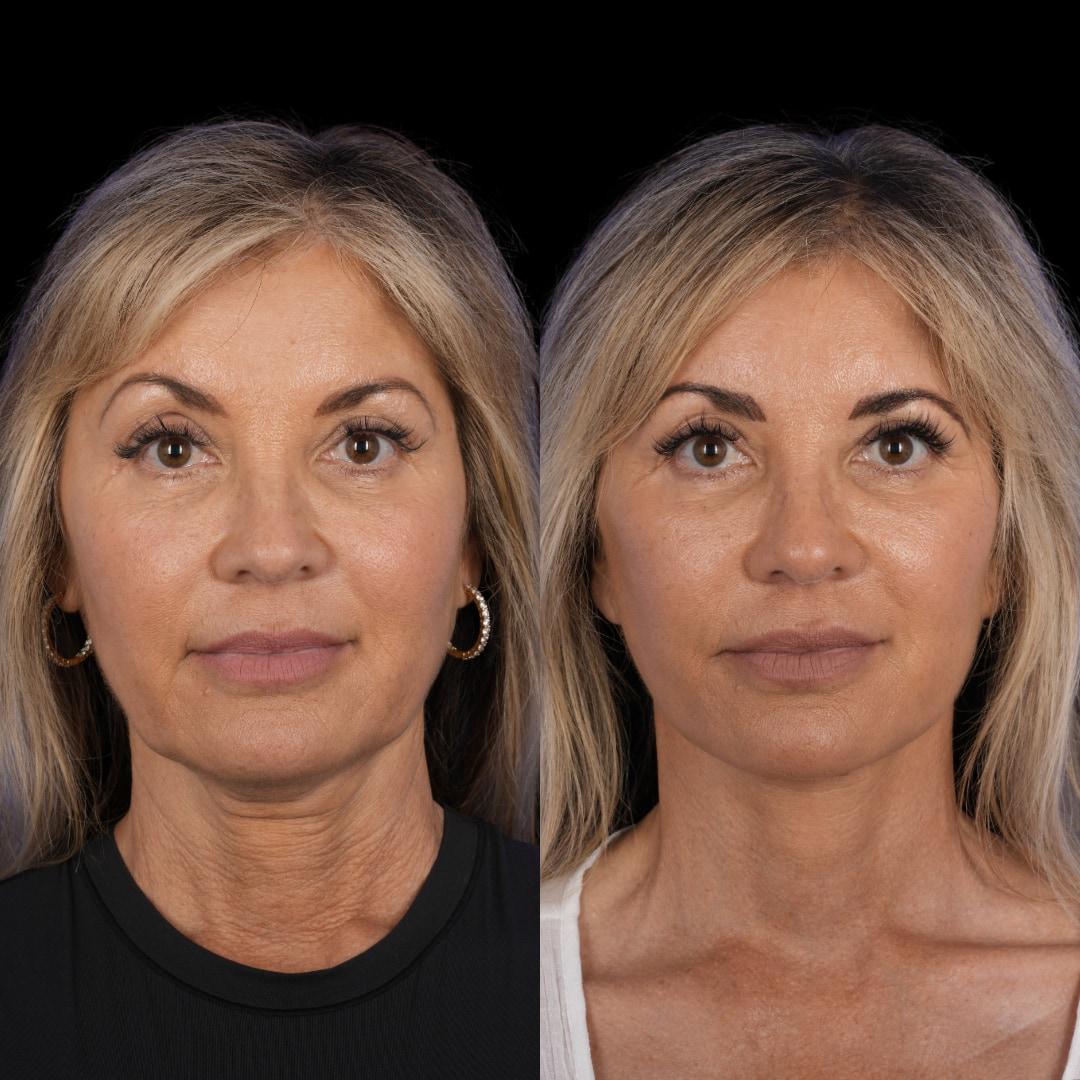
Front comparison
The photo is only the beginning.

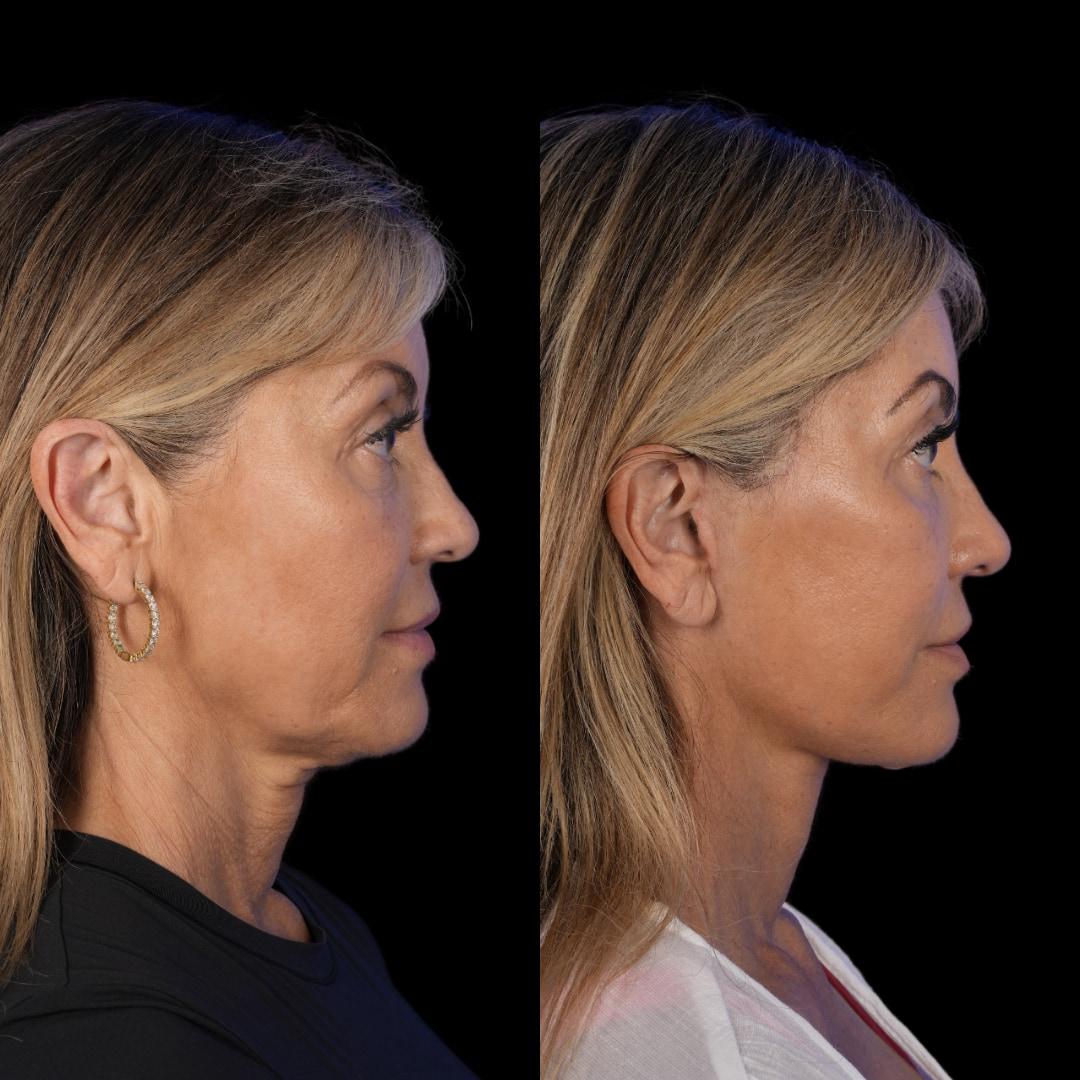
Timeline
2 months
Procedure
Deep plane facelift + fat grafting
Fat areas
Cheeks, temples, perioral region
Comments asked
Age, neck, under-eyes
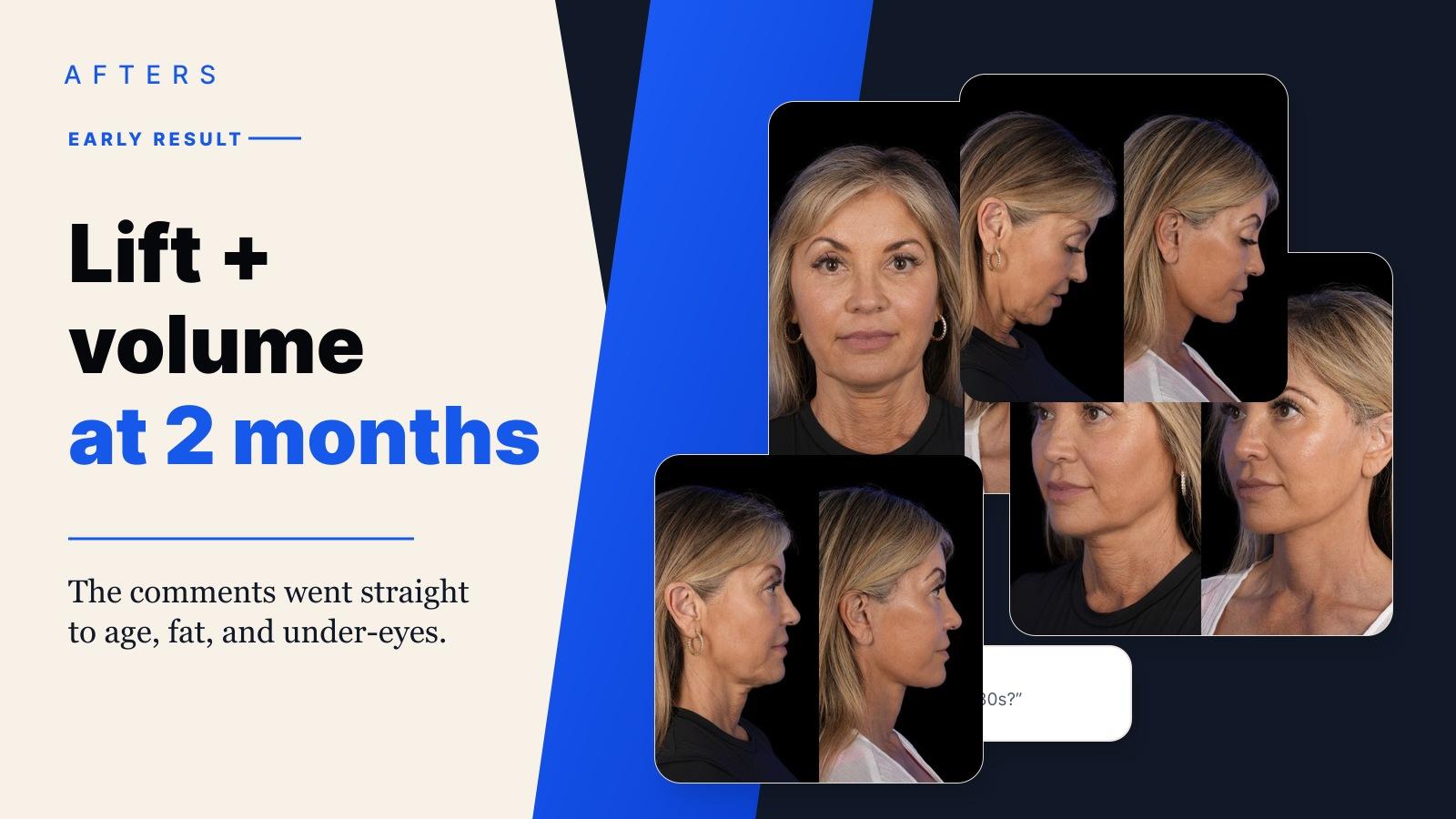
Compare real results
Compare lift and volume together
Look at real facelift and fat-transfer results so you can see what changed from support, what changed from volume, and what is still healing.
See facelift results106
score
41
comments
A surgeon-shared SF Bay Area case at 2 months after deep plane facelift and fat grafting to cheeks, temples, and the perioral region.
Also helpful
This was not only a lift question. It was a volume map question.
The post named cheeks, temples, and perioral fat grafting. That detail matters because a facelift can reposition tissue, while fat grafting can soften hollow or flat areas. Together, they can change the face in a way that is hard to decode from one photo.
The comments are where people got honest.
The neck reaction
"Good job for the neck lift."
Even when the post says facelift, people often judge the neck first. The jawline and cervicomental angle are where confidence changes fast.
The age question
"Do you perform facelifts on patients in their late 30s?"
This is becoming a real search behavior: younger patients asking if earlier surgery can be subtle instead of waiting for bigger laxity.
The placement question
"I thought Fat Grafting was commonly used under the eyes."
Patients hear "fat grafting" and want a map. Under-eyes, cheeks, temples, and mouth area are different decisions.
Two months is early, but it can show the direction.
At two months, swelling is still part of the picture. That does not make the photos useless. It means you should read them as an early result, not a final promise.
The jawline and neck can already look more defined, while incision color, facial softness, and fat-graft settling may keep changing.
Fat grafting changes the conversation from pulling to restoring.
A facelift is often described as lifting, but many faces also need volume support. Cheeks, temples, and the area around the mouth can make a lifted face look healthier instead of tighter.
The important thing is placement. Fat under the eyes is not the same decision as fat in the cheek or temple. Each area has its own risk, texture, and margin for error.
Ask where fat would be placed on your face and why.
Ask which areas the surgeon would avoid in you.
Ask how they handle overcorrection, undercorrection, or fat that does not survive evenly.
The late-30s question deserves nuance.
Some younger patients are researching facelifts because they are tired of lasers, fillers, and devices that do not address laxity. That does not mean every person in their 30s is a candidate.
A good surgeon should be able to explain whether you have enough laxity to justify surgery, whether a less invasive option is more appropriate, and what waiting would change.
Consult gut check
If a surgeon says yes quickly to a younger facelift without showing what they are correcting, get another opinion. Early intervention still needs a real anatomic reason.
Ask these before facelift with fat grafting
The best consult will separate lift, volume, skin quality, and timeline instead of treating them like one big makeover.
Which parts of my result would come from lifting, and which would come from fat grafting?
Where exactly would you place fat on my face?
Would you treat my under-eyes with fat, filler, blepharoplasty, or nothing?
At my age, what makes me a good or poor candidate?
How should I judge the result at 2 months versus 6 months?
What happens if the fat takes unevenly or I want a touch-up?
The questions that usually come next
Is 2 months after facelift the final result?
No. It can show direction, but swelling, scars, tissue softness, and fat grafting can keep changing for months.
Why combine fat grafting with facelift?
A facelift can improve laxity and reposition tissue. Fat grafting can restore volume in selected areas, which may make the result look softer and less pulled.
Can fat grafting be used under the eyes?
Sometimes, but under-eye fat grafting is delicate. Some surgeons prefer other approaches depending on hollowness, skin, bags, and risk tolerance.
Can someone in their late 30s get a facelift?
Some can, but candidacy depends on anatomy, laxity, goals, and whether surgery is truly better than non-surgical options.
Compare lift and volume together
Look at real facelift and fat-transfer results so you can see what changed from support, what changed from volume, and what is still healing.
See facelift results