
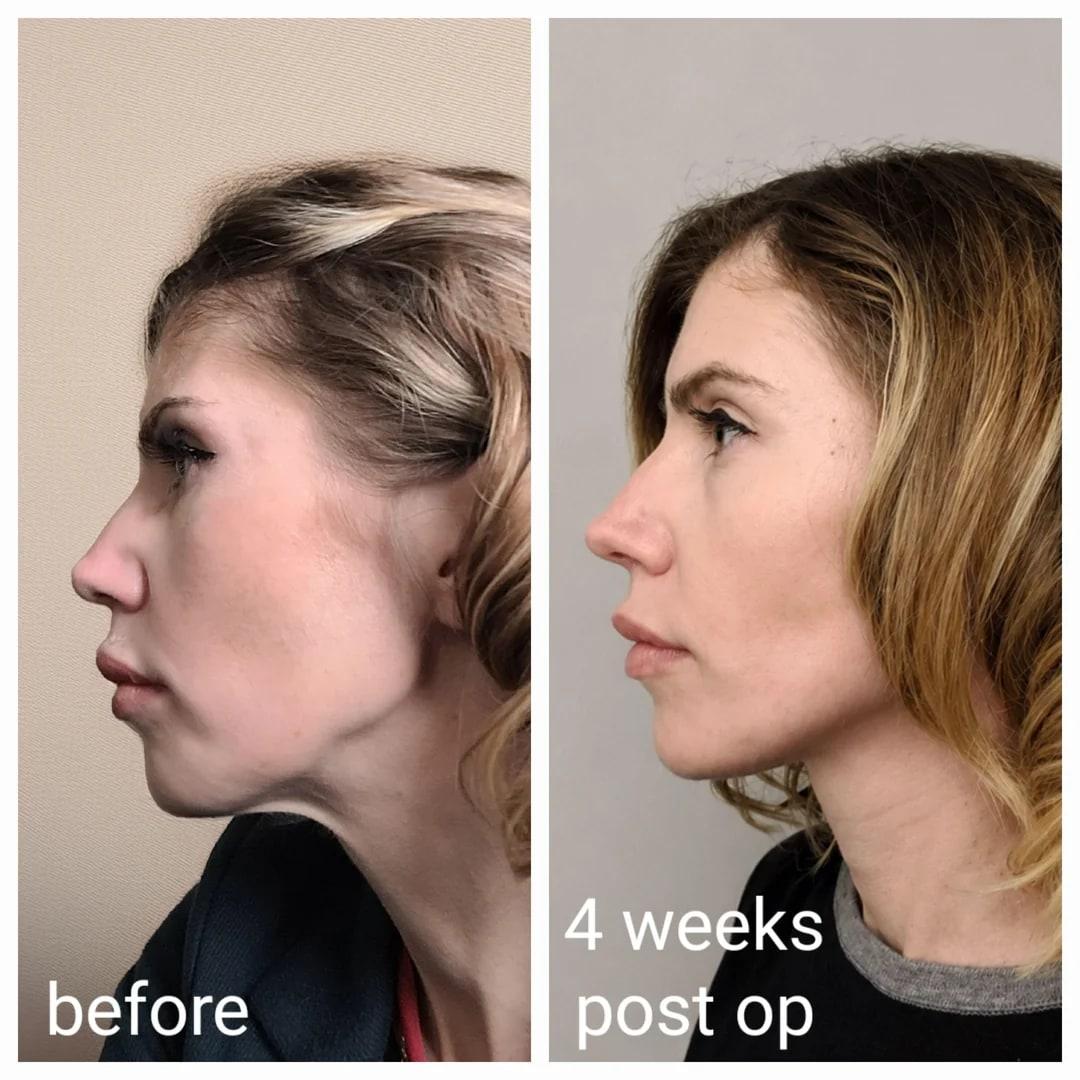
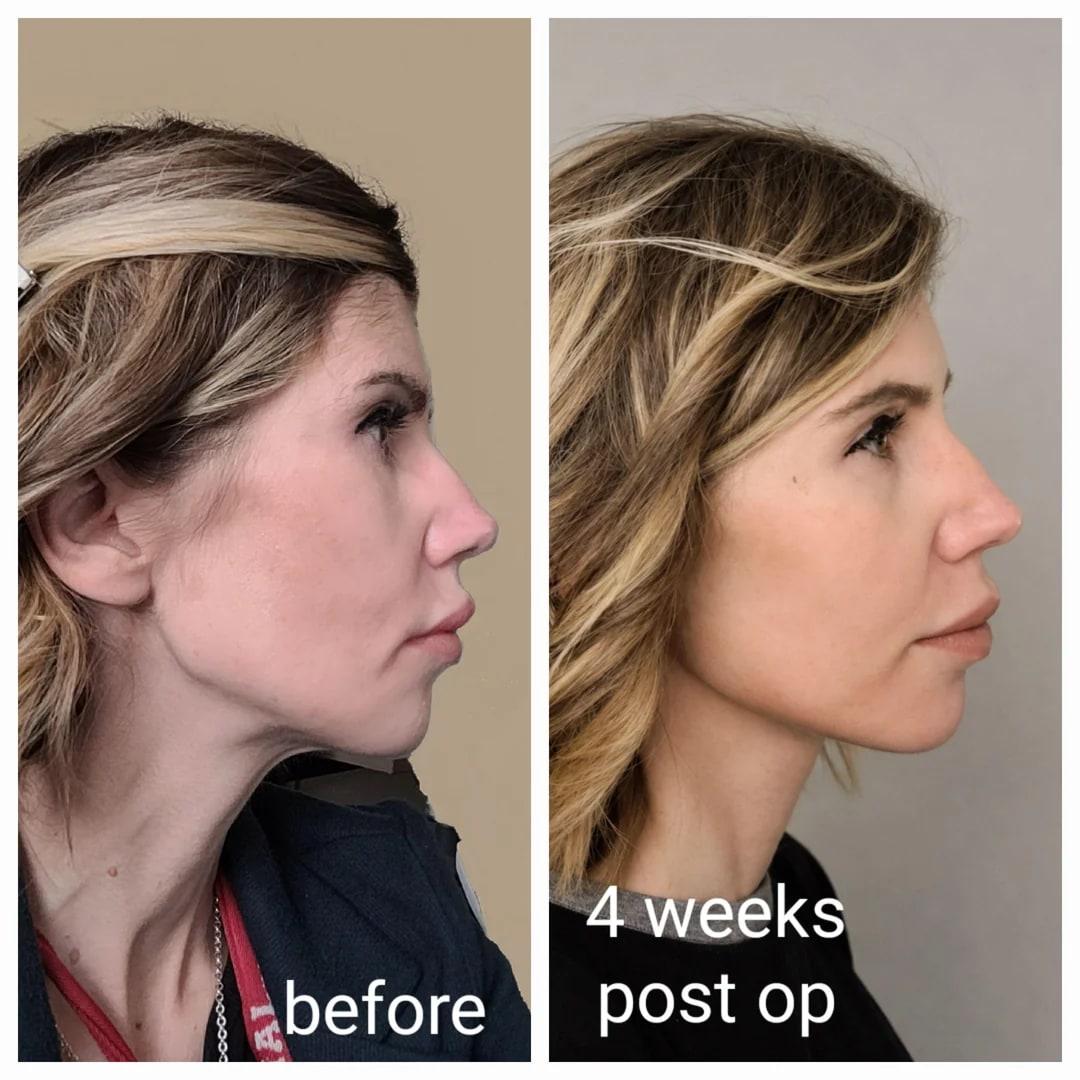
Four weeks after a deep plane face and neck lift, she explained the decision
You’re almost 42, tired of spending money on treatments that barely move the needle, and you keep wondering if it’s too soon. She felt all of that too. Here’s how she made peace with choosing surgery before things felt worse.

Patient
Almost 42
Timeline
4 weeks post-op
Cost shared
$30k
Recovery note
Presentable around day 8
Compare real results
Compare results by age and neck starting point
Forget the celebrity photos. The comparison that actually helps you is people whose neck, jawline, age, and goals look a lot like yours.
See facelift results1.3k
score
226
comments
A real patient update at 4 weeks after deep plane face and neck lift, with unusually helpful comments about cost, timing, recovery, and surgeon fit.
Also helpful
Deep plane face and neck lift in Denver
A surgeon-shared two-month result with naturalness, cost, incision, and downtime questions.
3.5-month facelift patient story
A real update about still looking like yourself after the early recovery window.
Browse facelift results
Compare real face and neck lift photos by age, angle, and timeline.
You’re not really asking “do I look old enough?” You’re asking when surgery actually starts to make sense.
That’s the quieter question underneath all of this. You can spend years on devices, injections, and skin treatments because surgery feels too big, or too soon. At some point the math quietly shifts, and you just want someone to help you see when.
The comments are where people got honest.
The timing question
"Timing was perfect... turned things around before it got really bad."
If part of you is afraid that wanting this makes you vain, read that line again. She’s talking about timing. Some people genuinely want to wait. You might just want to soften the thing that’s already changing how you feel when you look in the mirror.
The money lesson
"Nothing beats a needle and thread."
She agreed, and said she wished she hadn’t spent money on Ultherapy, Morpheus, and similar treatments first. That’s the math a lot of you are quietly running too. One honest caveat though: plenty of people do get real, lasting benefit from those devices. For early skin laxity they can genuinely help. It really comes down to your anatomy and how much loose tissue is already there.
The recovery answer
"Pretty easy tbh... presentable around day 8."
Hers is one recovery, not a promise about yours. Still, “presentable around day 8” tells you so much more than the vague “minimal downtime” line you keep seeing. It’s the kind of honest detail you can actually plan your life around.
Sometimes the honest answer is that you waited long enough.
She knew 42 sounded young to some people. She said so herself. But she also knew what she was seeing in the mirror: a softening neck, those vertical cords down the front of it (the platysma muscle, the one that starts to band as you age), and enough change that her treatments were starting to feel like expensive ways to stall.
Here’s the thing. “Am I too young for a facelift?” usually isn’t the real question. The real one is gentler and more specific. Does your actual anatomy match what this surgery fixes? Does the change bother you enough? And are the smaller treatments still giving you anything real?
A kinder way to think about it
This isn’t about shaming you for wanting it early, or selling you on it. It’s just one honest question worth sitting with: are you trying to fix a surgical problem with non-surgical tools?
And she actually told you what she paid.
She shared that she paid $30,000 for a deep plane face and neck lift (the kind that lifts the deeper muscle layer, not just the skin) in the San Francisco Bay Area. She mentioned a lower price for a neck-focused option, and a higher one if she had added a brow lift.
It’s rare for anyone to be that open, and it helps. Because “facelift cost” is never one number. It shifts with where you live, who you choose, the facility, the anesthesia, and how much you’re actually doing: face, neck, brow, eyelids, resurfacing, or some smaller version of all that.
A face and neck lift isn’t priced like a neck-only procedure.
Adding a brow lift, eyelid work, or resurfacing can move the number fast.
When it’s your face, the cheapest quote is rarely the one that lets you sleep at night.
The detail that mattered most wasn’t in the photos.
She said she loved that her surgeon didn’t push extra procedures, and actually told her she didn’t need certain work. Hold onto that. When someone is willing to talk you out of spending more, that tells you something the before-and-after never could.
A good consult shouldn’t feel like someone reading you a menu. It should feel like someone studying your face, walking you through the tradeoffs honestly, and telling you what they would leave alone. Sometimes the most reassuring thing you can hear is “no, I wouldn’t add that.”
Four weeks in, it’s okay to be excited and still unsure.
The photos hit hard at four weeks because the neck and jawline are already so different. But four weeks is still early. Tightness, swelling, numbness, and the scars all keep settling, and so does the strange emotional whiplash of watching your own face change.
Both things get to be true at once. Your result can already feel exciting, and it can still be far too soon to judge every tiny detail as final.
Ask these if you’re weighing surgery against more treatments
If you’re caught between “just one more device treatment” and surgery, you’re not alone, and you don’t have to decide tonight. Bring these to a consult and let someone be honest with you about what each option can really do.
Is my main issue skin quality, volume, muscle/neck banding, or laxity?
What would a deep plane face and neck lift improve that devices or injectables cannot?
Would you recommend face and neck, neck only, or no surgery yet?
Which procedures would you not add for me right now?
What recovery day do your patients usually feel comfortable being seen?
How many revision or touch-up situations do you see after this procedure?
Can I see patients near my age with similar neck laxity and jawline changes?
The questions that usually come next
Is 42 too young for a deep plane face and neck lift?
Your age alone doesn’t decide this. What matters more is your skin laxity, neck banding, anatomy, goals, and health, plus whether the non-surgical options are still doing anything for you. The birthday is the least important part.
How long does deep plane facelift recovery take?
Some people feel okay being seen in about 2 weeks, sometimes sooner. The swelling, tightness, numbness, and scar changes can keep evolving for months, though. Your surgeon should give you a realistic timeline for your specific plan.
Why choose surgery instead of more skin tightening treatments?
If your main issue is deeper laxity or neck banding, devices may not be able to create the structural change a lift does. That said, plenty of people get real benefit from devices, especially earlier on. A good consult should tell you honestly where non-surgical treatment stops helping for you.
What’s a good sign during a facelift consult?
Look for a surgeon who tells you what they wouldn’t do, shows you patients who actually resemble you, talks plainly about scars and recovery, and doesn’t try to add on every possible procedure. That kind of honesty is worth a lot.
Compare results by age and neck starting point
Forget the celebrity photos. The comparison that actually helps you is people whose neck, jawline, age, and goals look a lot like yours.
See facelift results