
Blepharoplasty and fat transfer in Denver: the under-eye result people couldn’t stop analyzing
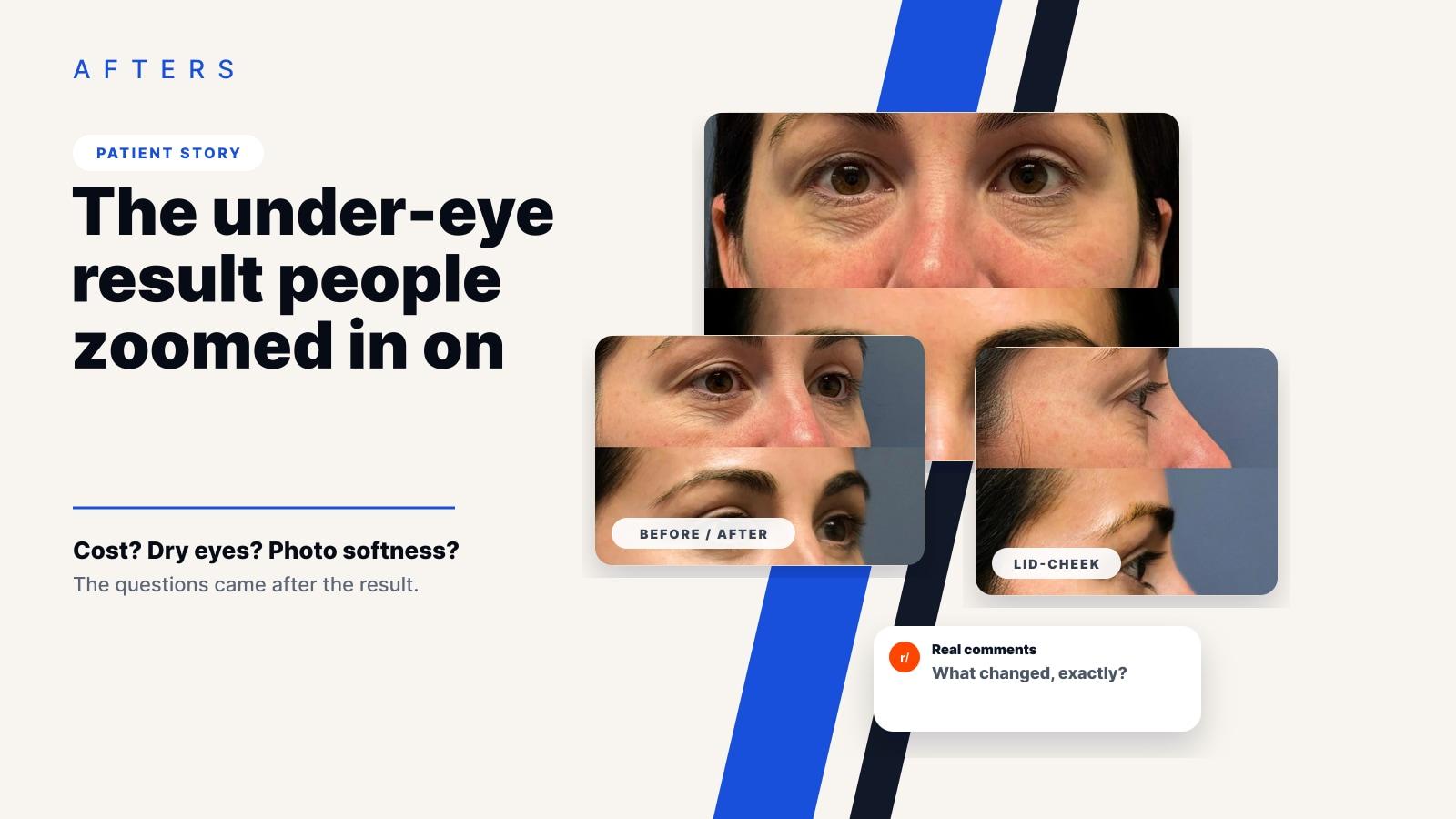
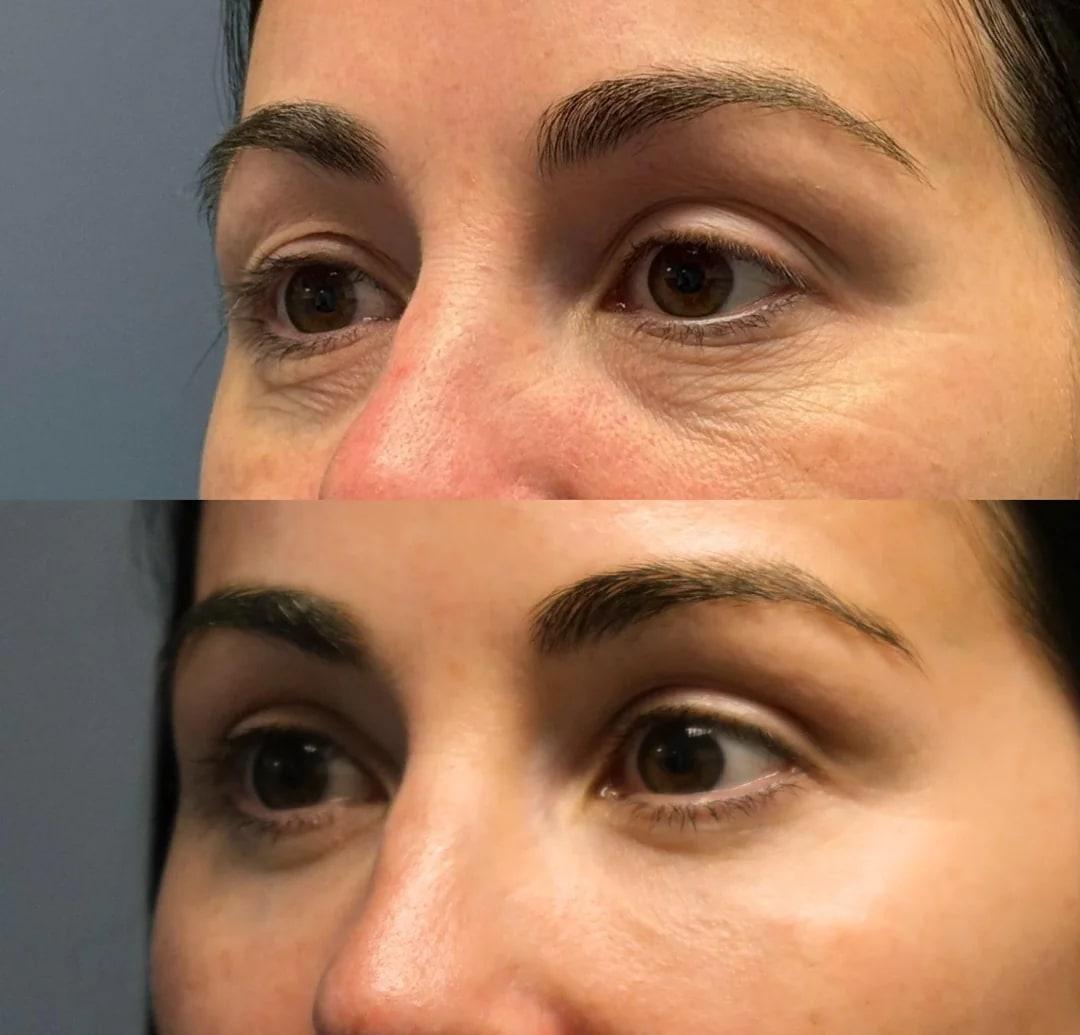
If you’ve ever stared at a gorgeous before-and-after and thought “okay, but is that real, and could that be me?” — this one’s for you. The afters looked bright and rested. Then everyone zoomed in: the cost, the dry eyes, how much of the fat actually survives, whether the photos were a little too smoothed.
Timeline
1.5 months
Fat transfer
About 7cc per side
Lower bleph
Incision hidden inside the lid
Cost shared
$6.5k lower bleph + about $5k fat transfer
Compare real results
Compare eyes that started like yours
A result makes a lot more sense once you can see eyes that started where yours are now — by age, anatomy, and how far along the healing is.
See blepharoplasty results366
score
65
comments
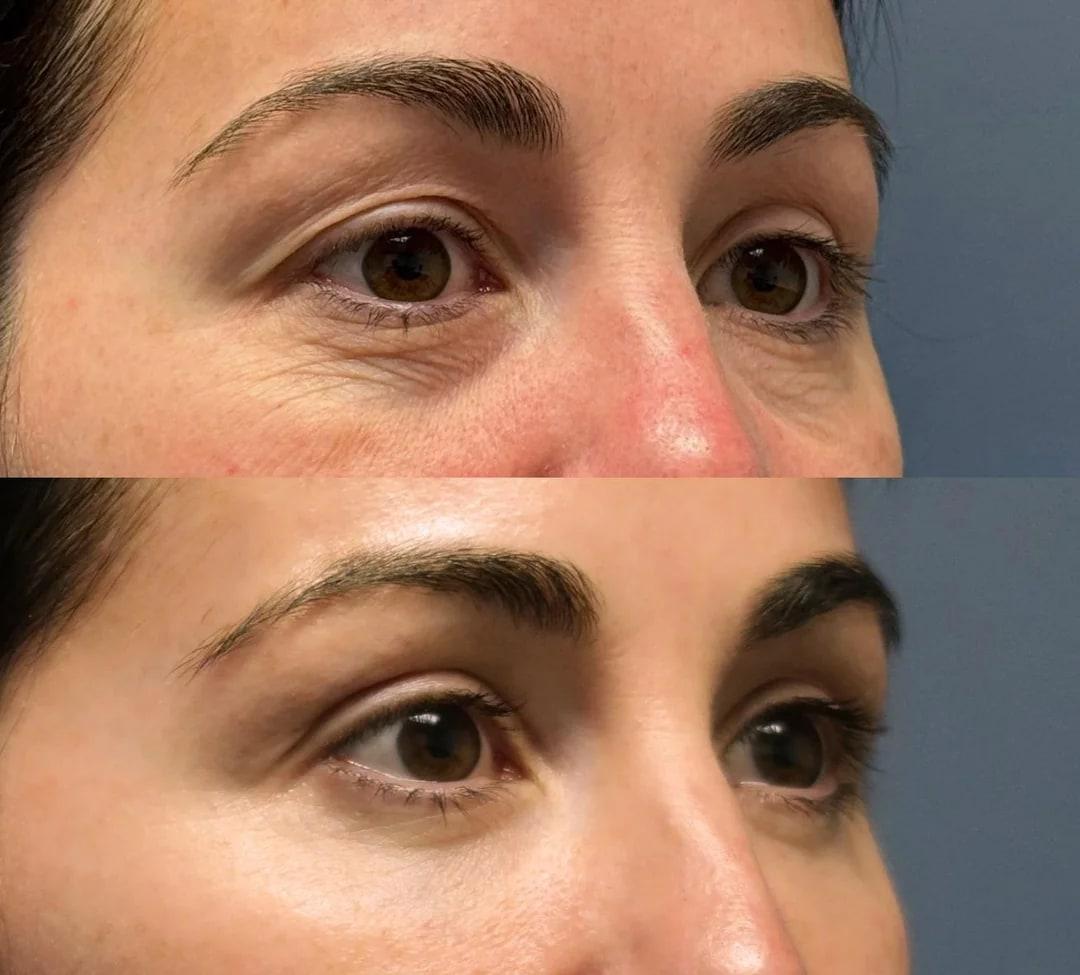
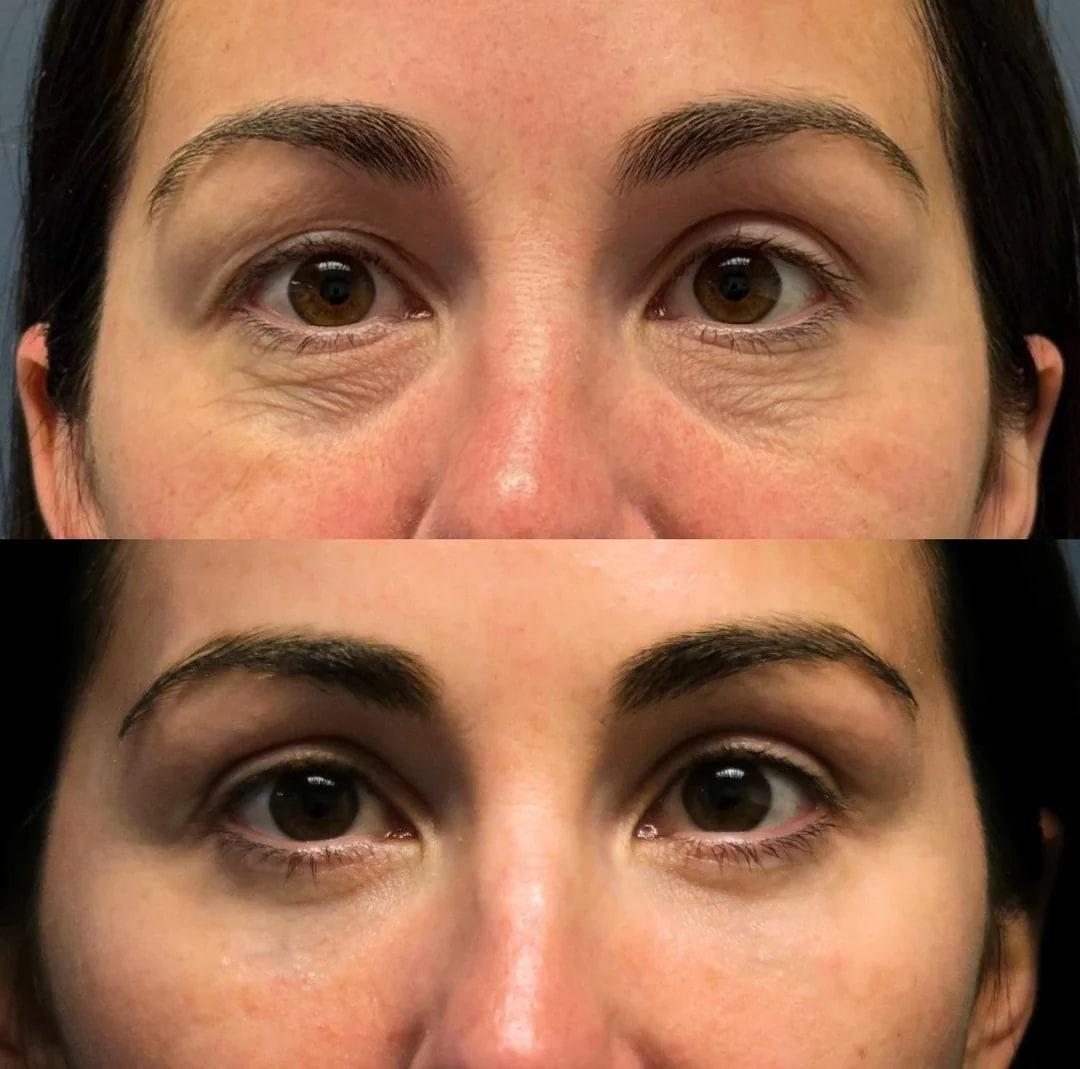
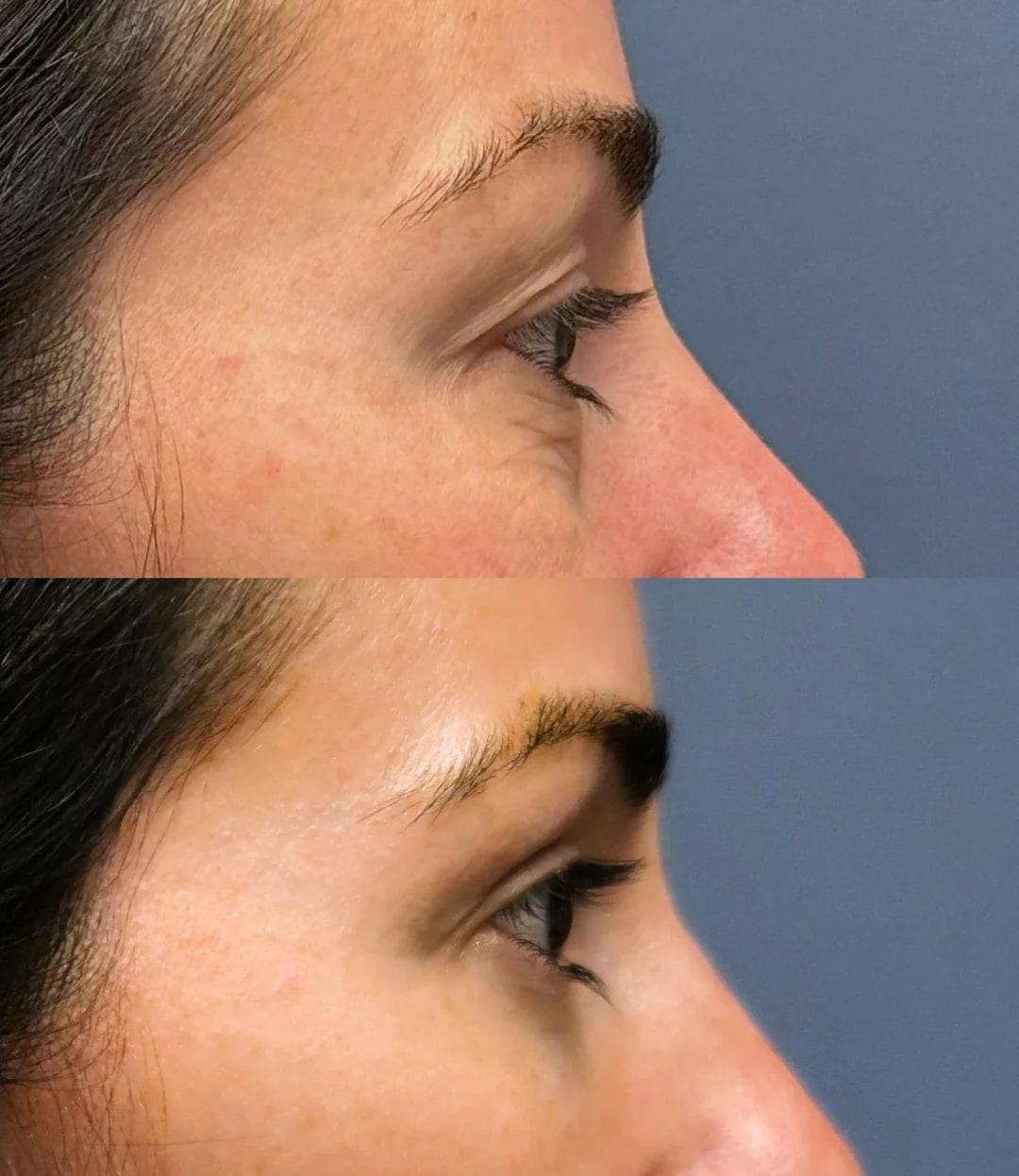
A Denver surgeon shared this result — lower and upper eyelid surgery plus under-eye fat transfer, photographed at about 1.5 months.
Also helpful
Lower bleph and fat transfer at 3 weeks
A patient story about under-eye change, canthoplasty, cost, and surgeon research.
Full-face fat graft at 10 days
A real fat-transfer thread about placement, swelling, retention, and photo comparison.
Browse blepharoplasty results
Compare real eye surgery photos by angle, timeline, and anatomy.
When a result looks this good, the first thing you want to know is: could this happen for me?
And that’s where the comments got good. They moved past “wow” and into the stuff you’d actually want to ask in a consult: where the incision goes, how much fat was placed, what dry eyes change, and whether the photos are honest enough to trust.
The comments are where people got honest.
The first reaction
"Are these average results? Cuz if so sign me up!"
That’s the feeling underneath so much of this searching. You’re not just asking whether it looks good. You’re asking whether your result could land somewhere close.
Photo trust
"The afters look softened a lot and that undermines the value..."
You notice this stuff — everyone does. A beautiful result loses you the second the lighting, skin texture, or smoothing looks too different from the “before.”
The detail everyone wanted
"How much cc per eye?"
Here, the surgeon said about 7cc per side, placed where the lower lid blends into the cheek. That’s the kind of detail that lets you understand the plan instead of guessing from a photo.
The result is pretty. The comments are where you actually learn something.
A polished gallery would show you this exact result and stop there. The comments tell you what the photo can’t: where the incision went, what was taken out, what was added, and what might make someone a bad candidate. That’s the part you can actually use.
The surgeon used a lower transconjunctival blepharoplasty, which just means the lower-lid fat was reached through an incision inside the eyelid — so there’s no external cut under the lashes. Then fat was taken from the lower belly, processed into very fine “microfat,” and tucked into the midface and the spot where the lower lid meets the cheek.
The under-eye bags were treated without any cut on the outside of the lid.
That hollow where the under-eye meets the cheek was filled with the patient’s own fat, not filler.
The upper-lid work was about balance — not changing the shape of her eyes.
A beautiful result still deserves a fair-photo check.
The thread got good because someone was willing to ask the slightly awkward question: are the afters a little softened? That doesn’t mean the result’s fake. It means you’re learning to read before-and-afters with the healthy skepticism they deserve.
When you’re comparing eye results, look at the skin texture, how open the eyes are, the head angle, the makeup, the shadow under the brow, and whether the camera’s the same distance away. Under-eyes are so sensitive to light — one small shift in shadow can make hollowness look dramatically better or worse without anyone touching a scalpel.
Photo reading tip
The before-and-afters you can trust show the same expression, the same angle, the same lighting, and enough real skin texture that you can see exactly what changed.
Dry eyes aren’t a footnote — especially if they’re yours.
Someone in the thread asked whether you can still get an upper-eyelid lift if you have moderate-to-severe dry eyes. Honestly? That’s exactly the kind of question a good surgeon should slow all the way down for.
Take too much upper-lid skin and the eyes can have trouble closing all the way — which, if you already deal with dryness, is a real problem, not a maybe. No article can hand you a clean yes or no here. What you want is a careful exam, a conservative plan, and a surgeon who’ll talk about how your eyes feel before how they look.
The cost talk was blunt — and that’s a gift.
The surgeon actually shared numbers: $6,500 for the lower lids, around $5,000 for the fat transfer, $6,500 for the upper lids. Yours will shift with your city, your surgeon, anesthesia, the facility, and what’s bundled in — but a real number gives you somewhere to start instead of a shrug.
That kind of honesty matters, because eyelid surgery looks simpler from the outside than it is. Your plan might include upper lids, lower lids, fat removal, fat transfer, laser, a canthopexy (a small stitch that supports the outer corner of the eye) — or none of those. The price only means something once the plan is actually yours.
Ask these before you book under-eye surgery
Bring the photo you love. Then bring better questions. You’re not trying to copy her result — you’re trying to understand what your own eyes need.
Would you treat my lower lids through an internal or external incision, and why?
Do I need fat removal, fat repositioning, fat transfer, skin tightening, or a combination?
If you recommend fat transfer, how many cc do you usually place and where?
How do you evaluate dry eyes before upper blepharoplasty?
Can I see results with similar under-eye hollowness, skin tone, and cheek structure?
How do you standardize lighting and skin texture in your before-and-after photos?
What would make you tell me not to do this yet?
ASPS: eyelid surgery overview
A baseline source for what blepharoplasty can address, what it cannot address, and the questions to ask during a surgical consult.
Cleveland Clinic: fat transfer
Useful context for how fat transfer works: fat is removed from one area, prepared, and placed somewhere else to restore or reshape volume.
The questions that usually come next
Is 1.5 months after blepharoplasty the final result?
No. It shows you the direction things are heading, but eyelid swelling, scar softness, and the transferred fat settling can all keep changing for months.
What is a transconjunctival lower blepharoplasty?
It’s a lower-eyelid surgery done through the inside of the lid, so there’s no external scar. It’s useful when the real issue is fat bulging rather than extra skin.
Can fat transfer help under-eye hollowness?
It can, for the right candidate. The whole game is placement — under-eyes and cheeks need tiny, careful amounts, not a one-size-fits-all fill.
Can you get an upper bleph if you have dry eyes?
Sometimes — but your dry eyes need to be on the table before surgery. Over-removing skin can change how your eyes close, so conservative planning and a real eye exam matter.
Compare eyes that started like yours
A result makes a lot more sense once you can see eyes that started where yours are now — by age, anatomy, and how far along the healing is.
See blepharoplasty results