Before veneers: Veneers: Do They Ruin Your Teeth?
 Felipe LeeCo-founder, Afters · Updated October 18, 2026
Veneers cover the front of teeth. ADA says enamel-removing placement is irreversible. Compare porcelain and composite, ask what no-prep means for your teeth, and decide how much original tooth you are willing to change.
- Enamel removal
- Permanent changeADA and ACP education, checked October 2026
- No obligatory full set
- Tooth by toothACP consultation guidance
- Survival is not trouble-free service
- Maintenance matters2021 porcelain review; 3,300 failure-timed veneers
Questions before choosing veneers
Start with the teeth you want to change, then compare preparation, alternatives and ongoing care. Save the questions you want to bring to your dentist.
- What are veneers and what do veneers fix?Veneers are custom-made coverings for the front of existing teeth that can change visible shape or color, according to the American Dental Association’s patient education.
- Are porcelain veneers or composite veneers better?Porcelain veneers and direct composite veneers have different preparation, fabrication and repair trade-offs, according to the American Dental Association, which describes composite as potentially requiring less enamel removal and being easier to repair.
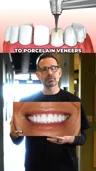 Do veneers ruin your teeth or remove enamel?Veneers that require enamel removal permanently change the original tooth, according to the American Dental Association and American College of Prosthodontists; Cleveland Clinic says enamel already lost cannot regrow.
- Are no-prep veneers really reversible?No-prep veneers are not uniformly defined or reliably reversible by label alone, because Cleveland Clinic groups no-prep with minimal-prep while ACP describes selected porcelain placement without tooth preparation.
- Are removable veneers the same as bonded veneers?Removable veneers are pop-on or snap-on coverings that come off like retainers, rather than individually bonded tooth coverings, according to Cleveland Clinic’s July 2022 education.
 Who should wait before getting veneers?People with tooth decay or gum disease should have those conditions treated before veneers, according to the American Dental Association, which warns that covering unhealthy teeth can worsen existing problems.
- Can you get veneers if you grind your teeth?Grinding, clenching or a deep overbite can make veneers unsuitable, according to the American Dental Association, so the bite needs assessment before choosing a material.
- How many veneers do you need for a full smile?There is no obligatory full-smile veneer count, according to the American College of Prosthodontists, which says veneers may address one tooth’s minor flaw or several teeth and recommends a consultation to decide the number.
 What are the alternatives to veneers?Alternatives to veneers include whitening, localized bonding, orthodontic planning, a crown when whole-tooth coverage is indicated, or leaving a healthy tooth untreated, according to ACP, ADA and the 2025 international consensus on preserving sound tooth structure.
- What happens at veneers appointments?Porcelain veneer appointments usually separate examination and design, preparation with possible temporaries, final fit and bonding, and follow-up, according to ADA and AACD patient education.
- How long do veneers last?Porcelain veneers had an estimated 95.5% ten-year cumulative survival in Alenezi’s 2021 systematic review using 3,300 veneers with failure-timing data, but that is restoration survival rather than the chance a US patient has a trouble-free smile.
 What happens when veneers fail or need replacing?Veneers can chip, crack, wear, loosen or need rebonding, repair or replacement, according to the American Dental Association, and the underlying teeth can still develop cavities.
- What dentist should place veneers?A licensed dentist should place veneers, according to the American Dental Association, and state dental boards set US licensure requirements; cosmetic dentistry is absent from the National Commission’s list of 12 recognized dental specialties.
- What should veneers before and after photos show?Veneers before and after photos are most useful when they show a starting situation like yours with the exact treated teeth, other procedures and follow-up interval identified, according to ACP’s guidance to review similar cases.
- What should you ask before getting veneers?Before getting veneers, ask for a tooth-specific explanation of material, enamel removal, alternatives, design approval and future care, supported by ADA, ACP and AACD consultation guidance.
Understand the treatment
What are veneers and what do veneers fix?
Veneers are custom-made coverings for the front of existing teeth that can change visible shape or color, according to the American Dental Association’s patient education. They differ from crowns, which cover the whole tooth. A veneer can address a visible concern without being the right treatment for an unhealthy or heavily damaged tooth.
Start with the surface and the goal
A covering on the front of an existing tooth. It can change visible shape or color.
A covering around the whole tooth. ADA distinguishes this from a front-surface veneer.
ACP allows a veneer on one tooth with a minor flaw; a complete visible row is not obligatory.
Cleveland Clinic says cosmetic veneers do not necessarily strengthen or repair teeth.
More from the sources
Start by naming the change you want. A small chip, a tooth that looks too narrow, a gap or a stain that does not respond to whitening can lead to different proposals. Cleveland Clinic’s July 2022 veneer page includes stains unresponsive to whitening, but cautions that cosmetic veneers do not necessarily strengthen or repair teeth. The American College of Prosthodontists, or ACP, describes porcelain veneers for relatively intact teeth that are misshapen, discolored or chipped.
Its FAQ allows treatment of one tooth’s minor flaw or several teeth. That makes the condition of each tooth more useful than a package name. A smile makeover can combine treatments, but those additions should be identified separately. A crown on a damaged tooth is not made into a veneer because it appears in the same finished smile.
Ask for an explanation of which tooth surfaces would be covered and what clinical problem, if any, the restoration would address. If your concern is only appearance, say what you want to keep as well as what you want changed. ADA and ACP education checked October 18, 2026 provides definitions rather than a patient cohort or a numerical probability of improvement. A photograph or a material name cannot establish your eligibility.
“Which concern would a veneer address on each proposed tooth, and why is a front covering appropriate there?”
Understand the treatment
Are porcelain veneers or composite veneers better?
Porcelain veneers and direct composite veneers have different preparation, fabrication and repair trade-offs, according to the American Dental Association, which describes composite as potentially requiring less enamel removal and being easier to repair. ADA also describes composite as less resistant to stains and wear. Those differences do not establish one material as the right choice for every mouth.
Separate the material from how it is made
More from the sources
Porcelain is made as a custom shell outside the mouth and bonded after the dentist checks fit and shape. In ADA’s direct-composite workflow, the dentist prepares the tooth, sculpts tooth-colored resin, hardens it with a special light, then smooths and polishes it. Cleveland Clinic says this resin is the same material used for dental bonding. The term bonding is broader than a full facial composite veneer, so ask whether the proposal covers a small edge or most of the front surface. Also ask whether resin is direct or indirect.
Research about resin restorations made outside the mouth does not automatically apply to resin sculpted directly on your teeth. The Journal of Evidence-Based Dental Practice’s 2023 composite review includes seven studies, three randomized trials and four cohorts, with mean follow-up ranging from 24 to 97 months. It reports surface roughness, color mismatch and marginal discoloration among the most reported problems, but supplies no universal repair schedule. Its direct-versus-indirect survival direction also differs from a 2025 narrative review. Those findings cannot settle an individual material choice or lifetime bill.
ADA’s qualitative statement that porcelain tends to cost more belongs beside a written quote for the same teeth and services. The linked cost guide keeps those scopes separate. Consider how much original tooth would change, how a future chip could be managed and what appearance maintenance you are willing to accept.
“Why do you recommend this material and direct or indirect technique for my teeth, including preparation and future repair?”
Understand the commitment
Do veneers ruin your teeth or remove enamel?
Veneers that require enamel removal permanently change the original tooth, according to the American Dental Association and American College of Prosthodontists; Cleveland Clinic says enamel already lost cannot regrow. That is a real commitment, but it does not mean every prepared tooth is ruined. The relevant question is how much healthy structure your particular plan changes and why.
Ask what changes on each tooth
The protective outer covering. Cleveland Clinic says enamel already lost cannot regrow.
The layer beneath enamel. A tooth-specific plan should distinguish retained enamel from exposed dentin.
Added material needs space. ACP describes preparation to avoid an oversized appearance.
AACD’s usually less than a millimeter is education, not a required depth at every point.
More from the sources
ADA describes removing a small amount of enamel from the front and sides for conventional porcelain placement. ACP explains that reduction creates room for porcelain and helps avoid an oversized or bulky tooth. AACD’s patient education, checked October 18, 2026, describes conventional preparation as usually less than a millimeter. This is an educational description, not a required cutting depth for every surface, tooth position or veneer. Existing wear, fillings, discoloration and the proposed final shape can change the discussion.
A 2004 USC-affiliated technique paper describes an additive wax-up or mock-up that accounts for tooth substance already lost. It cautions that cutting from the current surface without considering wear can expose more dentin. That paper describes a technique, not a measured personal risk reduction. The 2013 preparation-classification paper asks clinicians to describe reduction, enamel remaining and dentin exposed rather than relying on a label. Ask the dentist to draw those distinctions for each tooth.
Cleveland Clinic’s October 2025 enamel page distinguishes supporting lightly damaged enamel with fluoride from regrowing enamel already removed. Remaking or taking off a shell cannot undo the preparation beneath it. The 2025 international consensus prioritizes preserving sound tooth structure and considering the least invasive options first. Take that principle into the discussion before giving approval to preparation.
“Can you show the enamel you plan to remove, any expected dentin exposure and the less invasive alternative for each tooth?”
SourcesAmerican Dental AssociationAmerican College of ProsthodontistsAmerican College of ProsthodontistsCompendium of continuing education in dentistry (Jamesburg, N.J. : 1995)Journal of esthetic and restorative dentistry : official publication of the American Academy of Esthetic Dentistry ... [et al.]American Academy of Cosmetic DentistryCleveland ClinicSSRD / SEPES / PROSEC consensus; Journal of Esthetic and Restorative Dentistry@dr_andrewhall
Understand the commitment
Are no-prep veneers really reversible?
No-prep veneers are not uniformly defined or reliably reversible by label alone, because Cleveland Clinic groups no-prep with minimal-prep while ACP describes selected porcelain placement without tooth preparation. Cleveland Clinic’s July 2022 page describes some enamel removal yet calls some approaches reversible. Your dentist needs to explain the actual procedure and removal limitations before you rely on that word.
The same label has different definitions
More from the sources
AACD likewise groups no-prep and minimal-preparation approaches as generally requiring less removal. By contrast, the 2025 no-prep systematic review defines ultrathin ceramics bonded without tooth reduction. It includes four studies, 126 patients and 612 veneers with follow-up from two to nine years. Its reported mean survival comparison does not establish a common follow-up, a controlled US advantage or damage-free removal in your mouth.
The terminology difference should stay visible rather than being flattened into a promise that no-prep means no drilling. ACP identifies Lumineers as a commercial porcelain brand and also says traditional porcelain can be placed without preparation when the dental situation permits. A brand therefore does not answer whether your dentist will reduce, reshape or otherwise alter a tooth. Ask what is proposed before bonding and what would be needed if you later wanted the material removed.
Andrew Hall’s selected explanation treats bonded porcelain as an ongoing commitment even when no tooth reduction is planned; that is his clinical opinion about removal risk, not a study proving all no-prep treatment has identical consequences. Adding material also changes the final contour. Have the dentist explain how the intended shape fits your starting tooth rather than equating less preparation with a better appearance in every case.
“In your no-prep plan, exactly what changes before bonding and what could prevent returning to my original teeth afterward?”
Understand the commitment
Are removable veneers the same as bonded veneers?
Removable veneers are pop-on or snap-on coverings that come off like retainers, rather than individually bonded tooth coverings, according to Cleveland Clinic’s July 2022 education. The same page says they may interfere with eating or speech and that research is limited. They should not be assigned porcelain veneer survival statistics.
A removable cover is a different commitment
Cleveland Clinic describes pop-on or snap-on coverings removed like retainers, rather than a shell permanently bonded to each tooth.
Cleveland Clinic says removable veneers may make eating difficult and negatively affect speech.
The same 2022 page says research is limited. No reliable long-term complication rate is supplied.
ADA calls for a licensed dentist. A private veneer course is not evidence of state-authorized dental practice.
More from the sources
ACP describes Snap on Smile as an appliance worn over teeth to give the appearance of a straighter, whiter smile. That describes a different product category and commitment from a porcelain shell or resin bonded to a tooth. Ask which type of appliance is actually being discussed, how it is fitted and how the teeth underneath will be examined and cleaned. Cleveland Clinic supplies no reliable long-term removable-appliance complication rate, so a numerical safety comparison with bonded veneers would be misleading.
A removable cover also does not establish that existing decay, gum disease or a bite concern has been treated. If a seller uses the same word veneer for a removable product and a permanently attached restoration, have the distinction put in writing before comparing offers. ADA says veneer placement should be performed by a licensed dentist and warns that unlicensed services can involve infection, nerve damage or missed unhealthy teeth. Its practice-scope statement says state dental practice acts define what dentists and other dental personnel can do.
A course certificate or a social-media title does not establish that authority. The sources checked October 18, 2026 are professional education and regulatory statements, not a cohort measuring how often a removable product causes harm. They support checking the product and provider, without endorsing a particular brand.
“Is this a removable appliance or a bonded restoration, and who will examine the teeth and supervise its fit and care?”
Check candidacy first
Who should wait before getting veneers?
People with tooth decay or gum disease should have those conditions treated before veneers, according to the American Dental Association, which warns that covering unhealthy teeth can worsen existing problems. Cleveland Clinic also limits the cosmetic option to people without extensive cavities or gum disease. Appearance alone cannot establish that a tooth is ready.
Reasons to examine and treat before covering
ADA says treat it first. A veneer does not stop cavities beneath or around the restoration.
ADA says it can exist without warning signs. An attractive smile does not establish healthy supporting tissues.
Bring records of fillings, crowns, root canals and prior veneers so the dentist can assess each tooth.
ADA advises fluoride toothpaste twice daily and daily cleaning between teeth; ask for a plan you can maintain.
More from the sources
A consultation should examine both the proposed teeth and their supporting tissues. ACP says X-rays or impressions may be needed; Cleveland Clinic describes examining teeth and gums to determine eligibility. Bring information about existing restorations and previous dental treatment so the dentist can explain what is being covered. ADA says gum disease can exist without warning signs, making the absence of bleeding or pain an unreliable substitute for examination. Its patient education lists bleeding, recession, loose teeth and bite changes as possible periodontal signs, not as a veneer-specific diagnosis.
Sensitivity also has several possible causes, including decay, fractures, worn fillings, gum disease, worn enamel and exposed roots. ADA says treatment depends on the cause. If you already have symptoms, have them evaluated rather than assuming a new cosmetic covering will fix them. After placement, cavities can still occur under or around veneers. ADA’s home-care guidance calls for fluoride toothpaste twice daily and daily cleaning between teeth.
Those frequencies are education, not a measured promise that failure can be prevented. Ask whether you can realistically maintain the proposed contours and attend follow-up. The sources checked October 18, 2026 supply no universal waiting period after treating decay or gums. Your dentist should explain what needs to improve and how readiness will be reassessed.
“What decay, gum or existing-tooth problems need treatment first, and how will you confirm that I am ready for veneers?”
Check candidacy first
Can you get veneers if you grind your teeth?
Grinding, clenching or a deep overbite can make veneers unsuitable, according to the American Dental Association, so the bite needs assessment before choosing a material. ACP discusses porcelain as an option for some people who grind while also warning about cracking and describing a bite guard. Neither statement clears every grinder for veneers.
Grinding deserves a separate decision
More from the sources
Tell the dentist about clenching, worn teeth, jaw symptoms and any guard you already use. ADA notes that many people are unaware they grind, so a negative self-report cannot by itself settle the assessment. A sports mouthguard and a night guard serve different purposes in ADA education. Ask which appliance, if any, the dentist is proposing and why. The 2018 bruxism systematic review includes eight studies overall, with five meta-analyzed across ceramic-restoration types.
Its evidence was graded very low because methods and clinical settings varied. The anterior-veneer subgroup showed an association with failure, but the abstract does not provide the veneer-specific denominator needed to translate that into a personal risk. The broader all-ceramic-restoration finding also differed from the veneer subgroup. Neither result justifies saying grinding is harmless or assigning you a fixed multiple of risk. The 2025 SSRD/SEPES/PROSEC international consensus recommends recall and occlusal splints for patients with parafunctional habits.
It supplies no universal recall schedule or quantified causal reduction in failure from a splint. ACP also makes the home-care plan individual and conditional on the prosthodontist’s recommendation. A proposed guard should therefore be part of a candid conversation about remaining limitations, rather than a reason to skip the candidacy question. If the dentist recommends waiting or a different treatment, ask what finding drives that advice.
“How does my bite or grinding change candidacy, preparation and protection, and what risk would remain even with your proposed guard?”
Choose the smallest useful scope
How many veneers do you need for a full smile?
There is no obligatory full-smile veneer count, according to the American College of Prosthodontists, which says veneers may address one tooth’s minor flaw or several teeth and recommends a consultation to decide the number. The 4, 6, 8 and 10 upper-tooth drawings are planning examples. They are not package minimums or evidence that every visible tooth needs treatment.
Use the smile zone as a discussion, not a package minimum
A central planning example in the drawing. Ask what happens to the visible teeth beside them.
A wider example, not proof that every canine needs a restoration.
Includes more side teeth. ACP mentions possible gum or jaw soreness with eight or more, without a measured rate.
A broader visible row. Ask why each additional tooth needs a veneer rather than accepting a set count.
More from the sources
Ask the dentist to identify each proposed tooth and the reason to include it. Color matching, the shape of neighboring teeth and what shows in your own smile belong in that explanation. ACP expresses an aesthetic preference for even numbers and lists two, four, eight, ten or twelve. That preference is not a clinical rule against treating one tooth or proof that more teeth produce a better result.
If the concern is a small chip or a narrow tooth, compare a limited plan with a broader one rather than allowing a set name to determine the scope. Also distinguish upper from lower teeth and veneer from crown. A full-mouth proposal may mix restoration types and cannot be interpreted as a uniform veneer plan. ACP notes possible gum and jaw soreness when eight or more veneers are placed, but gives no measured incidence or duration; the count does not predict how you will feel.
The same FAQ discusses coordinating natural-tooth whitening with veneer shade choice and notes that gum contouring can be an additional treatment. Those choices should be identified before comparing plans or recovery expectations. All these ACP statements were checked October 18, 2026 and come from education rather than a study assigning patients to tooth counts. The drawing helps make the conversation concrete while leaving necessity to the tooth-specific examination.
“Why does each proposed tooth need a veneer, and what would a smaller plan leave visibly or functionally different?”
Choose the smallest useful scope
What are the alternatives to veneers?
Alternatives to veneers include whitening, localized bonding, orthodontic planning, a crown when whole-tooth coverage is indicated, or leaving a healthy tooth untreated, according to ACP, ADA and the 2025 international consensus on preserving sound tooth structure. These options solve different problems. Compare them in a smile makeover consultation rather than treating them as interchangeable cosmetic packages.
Match the change to the treatment
More from the sources
ACP describes whitening as lightening enamel and dentin after examination and diagnosis. It describes cosmetic bonding as potentially appropriate for minor changes when teeth function properly. Cleveland Clinic’s January 2026 bonding education says bonding can change shape, size or color and typically does not require enamel removal. That qualified description of general bonding does not prove every direct composite veneer involves no preparation. ADA distinguishes a veneer on the front from a crown covering the whole tooth, so a structurally compromised tooth needs its own explanation rather than an appearance-only comparison.
Tooth position is another planning issue. In the selected video, Dani Benyaminy explains why he may recommend aligners before veneers when crowding would otherwise require removing more natural structure. This is his clinical preference, not a rule that every person needs Invisalign or a comparative trial establishing one sequence. The 2025 SSRD/SEPES/PROSEC consensus supports considering less invasive options and prioritizing preservation of sound structure; it is expert consensus rather than a new patient cohort. Ask the dentist to compare the outcome you care about, including what each approach cannot change.
A smaller treatment can leave some original color or shape, and accepting that limitation may matter to you. The linked smile makeover guide handles broader combinations. There is no validated lifetime savings model here that makes one option automatically the least expensive over your future life.
“Could whitening, limited bonding, orthodontics or no treatment meet my goal with less tooth change, and what would each leave unresolved?”
SourcesAmerican Dental AssociationCleveland ClinicAmerican College of ProsthodontistsAmerican College of ProsthodontistsAmerican College of ProsthodontistsAmerican College of ProsthodontistsCleveland ClinicJournal of esthetic and restorative dentistry : official publication of the American Academy of Esthetic Dentistry ... [et al.]SSRD / SEPES / PROSEC consensus; Journal of Esthetic and Restorative Dentistry@drdanib
Plan before preparation
What happens at veneers appointments?
Porcelain veneer appointments usually separate examination and design, preparation with possible temporaries, final fit and bonding, and follow-up, according to ADA and AACD patient education. Direct composite follows a different sculpt-and-cure workflow. Ask which decisions happen before irreversible preparation and which changes remain possible before bonding.
Know the decisions at each visit
Examination, proposed teeth and design discussion. AACD describes a diagnostic mock-up as a planning aid.
Porcelain may involve enamel reduction, an impression or scan, and temporary veneers while the lab works.
ADA describes checking fit and shape and making adjustments before bonding. Discuss concerns before this step.
AACD describes a one-week follow-up. Your dentist should supply the actual appointment and contact plan.
More from the sources
ACP says consultation may involve X-rays or impressions. AACD describes a diagnostic mock-up to try a proposed design, while ACP describes a digitally edited facial photograph as another possible preview. Neither predicts the final result with certainty. Ask whether the preview is an image, a removable trial, temporary teeth or the final material being tried in. ADA describes an impression or scan for porcelain and says temporaries may be used while the laboratory makes the final veneers.
Cleveland Clinic’s July 2022 page says laboratory work can take a few weeks; AACD’s undated page, checked October 18, 2026, says to expect at least a week. Those are fabrication expectations, not measured healing intervals or a promise that a particular event deadline can be met. ADA describes checking fit and shape, making adjustments, then cleaning and bonding. Raise shape, shade and comfort concerns at the relevant visit rather than assuming a later remake is included. Cleveland Clinic says the dentist checks the bite after bonding, and ADA says to report a bite that feels wrong for correction.
AACD describes a one-week follow-up to assess the mouth’s response, but your dentist sets the actual schedule. ACP distinguishes small cases from larger ones that may involve gum or jaw soreness. Ask separately about any gum procedure and its recovery, because a veneer-only description cannot explain every combined treatment.
“When will I approve shape and shade, what can change before bonding, and what are my actual temporary and follow-up arrangements?”
Consider the later years
How long do veneers last?
Porcelain veneers had an estimated 95.5% ten-year cumulative survival in Alenezi’s 2021 systematic review using 3,300 veneers with failure-timing data, but that is restoration survival rather than the chance a US patient has a trouble-free smile. The broader review contained 6,500 veneers in 1,646 patients across 25 studies. Composite and removable veneers cannot inherit that porcelain estimate.
Read each lifespan estimate with its denominator
More from the sources
The studies involved mixed countries, settings and ages, including some minors. Survival can allow maintenance or problems that do not cause absolute failure, and the review explicitly excluded composite laminate studies. Its full text also describes inconsistent failure definitions. That is why a veneer staying in place is not the same as no treatment needed or satisfaction with appearance. Klein’s 2025 material review includes 29 studies overall and a long-term subgroup of 1,688 ceramic veneers at mean 10.4 years.
It found no statistically significant long-term survival difference between ceramic materials, while shorter-term subgroup findings differed. These indirect comparisons do not prove equivalent outcomes or identify a universal material winner. The Journal of Evidence-Based Dental Practice’s 2023 composite review pooled randomized-trial survival at 88%, with a 95% confidence interval of 81% to 94%, across mean follow-up from 24 to 97 months. Its abstract does not supply a restoration denominator, and the estimate is not a fixed ten-year direct-composite rate. General educational intervals also differ.
ACP gives approximately five to ten years, Cleveland Clinic’s veneer page ten to fifteen, and its bonding page ten to twenty for porcelain. These are guidance descriptions, not individual expiry dates or matched material comparisons. Do not average them or plan mandatory replacement on an anniversary. Ask about the proposed restoration, maintenance and later examples while leaving the focused lifespan guide to examine the studies in depth.
“What does your long-term evidence count as survival, repair and failure for the material and preparation you propose?”
SourcesCleveland ClinicAmerican College of ProsthodontistsCleveland ClinicJournal of esthetic and restorative dentistry : official publication of the American Academy of Esthetic Dentistry ... [et al.]The journal of evidence-based dental practiceThe International journal of prosthodonticsJournal of clinical medicineJournal of clinical medicineEuropean journal of dentistryJournal of esthetic and restorative dentistry : official publication of the American Academy of Esthetic Dentistry ... [et al.]
Consider the later years
What happens when veneers fail or need replacing?
Veneers can chip, crack, wear, loosen or need rebonding, repair or replacement, according to the American Dental Association, and the underlying teeth can still develop cavities. A restoration remaining in place can still need treatment. Repair, complete replacement and treatment of the tooth underneath are separate possibilities to discuss before committing.
Still present can still mean problems
Panayong recall study, online 2024 / issue 2025
- Veneers aged nine to ten years at recall
- 185 of all 233 restorations, not 185 patients or only surviving veneers
- Inception cohort, loss to recall and treatment setting/country not established in abstract; authors have Thai affiliations
- No percentage dissatisfied, US risk estimate or universal replacement deadline
More from the sources
Panayong’s recall study, published online in 2024 and in a 2025 issue, assessed 233 ceramic veneers aged nine to ten years in 30 patients. It classified 23 as successful, 185 as surviving with complications and 25 as failures. The 185 uses all 233 veneers as its denominator, not patients or only surviving veneers. The abstract does not establish the inception cohort, loss to recall or treatment country and setting; the authors have Thai affiliations. It cannot supply a US complication or regret probability.
It does illustrate why high survival alone does not answer questions about function, cleaning or further treatment. ACP says a cracked veneer can be difficult to repair without replacement and that gum recession can expose roots, prompting some people to seek new veneers. Those are possibilities, not a fixed schedule. Ask who assesses a problem and which practice, laboratory and appointment charges could apply. The cost guide keeps posted replacement charges separate from initial veneer prices; this guide does not invent a lifetime replacement budget.
ACP advises saving a detached veneer, avoiding household glue and calling the prosthodontist’s office. Cleveland Clinic says to call the dentist right away if something about existing veneers does not feel right. Get that contact route before treatment. ACP’s general-restoration guidance recommends lifelong recall and clinical examinations at least every six months, while individual schedules and the early placement check address different phases of care.
“Who will assess a loose or damaged veneer, and who pays for repair, laboratory work, replacement and any underlying tooth treatment?”
SourcesAmerican Dental AssociationCleveland ClinicAmerican College of ProsthodontistsAmerican College of ProsthodontistsThe Journal of prosthetic dentistryAmerican Academy of Cosmetic DentistryJournal of esthetic and restorative dentistry : official publication of the American Academy of Esthetic Dentistry ... [et al.]Journal of clinical medicineJournal of Esthetic and Restorative Dentistry / Panayong et al.VNHV-132
Choose and verify the clinician
What dentist should place veneers?
A licensed dentist should place veneers, according to the American Dental Association, and state dental boards set US licensure requirements; cosmetic dentistry is absent from the National Commission’s list of 12 recognized dental specialties. AACD accreditation is a separate examination credential. Neither a cosmetic title nor an AACD membership alone establishes that credential or ranks a dentist.
Verify distinct claims separately
More from the sources
Check the clinician’s full name and license number with the board in the state where treatment will happen. ADA distinguishes licensure from practice-scope rules, which state dental practice acts define for dentists and other personnel. A private veneer-tech course certificate cannot establish that someone is authorized to perform dental work. Official state lookup routes include California, Colorado, Florida, New York and Utah. Records have their own currency limits.
Utah’s saved lookup stated current as of October 14, 2026 even though the researcher accessed it later; check again when booking. For specialty training, ACP describes a prosthodontist as a dentist with dental school plus at least three additional years in a CODA-accredited prosthodontic graduate program. ACP also acknowledges that other dentists can perform some of these treatments. American Board of Prosthodontics certification is a separate examination claim. AACD’s July 2026 protocol describes a written examination, clinical case submissions and oral examination.
Its accreditation overview includes required courses before case submission and says successful oral examination completes accreditation for a dentist or laboratory technician. Membership and being in process are not the same as completion. AACD says most member categories can appear in its consumer directory, so a listing alone does not prove accreditation. Ask about the dentist’s relevant veneer experience, who makes the restorations and who handles follow-up. Credentials help you verify stated training and authority; these sources do not establish a ranking or a provider-specific outcome comparison.
“Where can I verify your state license and exact claimed credentials, and who will plan, place and maintain my veneers?”
SourcesAmerican Dental AssociationAmerican College of ProsthodontistsNational Commission on Recognition of Dental Specialties and Certifying BoardsAmerican Dental AssociationAmerican Dental AssociationAmerican Dental AssociationAmerican College of ProsthodontistsAmerican Academy of Cosmetic DentistryAmerican Academy of Cosmetic DentistryAmerican Academy of Cosmetic DentistryNew York State Education DepartmentFlorida Board of DentistryColorado Division of Professions and OccupationsDental Board of CaliforniaUtah Division of Professional LicensingUtah Division of Professional Licensing
Choose and verify the clinician
What should veneers before and after photos show?
Veneers before and after photos are most useful when they show a starting situation like yours with the exact treated teeth, other procedures and follow-up interval identified, according to ACP’s guidance to review similar cases. Browse Afters’ veneers gallery at /photos/veneers, then ask the treating dentist about comparable cases. A selected photograph cannot predict your result or reveal every functional problem.
Keep the photograph attached to the treatment
More from the sources
Ask whether the image shows a simulation, mock-up, temporary restorations or bonded final veneers. ACP describes edited facial photographs as possible previews; AACD describes a diagnostic mock-up and cautions that results vary and images may contain models. That distinction matters when an appealing picture is used to discuss a plan. A 2025 digital-smile-design review reported seven mixed-treatment studies and did not pool patient-centered outcomes because methods and treatments differed.
Its reporting also included a case report despite stating case reports were excluded. It cannot establish a universal veneer satisfaction rate or prove that a digital preview will match the final restoration. When viewing actual cases, ask what else changed, such as whitening, orthodontics, crowns or gum contouring, rather than assigning the whole difference to veneers. Ask about later follow-up and intervening repairs as well as an early smile reveal.
Comfort, food impaction, cleaning and bite cannot be established from a still image. Klein’s 2025 review specifically calls for patient- and clinician-reported outcomes alongside survival and complications, because these answer different questions. Use the worksheet to identify your preferred shape and shade and what you want to preserve. If an example feels unlike your own smile, ask the dentist to explain the limitation rather than treating a visually striking transformation as a target you must adopt.
“Can you show comparable actual cases with every treatment and photo date identified, and explain what the images cannot tell me?”
Your consultation
What should you ask before getting veneers?
Before getting veneers, ask for a tooth-specific explanation of material, enamel removal, alternatives, design approval and future care, supported by ADA, ACP and AACD consultation guidance. Put the proposed teeth and restoration types beside the written quote. Preparation can be permanent even when the restoration will eventually need maintenance or replacement.
Take a tooth-specific plan home
More from the sources
Bring your main concern, existing dental records and any questions about grinding or your bite. Ask which conditions need treatment first, what additional investigations are needed and why each proposed tooth belongs in the plan. Ask to compare the limited option with the broader smile makeover proposal and to discuss leaving healthy teeth alone. Record how you will evaluate shape and shade before bonding, what the mock-up represents and what happens if the finals differ from the preview. Have the practice identify the dentist, laboratory and follow-up responsibilities rather than relying on a reassuring label.
For money, ask what the written quote includes for temporaries, adjustments and possible remakes; the cost guide carries the material-specific posted-price comparisons. Do not assume cosmetic veneers qualify for dental benefits. PEHP’s Utah Fixed Prosthodontics policy effective January 1, 2026 excludes dentistry for solely cosmetic reasons, including veneers. Its possible restorative pathway requires that less expensive direct restoration cannot adequately address the defect and has records and preauthorization requirements. Those terms are specific to that policy, not all dental plans, and predetermination does not establish payment.
Policy text is not a coverage guarantee. Ask your own plan about your exact proposed treatment before relying on reimbursement. Finally, keep the office’s urgent contact route and maintenance plan. The education checked October 18, 2026 does not establish your personal candidacy, future bill or satisfaction probability; a clear written plan lets you decide with those uncertainties visible.
“Can I take home the tooth-by-tooth plan, alternatives, approval steps, full quote and responsibility for follow-up and future treatment?”
Your veneer questions
Keep the questions that matter to your teeth and your decision.
Nothing saved yet. Tap Save to my list under any question.
Start with a short intake, pick your top 3 practices, and get Interactive Quotes back.
Near you
Practices that publish dental veneers results, and dental veneers pages for the cities and states Afters covers.
Make the preparation decision concrete
Bring your goals, dental history and saved questions. Ask for the tooth-specific plan before approving irreversible work.
Sources and what they can tell you
This guide draws on dental society education and published research checked October 18, 2026. Society education explains treatment; systematic reviews describe restoration outcomes in their original populations. Neither establishes personal candidacy.
Patient questions shape the outline
Preparation, preview approval, tooth counts, provider checks and future repairs reflect paraphrased patient questions. Incomplete discussions and selected practice accounts cannot supply representative regret or satisfaction rates.
Keep denominators attached
The 2021 porcelain review’s ten-year estimate uses 3,300 failure-timed veneers, within 6,500 restorations in 1,646 patients overall. Composite follow-up, recalled samples and educational lifespan descriptions stay separate.
Definitions can disagree
Cleveland Clinic groups no-prep with minimal-prep; ACP and the no-prep review describe selected unreduced teeth. The actual preparation and removal plan matters more than a label.
Video explanations have limits
Dentists’ comments are attributed explanations and preferences. They do not establish material rankings, lifetime value or a personal risk estimate. Available videos retain their creator credits and original links.
No individual dentist is ranked. State licensure, recognized specialty, board certification and AACD accreditation are separate checks. Broader treatment combinations belong in the linked smile makeover guide.
Sources
- VeneersAmerican Dental Association · Accessed Oct 17, 2026
- Veneers: What Are Dental Veneers? Cost, Procedure & AdvantagesCleveland Clinic · 2022
- How to Improve Your Oral Health FAQs | American College of Prosthodontists American College of Prosthodontists · Accessed Oct 17, 2026
- Veneers | American College of Prosthodontists American College of Prosthodontists · Accessed Oct 17, 2026
- Frequently Asked Questions about Dental Veneers | American College of Prosthodontists American College of Prosthodontists · Accessed Oct 17, 2026
- SURVIVAL AND COMPLICATION RATES OF RESIN COMPOSITE LAMINATE VENEERS: A SYSTEMATIC REVIEW AND META-ANALYSIS.The journal of evidence-based dental practice · 2023
- A Narrative Review on the Survival and Success Rates of Dental Veneers in Contemporary Dentistry.The European journal of prosthodontics and restorative dentistry · 2025
- Establishing a classification system and criteria for veneer preparations.Compendium of continuing education in dentistry (Jamesburg, N.J. : 1995) · 2013
- Novel porcelain laminate preparation approach driven by a diagnostic mock-up.Journal of esthetic and restorative dentistry : official publication of the American Academy of Esthetic Dentistry ... [et al.] · 2004
- Porcelain Veneers | Dental Veneers | Cosmetic DentistryAmerican Academy of Cosmetic Dentistry · Accessed Oct 17, 2026
- Tooth Enamel: What It Is, Function & CareCleveland Clinic · 2025
- Survival and Complication Rates of Ceramic Partial Coverage Restorations (PCRs) and Ceramic Laminate Veneers Made of Different Types of Ceramics. Consensus Statement From SSRD, SEPES, and PROSEC Conference on Minimally Invasive RestorationsSSRD / SEPES / PROSEC consensus; Journal of Esthetic and Restorative Dentistry · 2025
- Veneers candidacy: @dr_andrewhallTikTok · @dr_andrewhall · Dec 26, 2023
- Clinical Outcomes of No-prep Veneers and Conventional Veneers: A Systematic Review.The journal of contemporary dental practice · 2025
- Statement on Recent Reports of "Veneer Technicians" | American Dental AssociationAmerican Dental Association · 2024
- Sensitive Teeth - Heat and Cold SensitivityAmerican Dental Association · Accessed Oct 17, 2026
- Gum Disease - Periodontal DiseaseAmerican Dental Association · Accessed Oct 17, 2026
- Tooth DecayAmerican Dental Association · Accessed Oct 17, 2026
- Veneers candidacy: @dr_andrewhallTikTok · @dr_andrewhall · May 11, 2026
- Frequently Asked Questions about Caring for Restored Teeth - Caring for Restored Teeth | American College of Prosthodontists American College of Prosthodontists · Accessed Oct 17, 2026
- Teeth GrindingAmerican Dental Association · Accessed Oct 17, 2026
- Association of sleep bruxism with ceramic restoration failure: A systematic review and meta-analysis.The Journal of prosthetic dentistry · 2018
- Bonding | American College of Prosthodontists American College of Prosthodontists · Accessed Oct 17, 2026
- What is Dental Bonding & What To ExpectCleveland Clinic · 2026
- Porcelain veneer restorations: a clinician’s opinion about a disturbing trend.Journal of esthetic and restorative dentistry : official publication of the American Academy of Esthetic Dentistry ... [et al.] · 2001
- Veneers candidacy: @drdanibTikTok · @drdanib · May 29, 2025
- Survival and Complication Rates of Feldspathic, Leucite-Reinforced, Lithium Disilicate and Zirconia Ceramic Laminate Veneers: A Systematic Review and Meta-Analysis.Journal of esthetic and restorative dentistry : official publication of the American Academy of Esthetic Dentistry ... [et al.] · 2025
- Main Clinical Outcomes of Feldspathic Porcelain and Glass-Ceramic Laminate Veneers: A Systematic Review and Meta-Analysis of Survival and Complication Rates.The International journal of prosthodontics · 2016
- Long-Term Survival and Complication Rates of Porcelain Laminate Veneers in Clinical Studies: A Systematic Review.Journal of clinical medicine · 2021
- Long-Term Survival and Complication Rates of Porcelain Laminate Veneers in Clinical Studies: A Systematic Review - PMC Journal of clinical medicine · 2021
- Survival Rates for Porcelain Laminate Veneers: A Systematic Review.European journal of dentistry · 2021
- Survival and Complication Rates of Feldspathic, Leucite‐Reinforced, Lithium Disilicate and Zirconia Ceramic Laminate Veneers: A Systematic Review and Meta‐Analysis - PMC Journal of esthetic and restorative dentistry : official publication of the American Academy of Esthetic Dentistry ... [et al.] · 2025
- Clinical survival and complication rate of ceramic veneers bonded to different substrates: A systematic review and meta-analysis.The Journal of prosthetic dentistry · 2025
- Long-Term Outcomes of Ceramic Veneers Restorations: A Comprehensive Analysis of Clinical and Patient-Reported Metrics.Journal of Esthetic and Restorative Dentistry / Panayong et al. · Accessed Oct 18, 2026
- Veneers candidacy: Arthur Glosman, Beverly Hills Cosmetic DentistYouTube/Arthur Glosman, Beverly Hills Cosmetic Dentist · 2022
- Recognized Dental SpecialtiesNational Commission on Recognition of Dental Specialties and Certifying Boards · Accessed Oct 17, 2026
- Veracity | American Dental AssociationAmerican Dental Association · Accessed Oct 17, 2026
- Licensure Overview | American Dental AssociationAmerican Dental Association · Accessed Oct 17, 2026
- Why See a Prosthodontist? | American College of Prosthodontists American College of Prosthodontists · Accessed Oct 17, 2026
- AACD | Accreditation ProcessAmerican Academy of Cosmetic Dentistry · Accessed Oct 17, 2026
- AACD | Membership American Academy of Cosmetic Dentistry · Accessed Oct 17, 2026
- Microsoft Word - Dentist Protocol July 2026American Academy of Cosmetic Dentistry · Accessed Oct 17, 2026
- Online Registration Renewal | Office of the ProfessionsNew York State Education Department · Accessed Oct 17, 2026
- Homepage - Florida Board of DentistryFlorida Board of Dentistry · Accessed Oct 17, 2026
- Colorado Dental Homepage | Divisions of Professions and OccupationsColorado Division of Professions and Occupations · Accessed Oct 17, 2026
- Information for Consumers - Dental Board of CaliforniaDental Board of California · Accessed Oct 17, 2026
- Dentistry - commerce.utah.govUtah Division of Professional Licensing · Accessed Oct 17, 2026
- Search | License Lookup VerificationUtah Division of Professional Licensing · Accessed Oct 17, 2026
- Digital Smile Design and Patient-Centered Outcomes in Esthetic Restorative Dentistry: A Systematic ReviewCureus / Alwabel et al. · 2025
- DENTAL CLINICAL POLICY AND PROCEDURESPEHP · Accessed Oct 17, 2026
- PREAUTHORIZATION for SINGLE-TOOTH PROSTHODONTIC RESTORATIONPEHP · Accessed Oct 17, 2026
- Pehp - Dental PreauthorizationPEHP · Accessed Oct 17, 2026