Laser resurfacing recovery: How long is laser resurfacing recovery?
 Felipe LeeCo-founder, Afters · Updated October 18, 2026
Laser resurfacing recovery ranges from possible hours of nonablative swelling to at least a month for full ablative recovery, according to Mayo Clinic’s October 2024 patient guidance; MSK’s August 2025 fractionated CO2 instructions put skin healing at 1–2 weeks.
- Ablative new skin
- 7–10 daysMayo, October 2024; full recovery at least a month
- Fractionated CO2 healing
- 1–2 weeksMSK, August 2025; institutional instructions
- Fraxel Dual pinkness
- 2–5 daysOHSU, undated; no measured cohort denominator
Your laser resurfacing recovery questions
Start with your treatment label and the first days, then compare washing, ointment, sun protection and return to work. Each answer names its source and ends with one question to ask your surgeon. Settings and treatment areas matter throughout.
 How long is laser resurfacing recovery?Laser resurfacing recovery ranges from possible hours of nonablative swelling to at least a month for full ablative recovery, according to Mayo Clinic’s October 2024 patient guidance; MSK’s August 2025 fractionated CO2 instructions put skin healing at 1–2 weeks.
- Why does the laser resurfacing type change recovery?Laser resurfacing recovery depends on both whether skin is removed and whether treatment covers the surface or microscopic columns, according to ASLMS’s November 2025 explanation of ablative and fractional lasers.
- What is fully ablative laser resurfacing recovery day by day?Fully ablative laser resurfacing can involve early oozing and prolonged redness, but Stanford’s undated ablative guidance gives time windows rather than a separate measured full-field calendar: deeper-treatment oozing for 24–72 hours and peeling for 1–2 weeks.
- What is fractional CO2 laser resurfacing recovery day by day?Fractional CO2 laser resurfacing usually takes about 1–2 weeks for skin healing under MSK’s August 26, 2025 instructions, while University of Utah’s undated CO2 service page recommends one week of downtime.
 What is nonablative laser resurfacing recovery day by day?Nonablative laser resurfacing can leave several days of visible changes: OHSU’s undated Fraxel Dual page describes 2–5 days of pinkness and puffiness followed by flaking around days 3–7, rather than promising an invisible recovery.
- How do you wash skin after laser resurfacing?Laser resurfacing cleansing instructions differ: Stanford’s undated ablative regimen describes gentle cleansing twice daily, while Cleveland Clinic’s March 2021 page describes cleansing 2–5 times daily as directed by the treating doctor.
 What should you put on skin after laser resurfacing?Laser resurfacing ointment care should follow the treating team’s protocol: ASDS describes petrolatum after cleaning for ablative acne-scar treatment, while MSK’s August 2025 fractionated CO2 sheet limits ointments to those the provider directs.
- Do you need antivirals after laser resurfacing?Laser resurfacing can reactivate herpes, and MSK’s August 2025 fractionated CO2 instructions ask about herpes or shingles history and describe prescribed antivirals before and after treatment; the prescription and duration belong to your clinician.
- How long should you avoid sun after laser resurfacing?Laser resurfacing sun protection continues after visible healing: Stanford’s undated ablative instructions avoid direct sun for up to 2 months and specify SPF 30 or higher for at least 3 months, while Mayo’s October 2024 guidance recommends daily SPF 30 or higher.
 When can you wear makeup after laser resurfacing?After ablative laser resurfacing, wait until treated areas have healed before makeup, according to ASPS’s undated recovery page and MSK’s August 2025 fractionated CO2 instructions; OHSU’s Fraxel aftercare instead specifies avoiding cream or makeup for 2 days.
 When can you work and exercise after laser resurfacing?Laser resurfacing time off depends on the treatment: University of Utah’s undated CO2 page recommends a week of downtime, while ASDS says most patients can work immediately after its nonablative wrinkle procedure, without giving a patient denominator.
- Are dark or light patches after laser resurfacing temporary?Laser resurfacing pigment changes can be lasting, particularly in brown or Black skin, according to Mayo Clinic’s October 2024 guidance; new dark or light patches deserve assessment by your treating clinician rather than a promise that they will fade.
- When should you call after laser resurfacing?After laser resurfacing, contact your treating team promptly for fever, chills, green or yellow drainage, worsening pain, redness or swelling, or persistent bleeding, according to MSK’s August 26, 2025 fractionated CO2 instructions.
 When do laser resurfacing results show and how long do they last?Laser resurfacing results can keep improving for up to a year according to ASPS’s undated results page, while OHSU’s Fraxel instructions allow up to 6 weeks for improvement; neither timeframe promises permanent results.
 What do patients say about laser resurfacing recovery?Laser resurfacing recovery can remain visibly red beyond a week in individual accounts: in her day-11 CO2 diary, Maria Antonia Chapa describes residual redness and tenderness, while MSK’s August 2025 guidance allows 1–2 weeks for fractionated CO2 healing.
- What should you ask before laser resurfacing recovery?Before laser resurfacing, ask who will perform it and what recovery and complications to expect, as ASPS’s undated consultation checklist recommends; make the answers specific to the device, settings and treated areas in your plan.
Choose the right calendar
How long is laser resurfacing recovery?
Laser resurfacing recovery ranges from possible hours of nonablative swelling to at least a month for full ablative recovery, according to Mayo Clinic’s October 2024 patient guidance; MSK’s August 2025 fractionated CO2 instructions put skin healing at 1–2 weeks.
Ask which endpoint the office means when it says downtime. A closed skin surface, being comfortable on a video call, wearing makeup and losing the last pinkness can happen at different times. These institutional pages describe expected courses without measured patient denominators. Their ranges help you plan a conversation; they don’t tell you how many patients will be ready on your chosen day.
“For my exact device, settings and treatment area, when do you expect skin closure, work, makeup and fading redness?”
Choose the right calendar
Why does the laser resurfacing type change recovery?
Laser resurfacing recovery depends on both whether skin is removed and whether treatment covers the surface or microscopic columns, according to ASLMS’s November 2025 explanation of ablative and fractional lasers.
The word fractional tells you about the treatment pattern. It doesn’t identify the wavelength, depth, density or whether the surface is removed. Ask for the device name and the plan in writing. CO2, Fraxel and a hybrid session aren’t interchangeable labels, and a full-face treatment describes area rather than proving full-field ablation.
“Will my laser resurfacing remove the surface continuously or in columns, and what depth and density are you planning?”
SourcesLaser resurfacing - Mayo ClinicLaser Skin (Fractional) Resurfacing Procedure OverviewNon-ablative Laser Resurfacing for WrinklesLaser Resurfacing - ASLMSLaser Treatments | University of Utah HealthNonablative Fractional Laser Resurfacing for Acne Scarring in Patients With Fitzpatrick Skin Phototypes IV-VI.
The first days
What is fully ablative laser resurfacing recovery day by day?
Fully ablative laser resurfacing can involve early oozing and prolonged redness, but Stanford’s undated ablative guidance gives time windows rather than a separate measured full-field calendar: deeper-treatment oozing for 24–72 hours and peeling for 1–2 weeks.
Ablative milestones, with their limits
- 1First hours through day 3First hours through day 3
- ASPS’s undated recovery page describes a sunburned feeling, redness, swelling, itch and sting. Stanford describes deeper-treatment oozing for 24–72 hours. ASDS’s undated ablative acne-scar page gives 24–48 hours of swelling and 12–72 hours of itch or sting. These are different pages and scopes.
- 2Around days 5–7Around days 5–7
- ASPS describes drying and peeling around day 5 to a week. ASDS’s acne-scar page also describes peeling at 5–7 days, while Stanford allows 1–2 weeks of peeling. Don’t force crusts off to match a calendar. Call your treating team for blistering, excessive pain or swelling, as Stanford advises.
- 3After the surface closesAfter the surface closes
- Mayo’s October 2024 guidance gives 7–10 days for new skin, with full recovery at least a month. ASDS gives 10–21 days for ablative acne-scar healing, varying by site and size. ASPS describes pinkness fading over 2–3 months, sometimes persisting as long as a year.
Use the timeline as a description of the ablative wound phase. The sources don’t support a precise photograph or symptom for every morning after fully ablative CO2. ASPS’s general CO2 recovery estimate doesn’t identify fractional delivery, energy or density. Your surgeon should explain how your full-field plan differs from these broader instructions before you reserve time off.
“Which of these ablative milestones applies to my full-field treatment, and when will you examine my skin before changing care?”
The first days
What is fractional CO2 laser resurfacing recovery day by day?
Fractional CO2 laser resurfacing usually takes about 1–2 weeks for skin healing under MSK’s August 26, 2025 instructions, while University of Utah’s undated CO2 service page recommends one week of downtime.
MSK’s handout doesn’t specify energy, density or an elective full-face cohort. Utah describes ActiveFX and DeepFX as different treatment depths. A small area and a face-and-neck session may have different practical burdens. Ask the office to mark your exact treatment areas and explain which care instructions go with each area rather than treating the words fractional CO2 as a complete recovery plan.
“For my fractional CO2 settings and areas, what changes should I expect in the first days and when will you check that healing is complete?”
SourcesLaser Treatments | University of Utah HealthSkin Care Before and After Fractionated Carbon Dioxide Laser Treatment | Memorial Sloan Kettering Cancer CenterWrinkles and fine lines | OHSULaser resurfacing - Mayo ClinicLaser Resurfacing - ASLMSNon-ablative Laser Resurfacing for WrinklesNonablative Fractional Laser Resurfacing for Acne Scarring in Patients With Fitzpatrick Skin Phototypes IV-VI.
The first days
What is nonablative laser resurfacing recovery day by day?
Nonablative laser resurfacing can leave several days of visible changes: OHSU’s undated Fraxel Dual page describes 2–5 days of pinkness and puffiness followed by flaking around days 3–7, rather than promising an invisible recovery.
Fraxel-specific changes beside broader guidance
- 1First 48 hoursFirst 48 hours
- OHSU’s undated Fraxel aftercare instructions prohibit rubbing, scratching or pressure for 48 hours and avoid cream or makeup for 2 days. That instruction is more restrictive than the same institution’s wrinkle page. Ask which sheet your treating office intends you to follow before treatment.
- 2Days 2–7 on the faceDays 2–7 on the face
- OHSU describes pinkness and puffiness for 2–5 days and flaking around days 3–7. University of Utah describes facial redness, swelling, roughness and bronzing for 5–7 days. These are institutional expectations without a measured patient denominator; they don’t identify how many patients can hide changes with makeup.
- 3Neck, chest and later appearanceNeck, chest and later appearance
- Utah describes neck and chest effects for 7–14 days. OHSU says improvement can take up to 6 weeks. A longer visible course on the neck doesn’t mean the face has failed, and an early smooth patch doesn’t establish the mature result. Ask your clinician about unexpected or worsening changes.
Mayo’s October 2024 general page allows that nonablative swelling or color change may last only hours. Stanford gives an average of 3 days. Those descriptions don’t cancel Fraxel-specific instructions. Fraxel Dual, MOXI and hybrid HALO sessions have different devices and scopes. A diary involving BBL photofacial treatment also includes a second treatment whose effect cannot be isolated from the laser.
“What redness, swelling, bronzing and flaking should I expect after my exact nonablative device on my face versus my neck?”
Care and everyday life
How do you wash skin after laser resurfacing?
Laser resurfacing cleansing instructions differ: Stanford’s undated ablative regimen describes gentle cleansing twice daily, while Cleveland Clinic’s March 2021 page describes cleansing 2–5 times daily as directed by the treating doctor.
Keep each washing protocol together
Stanford describes gentle cleansing twice daily and repeated petrolatum or Aquaphor for 5–7 days. This is one institutional regimen without a patient denominator. Ask for a demonstration if you’re unsure how to clean a tender or oozing area without rubbing it.
Cleveland Clinic, March 22, 2021, describes cleansing 2–5 times daily as the doctor directs. That range is not a measured comparison proving that more washing heals skin faster. The treating team should select the frequency rather than leaving you to choose between web pages.
OHSU says no rubbing, scratching or pressure for 48 hours after Fraxel. MSK’s August 2025 fractionated CO2 sheet restricts products to provider-directed ointments. Neither instruction authorizes a homemade exfoliation routine or a cleanser borrowed from a patient’s video.
Get a written plan for the cleanser, technique and frequency your team wants. Don’t combine the most frequent washing schedule from one page with the strongest product from another. The 2018 invasive-resurfacing review selected 133 of 316 articles and found no unified aftercare standard. It reviewed literature, not 133 patients, and mostly addressed early wound care.
“Which cleanser, washing method and daily frequency should I use, and what change should make me call before the next wash?”
SourcesLaser Skin Resurfacing: Lasers Types, Skin Conditions, What to ExpectLaser Resurfacing for Acne ScarsSkin Care Before and After Fractionated Carbon Dioxide Laser Treatment | Memorial Sloan Kettering Cancer CenterTechniques | Stanford Health CareCosmetic After Care Instructions | OHSUComplications and posttreatment care following invasive laser skin resurfacing: A review.
Care and everyday life
What should you put on skin after laser resurfacing?
Laser resurfacing ointment care should follow the treating team’s protocol: ASDS describes petrolatum after cleaning for ablative acne-scar treatment, while MSK’s August 2025 fractionated CO2 sheet limits ointments to those the provider directs.
Ointment, moisturizer and active products
Stanford’s undated ablative protocol names petrolatum or Aquaphor several times daily for 5–7 days. ASDS describes petrolatum after cleaning to prevent scabbing. The Aesthetic Society says scabbing depends on the care regimen. A lack of crust doesn’t prove treatment failed, and a thick crust isn’t a reason to pick.
OHSU’s undated Fraxel aftercare sheet avoids cream and makeup for 2 days. Don’t carry an ablative ointment schedule onto that protocol without asking. MSK likewise doesn’t endorse adding arbitrary over-the-counter products to its fractionated CO2 regimen. Brand names in patient diaries are personal routines, not evidence that you need the same purchase.
ASPS’s undated general recovery page discusses retinoid or glycolic products around 6 weeks or as directed by the clinician. That isn’t a universal restart date or an instruction to stop prescribed medicine yourself. Ask the prescriber and treating clinician to agree on your medication plan.
Occlusive ointment helps keep an ablative wound from drying into a scab under the ASDS regimen. It isn’t the same as returning to your usual moisturizer or applying multiple recovery serums. Mayo’s October 2024 page warns that heavy creams and dressings can worsen acne or cause temporary milia. Ask the team to distinguish an expected treatment effect from a reaction that needs a product change.
“Which ointment and dressing do you want on each area, when should I stop, and which usual products must stay off?”
SourcesLaser Skin Resurfacing Recovery | American Society of Plastic SurgeonsLaser resurfacing - Mayo ClinicLaser Skin (Fractional) Resurfacing Procedure OverviewLaser Skin Resurfacing Recovery & AftercareLaser Resurfacing for Acne ScarsSkin Care Before and After Fractionated Carbon Dioxide Laser Treatment | Memorial Sloan Kettering Cancer CenterTechniques | Stanford Health CareCosmetic After Care Instructions | OHSU
Care and everyday life
Do you need antivirals after laser resurfacing?
Laser resurfacing can reactivate herpes, and MSK’s August 2025 fractionated CO2 instructions ask about herpes or shingles history and describe prescribed antivirals before and after treatment; the prescription and duration belong to your clinician.
Prevention evidence without a borrowed prescription
The 2002 valacyclovir study enrolled 120 patients and compared 10-day with 14-day regimens. Neither prophylaxis group had an HSV infection or recurrence reported. The abstract has no untreated control, so the study cannot establish a personal untreated risk or prove that medication eliminates it.
The 2000 randomized trial enrolled 84 facial-resurfacing patients across CO2, Er:YAG, peels and dermabrasion. Both groups received active prophylaxis and were followed for 21 days. Its absence of reported reactivation should stay attached to that mixed-treatment design, rather than become a modern fractional-CO2 risk estimate.
The Aesthetic Society lists herpes eruptions as a resurfacing risk. Contact your treating team promptly for a suspected eruption rather than waiting for the planned course to end or diagnosing it from a video. Cleveland Clinic’s prevention discussion doesn’t establish that every laser needs the same antibiotic or antiviral regimen.
Tell the team about previous cold sores before the appointment, even if you haven’t had one recently. Mayo’s October 2024 page lists bacterial, viral and fungal infections among the risks. A study in which everyone received prevention cannot tell you the untreated risk, and no observed HSV infections in a small protocol study means no observed events in that study rather than immunity for the next patient.
“Given my cold-sore history and planned laser, do I need an antiviral, and who should I call immediately if an eruption appears?”
SourcesValacyclovir prophylaxis for herpes simplex virus infection or infection recurrence following laser skin resurfacing.Use of valacyclovir for herpes simplex virus-1 (HSV-1) prophylaxis after facial resurfacing: A randomized clinical trial of dosing regimens.Laser resurfacing - Mayo ClinicLaser Skin Resurfacing: Lasers Types, Skin Conditions, What to ExpectLaser Skin Resurfacing Risks & Safety | The Aesthetic SocietySkin Care Before and After Fractionated Carbon Dioxide Laser Treatment | Memorial Sloan Kettering Cancer Center
Care and everyday life
How long should you avoid sun after laser resurfacing?
Laser resurfacing sun protection continues after visible healing: Stanford’s undated ablative instructions avoid direct sun for up to 2 months and specify SPF 30 or higher for at least 3 months, while Mayo’s October 2024 guidance recommends daily SPF 30 or higher.
Protect healing skin and the later result
Stanford’s ablative guidance gives direct-sun avoidance up to 2 months. Cleveland Clinic’s March 2021 sunscreen advice begins after healing. Get the office’s own instructions for covering and protecting the treated area during the earlier phase, including what to do if outdoor exposure is unavoidable.
AAD’s undated sunscreen guidance specifies broad-spectrum, water-resistant SPF 30 or higher. Broad-spectrum covers UVA and UVB; SPF alone doesn’t describe both. Mayo and AAD discuss tinted iron-oxide sunscreen for pigment concerns. Those are selection principles, not a product prescription or proof one formula fits every fresh wound.
ASPS’s undated results page says sunlight sensitivity may last up to a year. AAD says sun protection remains essential after sun-damage treatment and in cold or overcast weather. Its scar guidance warns that treating tanned or sunburned skin can cause burns or discoloration; report new tanning before another session.
Ask separately how to protect skin while it is still healing and when sunscreen may first touch the treated surface. Cleveland Clinic says SPF 30 or higher after healing; that wording doesn’t authorize applying a new sunscreen to an open wound. The longer sun-protection plan should fit your work, commuting and outdoor habits, not end when peeling becomes less obvious.
“How should I avoid sun during wound care, when can sunscreen touch my skin, and which protection fits my pigment history?”
SourcesLaser Skin Resurfacing Results | American Society of Plastic SurgeonsLaser resurfacing - Mayo ClinicLaser Skin Resurfacing: Lasers Types, Skin Conditions, What to Expect10 things to know before having laser treatment for your scarHow dermatologists treat sun-damaged skinHow to fade dark spots in darker skin tonesHow to select a sunscreenTechniques | Stanford Health Care
Care and everyday life
When can you wear makeup after laser resurfacing?
After ablative laser resurfacing, wait until treated areas have healed before makeup, according to ASPS’s undated recovery page and MSK’s August 2025 fractionated CO2 instructions; OHSU’s Fraxel aftercare instead specifies avoiding cream or makeup for 2 days.
Makeup permission depends on the wound
ASPS permits makeup after healing, without a universal postoperative day. MSK gives 1–2 weeks for fractionated CO2 healing but still ties makeup to fully healed skin. Mayo gives 7–10 days for new skin after ablation and at least a month for full recovery; those endpoints don’t automatically supply a makeup date.
ASDS’s undated nonablative wrinkle page allows camouflage makeup. OHSU’s Fraxel aftercare avoids cream or makeup for 2 days, despite less restrictive wording on its wrinkle page. A general claim of immediate makeup should never erase a device-specific instruction supplied by your treating team.
Being able to cover pinkness and being comfortable doing so are different. Ask how much residual color or flaking the team expects at your event date and what happens if healing takes longer. None of these educational sources supplies a measured patient denominator for reliable event readiness.
A calendar alone doesn’t show whether a raw or crusted area is ready. Ask your team what healed means for your treatment and whether they want to examine the skin first. OHSU’s wrinkle page and general aftercare sheet use different makeup language. That disagreement should be resolved with the treating office, rather than by choosing the less restrictive line online.
“What skin changes must resolve before makeup, and does your written instruction override the general Fraxel or ablative page?”
SourcesLaser Skin Resurfacing Recovery | American Society of Plastic SurgeonsLaser resurfacing - Mayo ClinicNon-ablative Laser Resurfacing for WrinklesSkin Care Before and After Fractionated Carbon Dioxide Laser Treatment | Memorial Sloan Kettering Cancer CenterTechniques | Stanford Health CareCosmetic After Care Instructions | OHSU
Care and everyday life
When can you work and exercise after laser resurfacing?
Laser resurfacing time off depends on the treatment: University of Utah’s undated CO2 page recommends a week of downtime, while ASDS says most patients can work immediately after its nonablative wrinkle procedure, without giving a patient denominator.
Work readiness and activity restrictions are separate
Utah recommends a week of downtime for its CO2 service and describes 5–7 days of facial changes after Fraxel, with 7–14 days on the neck or chest. These are educational service descriptions checked October 18, 2026. Immediate work on a general nonablative page doesn’t promise no visible changes.
Cleveland Clinic’s March 2021 page avoids flushing activities for 2 weeks. MSK’s August 2025 fractionated CO2 handout avoids pools, baths, saunas and hot tubs for 1–2 weeks. These restrictions address different exposures and shouldn’t be compressed into a universal return-to-gym date.
Cleveland Clinic describes extra-pillow elevation for the first 4 days; MSK describes its cooling protocol for the first 2–3 days. ASPS describes possible sedation or general anesthesia depending on extent. Ask your office about transport and help under your own anesthesia and aftercare plan before booking work commitments.
Your job changes the practical question. A private desk task, a face-to-face role and outdoor work may require different planning even when the skin is following the same course. Ask about washing breaks, ointment, sun protection, heat and whether prescribed medicines or sedation affect returning to your usual activities. A patient who exercised early in a diary hasn’t established that it is appropriate for you.
“Given my work environment and exercise routine, which activities should wait and what milestone lets me restart each one?”
SourcesLaser Skin Resurfacing Procedure Steps | ASPSLaser Skin Resurfacing: Lasers Types, Skin Conditions, What to ExpectNon-ablative Laser Resurfacing for WrinklesLaser Treatments | University of Utah HealthSkin Care Before and After Fractionated Carbon Dioxide Laser Treatment | Memorial Sloan Kettering Cancer Center
Changes to report
Are dark or light patches after laser resurfacing temporary?
Laser resurfacing pigment changes can be lasting, particularly in brown or Black skin, according to Mayo Clinic’s October 2024 guidance; new dark or light patches deserve assessment by your treating clinician rather than a promise that they will fade.
Redness, bronzing, post-inflammatory hyperpigmentation and loss of pigment are different findings. A photo or a Fitzpatrick label can’t determine which one you have. The evidence below uses small, settings-specific studies and incompatible denominators. It helps explain why nonablative treatment still needs careful planning; it cannot assign your personal risk or identify your skin type.
“If I develop darkening, light patches or a persistent grid, how soon will you examine it and what diagnosis would guide treatment?”
SourcesNonablative Fractional Laser Resurfacing for Acne Scarring in Patients With Fitzpatrick Skin Phototypes IV-VI.A retrospective chart review to assess the safety of nonablative fractional laser resurfacing in Fitzpatrick skin types IV to VI.Laser resurfacing - Mayo ClinicLaser Skin Resurfacing Risks & Safety | The Aesthetic SocietyHow to fade dark spots in darker skin tonesSkin typing: Fitzpatrick grading and others.
Changes to report
When should you call after laser resurfacing?
After laser resurfacing, contact your treating team promptly for fever, chills, green or yellow drainage, worsening pain, redness or swelling, or persistent bleeding, according to MSK’s August 26, 2025 fractionated CO2 instructions.
Match the symptom to the next step
- Contact the treating team promptly
Use MSK’s list for fever, chills, green or yellow drainage, increased pain, redness or swelling, or persistent bleeding. Stanford adds blistering and pus-like drainage. Tell the team when the change began, which area is affected and what products or medicines you have used. A diary cannot establish the cause.
- Don’t dismiss persistent pain or eruptions
The Aesthetic Society’s undated guidance tells patients with extreme or persistent pain to contact the surgeon and lists herpes eruptions among risks. Mayo’s October 2024 page lists viral, bacterial and fungal infections. Ask for assessment rather than treating every bump as acne or every dark patch as routine bronzing.
- Arrange the emergency plan before treatment
The cited resurfacing symptom pages tell you to contact the team for these skin findings. Ask your clinician to write down when to seek emergency care and where to go if they cannot be reached. ASLMS’s office-based laser guidance addresses emergency readiness and follow-up; it does not set a patient-facing emergency threshold.
Stanford separately names blistering, fever, excessive pain or swelling and pus-like drainage as reasons to contact its team. ASPS lists possible blistering after intense treatment, but that general description doesn’t overrule Stanford’s contact instruction. Don’t wait for the expected peeling day or a stranger’s reply before reporting a concerning change. These sources give contact triggers rather than a shared numerical fever threshold.
“Which symptoms require an immediate call, which number works after hours, and where should I go if I cannot reach you?”
SourcesLaser Skin Resurfacing Recovery | American Society of Plastic SurgeonsLaser resurfacing - Mayo ClinicLaser Skin Resurfacing Recovery & AftercareLaser Skin Resurfacing Risks & Safety | The Aesthetic SocietySkin Care Before and After Fractionated Carbon Dioxide Laser Treatment | Memorial Sloan Kettering Cancer CenterTechniques | Stanford Health CareGuidelines for Office-Based Laser Procedures
Follow-up and expectations
When do laser resurfacing results show and how long do they last?
Laser resurfacing results can keep improving for up to a year according to ASPS’s undated results page, while OHSU’s Fraxel instructions allow up to 6 weeks for improvement; neither timeframe promises permanent results.
Healing, improvement and durability
OHSU’s undated Fraxel aftercare allows up to 6 weeks for improvement. AAD’s scar guidance says results may take months and scars may become less noticeable but cannot be erased. These educational pages don’t provide a measured patient denominator for the chance of improvement by your next photograph.
ASPS describes improvement up to a year while aging brings wrinkles back. OHSU describes 2–3 Fraxel Dual treatments for brown spots and 3–5 for wrinkles, spaced a month apart. Those are one service’s expectations, not a package everyone needs or proof of a fixed number of years of benefit.
The 2025 melasma systematic review flags short follow-up and mixes resurfacing with other light and laser methods. It reports 16 studies and 471 patients but has reporting inconsistencies. It cannot establish one resurfacing recurrence rate or a permanent melasma cure. Ask about the diagnosis and maintenance plan before purchasing more sessions.
First judge whether the skin has healed, then judge the intended change at the follow-up interval your team chose. Pinkness can hide an ablative result for months. Mayo describes nonablative benefits as gradual, with more effect on texture and color than wrinkle smoothing. Early brightness, less visible pigmentation and scar remodeling are different outcomes, so ask which one the photographs are supposed to document.
“When will we judge my particular result, what improvement is realistic, and what later treatment or maintenance might still be needed?”
SourcesLaser Skin Resurfacing Recovery | American Society of Plastic SurgeonsLaser Skin Resurfacing Results | American Society of Plastic SurgeonsLaser resurfacing - Mayo ClinicLaser Skin Resurfacing: Lasers Types, Skin Conditions, What to ExpectLaser Skin Resurfacing Results | The Aesthetic SocietyLaser Treatments | University of Utah Health10 things to know before having laser treatment for your scarCosmetic After Care Instructions | OHSUWrinkles and fine lines | OHSUThe Efficacy of Laser Therapy in Melasma Treatment: A Systematic Review and Meta-Analysis
Follow-up and expectations
What do patients say about laser resurfacing recovery?
Laser resurfacing recovery can remain visibly red beyond a week in individual accounts: in her day-11 CO2 diary, Maria Antonia Chapa describes residual redness and tenderness, while MSK’s August 2025 guidance allows 1–2 weeks for fractionated CO2 healing.
Read each diary with its treatment label
Sara Jane Warner’s selected days 3 and 9 describe a difficult early appearance followed by fresher-looking skin. The videos concern face and neck, not a settings-matched full-field trial. Her personal washing and product choices remain individual reports. They cannot replace your own office’s cleansing and wound-care instructions.
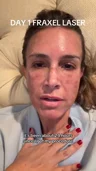
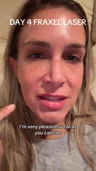
Partialtopink’s selected days 1 and 4 concern face and neck treatment she calls Fraxel; model and wavelength are not independently established. Cookiterica’s days 3 and 6 combine HALO with BBL photofacial treatment. The latter account cannot isolate HALO’s effects or supply a Fraxel recovery calendar.
University Park Dermatology & Medical Spa publishes a patient’s retrospective first-night-to-day-6 story; the device is not stated. Chapa’s day-11 CO2 settings are also unstated. An early-exercise choice, a smooth patch or residual tenderness in these accounts is not medical clearance or a measured complication signal.
The selected accounts make the practical burden easier to picture, but they don’t establish a typical recovery or diagnose your skin. The October 18, 2026 voices packet contains 60 partly or rendered-read original threads, with zero certified complete comment trees. Only 24 thread records had explicitly US portions retained. Counts refer to sources, not people, outcomes or satisfaction rates.
“Which of these patient experiences resembles my planned treatment, and what differences in settings or combination procedures should change my expectations?”
SourcesSkin Care Before and After Fractionated Carbon Dioxide Laser Treatment | Memorial Sloan Kettering Cancer CenterLaser Treatments | University of Utah HealthWrinkles and fine lines | OHSUpartialtopink · Day 1cookiterica · Day 3sarajanewarner · Day 3partialtopink · Day 4cookiterica · Day 6sarajanewarner · Day 9mariaantoniachapa · Day 11University Park Dermatology & Medical Spa · First week
Follow-up and expectations
What should you ask before laser resurfacing recovery?
Before laser resurfacing, ask who will perform it and what recovery and complications to expect, as ASPS’s undated consultation checklist recommends; make the answers specific to the device, settings and treated areas in your plan.
Leave with a plan you can actually use
Write down device, wavelength, fractional or full-field delivery, treatment areas and any combined procedure. Ask what the office means by downtime. Mayo’s October 2024 7–10 days for new ablative skin and MSK’s August 2025 1–2 weeks for fractionated CO2 healing are reference points, not a personal appointment calendar.
Ask which cleanser and ointment to obtain, how to use them and when makeup, sunscreen, shaving and active products can restart. Stanford’s undated ablative SPF 30 guidance and OHSU’s 2-day Fraxel makeup restriction address different contexts. Have the team explain which instructions belong to you and how they will confirm healing.
ASPS asks about before-and-after photos and reasonable expectations. Ask for examples matching your indication, treatment and follow-up interval, then schedule the review of your own result. Clarify which visits and unexpected-care charges are included before treatment. A flattering early photograph doesn’t establish long-term durability or personal pigment risk.
Bring the work or event dates you are trying to protect, your medication list, cold-sore history and questions about pigment changes. A useful plan tells you what to do at home, when the team wants to see you and whom to call if something changes. It should also explain what follow-up and unexpected care cost; this packet doesn’t establish a written refund, warranty or complication-payment policy.
“Can you give me one written recovery plan covering my exact treatment, products, follow-up visits, activity limits and after-hours contact?”
Your laser recovery appointment
Save the questions that fit your treatment and daily routine.
Nothing saved yet. Tap Save to my list under any question.
Start with a short intake, pick your top 3 practices, and get Interactive Quotes back.
What these patients described
Individual accounts with their original publication dates. HALO plus BBL stays labelled as a combination; an unstated device stays unstated. Their products, prices, exercise and satisfaction are personal reports.
Near you
Practices that publish laser skin resurfacing results, and laser skin resurfacing pages for the cities and states Afters covers.
Plan recovery around your treatment
Ask your treating team to write down the device, treated areas, care instructions, follow-up and contact plan before you book time away.
How we researched laser resurfacing recovery
Checked October 18, 2026. This guide uses corrected clinical claims, named institutional instructions and selected US-context patient accounts. It keeps devices, treatment areas, settings and healing endpoints separate.
What the numbers mean
Institutional healing ranges describe education or care protocols without measured patient denominators. Study counts retain people, paired sides or sessions as originally reported. No rates are pooled, and an average on a general page is not a device-specific return date.
Patient questions and incomplete reading
The voices packet contains 137 source records. Its 60 original-thread notes are partly or rendered-read, with zero certified complete comment trees; the full-comment reading requirement remains unmet. Only 24 thread records have explicitly US portions retained. Counts are sources, not people or outcome rates. Anonymous community material is paraphrased and not quoted.
What the videos can show
Each diary is one person’s account, credited and linked to its original post with its publication date. HALO plus BBL stays labelled as a combination, and unspecified settings remain unspecified. Reports of skin changes are personal observations. Their products, medication, exercise and satisfaction are not instructions, diagnoses or a measured recovery distribution.
Where care instructions differ
Cleansing frequency, makeup permission and recovery endpoints differ between institutions and between pages from the same institution. We keep those differences visible. Ask your treating team which complete protocol applies; combining pieces from several pages creates a regimen none of those sources gave.
Sources
- Laser resurfacing - Mayo ClinicMayo Clinic · 2024
- Skin Care Before and After Fractionated Carbon Dioxide Laser Treatment | Memorial Sloan Kettering Cancer CenterMemorial Sloan Kettering Cancer Center · 2025
- Techniques | Stanford Health CareStanford Health Care · Accessed Oct 18, 2026
- Laser Treatments | University of Utah HealthUniversity of Utah Health · Accessed Oct 18, 2026
- Wrinkles and fine lines | OHSUOregon Health & Science University · Accessed Oct 18, 2026
- Laser Skin (Fractional) Resurfacing Procedure OverviewThe Aesthetic Society · Accessed Oct 18, 2026
- Non-ablative Laser Resurfacing for WrinklesASDS · Accessed Oct 18, 2026
- Laser Resurfacing - ASLMSASLMS · 2025
- Nonablative Fractional Laser Resurfacing for Acne Scarring in Patients With Fitzpatrick Skin Phototypes IV-VI.Dermatologic surgery : official publication for American Society for Dermatologic Surgery [et al.] · 2016
- Laser Skin Resurfacing Recovery | American Society of Plastic SurgeonsAmerican Society of Plastic Surgeons · Accessed Oct 18, 2026
- Laser Resurfacing for Acne ScarsASDS · Accessed Oct 18, 2026
- Cosmetic After Care Instructions | OHSUOregon Health & Science University · Accessed Oct 18, 2026
- Laser Skin Resurfacing: Lasers Types, Skin Conditions, What to ExpectCleveland Clinic · 2021
- Complications and posttreatment care following invasive laser skin resurfacing: A review.PubMed-indexed original publication · 2018
- Laser Skin Resurfacing Recovery & AftercareThe Aesthetic Society · Accessed Oct 18, 2026
- Valacyclovir prophylaxis for herpes simplex virus infection or infection recurrence following laser skin resurfacing.Dermatologic surgery : official publication for American Society for Dermatologic Surgery [et al.] · 2002
- Use of valacyclovir for herpes simplex virus-1 (HSV-1) prophylaxis after facial resurfacing: A randomized clinical trial of dosing regimens.Dermatologic surgery : official publication for American Society for Dermatologic Surgery [et al.] · 2000
- Laser Skin Resurfacing Risks & Safety | The Aesthetic SocietyThe Aesthetic Society · Accessed Oct 18, 2026
- Laser Skin Resurfacing Results | American Society of Plastic SurgeonsAmerican Society of Plastic Surgeons · Accessed Oct 18, 2026
- 10 things to know before having laser treatment for your scarAmerican Academy of Dermatology · Accessed Oct 18, 2026
- How dermatologists treat sun-damaged skinAmerican Academy of Dermatology · Accessed Oct 18, 2026
- How to fade dark spots in darker skin tonesAmerican Academy of Dermatology · Accessed Oct 18, 2026
- How to select a sunscreenAmerican Academy of Dermatology · Accessed Oct 18, 2026
- Laser Skin Resurfacing Procedure Steps | ASPSAmerican Society of Plastic Surgeons · Accessed Oct 18, 2026
- A retrospective chart review to assess the safety of nonablative fractional laser resurfacing in Fitzpatrick skin types IV to VI.Journal of drugs in dermatology : JDD · 2013
- Skin typing: Fitzpatrick grading and others.Clinics in dermatology · 2019
- Guidelines for Office-Based Laser ProceduresAmerican Society for Laser Medicine and Surgery · Accessed Oct 18, 2026
- Laser Skin Resurfacing Results | The Aesthetic SocietyThe Aesthetic Society · Accessed Oct 18, 2026
- The Efficacy of Laser Therapy in Melasma Treatment: A Systematic Review and Meta-AnalysisPubMed-indexed original publication · 2025
- Laser Skin Resurfacing Questions | American Society of Plastic SurgeonsAmerican Society of Plastic Surgeons · Accessed Oct 18, 2026
- Laser resurfacing: partialtopinkTikTok · @partialtopink · Sep 27, 2025
- Laser resurfacing: cookitericaTikTok · @cookiterica · Feb 24, 2025
- Laser resurfacing: sarajanewarnerTikTok · @sarajanewarner · Feb 2, 2026
- Laser resurfacing: partialtopinkTikTok · @partialtopink · Oct 1, 2025
- Laser resurfacing: cookitericaTikTok · @cookiterica · Feb 26, 2025
- Laser resurfacing: sarajanewarnerTikTok · @sarajanewarner · Feb 8, 2026
- Laser resurfacing: mariaantoniachapaTikTok · @mariaantoniachapa · Aug 3, 2026
- Laser resurfacing: University Park Dermatology & Medical SpaYouTube/University Park Dermatology & Medical Spa · 2013