Laser skin resurfacing: Laser Skin Resurfacing: Which Type Do I Need?
 Felipe LeeCo-founder, Afters · Updated October 18, 2026
Laser skin resurfacing may improve wrinkles, sun damage, acne scars or texture. Start with the skin concern, then compare the exact device, pigment risk, downtime and the person performing treatment.
- Fractional
- A treatment pattern
- Pigment risk
- Device and skin specific
- The operator
- Verify scope and training
Laser skin resurfacing questions
Compare the change you want with the evidence for the proposed device. Save the questions that matter to your consultation.
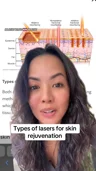 What is laser skin resurfacing?Laser skin resurfacing uses laser energy to remove surface skin or stimulate collagen without that removal, according to Mayo Clinic’s October 26, 2024 explanation of ablative and nonablative treatment.
 What does fractional laser skin resurfacing mean?Fractional laser skin resurfacing treats a grid of microscopic columns with surrounding skin left intact, according to ASLMS, and it can be ablative or nonablative.
- Is CO2 laser skin resurfacing the same as Fraxel?CO2 laser skin resurfacing and Fraxel DUAL are different treatments, with ASLMS describing CO2 as ablative and University of Utah identifying Fraxel DUAL’s nonablative 1550-nm and 1927-nm settings.
- Does laser skin resurfacing work for wrinkles and sun damage?Laser skin resurfacing improved photoaging in the 2011 study Fractionated Carbon Dioxide Laser Treatment of Photoaging, a prospective series of 45 patients and 108 sessions whose conclusions specify Fitzpatrick types I–III.
- Does laser skin resurfacing work for acne scars?Laser skin resurfacing can make acne scars less noticeable but cannot erase them, according to the American Academy of Dermatology, which distinguishes ice-pick scars from rolling scars and often combines treatments.
 Can laser skin resurfacing treat pigment and melasma?Laser skin resurfacing may help selected pigment concerns, without an established melasma cure, according to the 2024 review Efficacy and Safety of Ablative Fractional Laser in Melasma, which covered 14 randomized trials and 527 patients and found improved clinician ratings when ablative fractional laser was added to medication, without a statistically significant patient self-assessment benefit.
- Why does Fitzpatrick skin type matter for laser skin resurfacing?Fitzpatrick skin type matters for laser skin resurfacing because pigment risk varies with skin response and treatment, while the 2019 skin-phototyping review defines type by propensity to burn and ability to tan rather than race alone.
- Is laser skin resurfacing safe for dark skin?Laser skin resurfacing can be considered for darker skin with device-specific assessment, but the 2016 study Nonablative Fractional Laser Resurfacing for Acne Scarring, a randomized split-face trial of seven adults with types IV–VI, reported PIH on five of seven higher-density sides and three of seven lower-density sides.
- How does laser skin resurfacing compare with IPL, microneedling and peels?Laser skin resurfacing, IPL, microneedling and chemical peels are separate treatments, and the 2016 Cochrane acne-scar review of 24 trials and 789 adults did not establish one first-line intervention across its comparisons.
- Can I have laser skin resurfacing while taking acne medication?Laser skin resurfacing timing during isotretinoin use depends on the treatment, according to the 2017 review Isotretinoin and Timing of Procedural Interventions, which covered 32 publications and 1,485 procedures and found insufficient evidence to delay fractional ablative or nonablative laser solely for exposure, while not recommending fully ablative laser during systemic treatment.
- When should I postpone laser skin resurfacing for HSV, pregnancy or tanning?Laser skin resurfacing should be reassessed before treatment if you have active facial infection or a tan or sunburn, with the 21-expert fractional CO2 consensus generally treating active infection as a contraindication and AAD warning that lasering tanned or sunburned skin can cause serious burns or discoloration.
- What are the risks of laser skin resurfacing?Laser skin resurfacing complications affected 31 of 730 patients, or 4.2%, in the 2017 retrospective report Clinical Outcomes and Complications Associated with Fractional Lasers, which combined three separately selected device groups.
- How much downtime does laser skin resurfacing need?Laser skin resurfacing downtime varies by depth, device and the endpoint being discussed, with Mayo Clinic’s October 2024 guidance describing new skin after ablative treatment in seven to ten days and full recovery taking at least a month.
- Who can perform laser skin resurfacing in Utah?Utah separates ablative laser skin resurfacing from nonablative delegation, and its physician statutes name an exception for an unrestricted-license APRN to perform “an erbium full ablation resurfacing procedure or a CO2 fractionated resurfacing procedure,” with a patient-specific physician prescription, indirect physician supervision and at least 50 hours of procedure- and laser-specific training.
- Who can perform laser skin resurfacing in other states?Laser skin resurfacing operator rules vary by state, with California’s Medical Board saying cosmetologists may not use lasers, while Washington’s WAC 246-919-605 requires a trained licensed delegate with a permitting scope and excludes surgery from that delegation provision.
 How should I judge laser skin resurfacing before and after?Laser skin resurfacing before-and-after photos can help discuss reasonable expectations, as ASPS’s consultation checklist recommends, but cannot predict your result; browse /photos/laser-skin-resurfacing and check each case’s device, treatment count and timing.
Understand the treatment
What is laser skin resurfacing?
Laser skin resurfacing uses laser energy to remove surface skin or stimulate collagen without that removal, according to Mayo Clinic’s October 26, 2024 explanation of ablative and nonablative treatment. It may address fine wrinkles, uneven color or texture, sun damage and mild or moderate acne scars. The same Mayo page says resurfacing cannot fix sagging skin.
Start by showing the clinician what bothers you in ordinary light. A line, a depressed scar and a brown spot can call for different treatment plans even when they sit close together. The epidermis is the surface layer; the dermis beneath it contains supporting tissue. In Mayo’s description, an ablative laser destroys the epidermis and heats underlying skin, while a nonablative approach stimulates collagen. ASLMS lists CO2 and Er:YAG as ablative examples. These descriptions explain the mechanism without assigning one treatment depth to every device. Neither the society guidance nor Mayo’s patient page supplies a measured cohort denominator for this general definition. If your main concern is loose skin, ask what a surface treatment can realistically change before choosing it for a lifting claim. A consultation should separate the change you want from the instrument being advertised. Ask the clinician to point to the intended target on your skin and name the changes the proposed treatment would leave unaddressed. That gives you something concrete to compare at another appointment.
“What exactly are you treating in my skin, and which changes should I expect this laser to leave unaddressed?”
Understand the treatment
What does fractional laser skin resurfacing mean?
Fractional laser skin resurfacing treats a grid of microscopic columns with surrounding skin left intact, according to ASLMS, and it can be ablative or nonablative. Fractional describes the treatment pattern rather than the presence or absence of tissue removal. A 2009 anatomy study also found that increasing density could completely ablate the epidermis in excised tissue.
A fractional label alone cannot tell you how much recovery to arrange. Ask whether the columns remove tissue, which device creates them and how the proposed intensity relates to the goal. The 2009 study used 121 unlasered histology patients, 14 excised samples and 71 clinical patients for different questions. Its tissue findings do not supply a personal depth limit or an event rate for your face. Energy and density are separate settings; the study found greater injury depth with increasing energy and possible complete epidermal ablation with increasing density. Those observations explain why a gentler session and an aggressive session on the same machine may be meaningfully different treatments. ASLMS describes less downtime as a goal of fractional methods, while also describing weeks of downtime for aggressive ablative treatment. Prem Tripathi’s selected explanation illustrates settings and fractionation, but his personal estimates do not establish a recovery distribution or safety across all skin types. Get the delivery pattern and intended intensity written into the plan rather than relying on the word fractional.
“Is my proposed treatment fractional ablative, fractional nonablative or full-surface ablative, and how will the settings change its burden?”
Understand the treatment
Is CO2 laser skin resurfacing the same as Fraxel?
CO2 laser skin resurfacing and Fraxel DUAL are different treatments, with ASLMS describing CO2 as ablative and University of Utah identifying Fraxel DUAL’s nonablative 1550-nm and 1927-nm settings. FDA’s June 14, 2013 Fraxel DUAL clearance assigns indications separately by wavelength. Neither fractional nor the Fraxel brand alone identifies a complete treatment plan.
Read the indication for the actual device
FDA clearance is a substantial-equivalence determination for stated indications. It does not establish a universally suitable skin type, authorize an operator under state law or predict your result. In K130193, the 1550-nm statement includes resurfacing, dyschromia, melasma, periorbital wrinkles and acne and surgical scars. The separate 1927-nm statement names soft-tissue coagulation, actinic keratosis and pigmented lesions, including age spots, sun spots and freckles; it does not name melasma. The August 21, 2024 Fraxel FTX record also separates its wavelength indications. CLEAR+BRILLIANT TOUCH’s December 29, 2022 indication is “coagulation of soft tissue and general skin resurfacing procedures.” That wording does not promise scar removal. Sciton describes classic HALO as a hybrid of nonablative 1470 nm and ablative 2940 nm in the same microscopic zone; its newer TRIBRID has three independently controlled wavelengths. Those manufacturer descriptions cannot transfer a clinical result between generations. For CO2 or Er:YAG, request the proposed model’s own clearance and indication rather than accepting a category-wide FDA claim. The records here are regulatory documents without a patient outcome denominator.
“Which device, generation and wavelength will you use, and can you show its exact FDA indication for my concern?”
Match the concern
Does laser skin resurfacing work for wrinkles and sun damage?
Laser skin resurfacing improved photoaging in the 2011 study Fractionated Carbon Dioxide Laser Treatment of Photoaging, a prospective series of 45 patients and 108 sessions whose conclusions specify Fitzpatrick types I–III. Mayo Clinic says nonablative benefits develop gradually and favor texture and color more than wrinkle smoothing.
Match the endpoint to the study
Separate a fine surface line from deep folding or loose skin before discussing intensity. A 2017 review of controlled split-face wrinkle studies favored CO2 efficacy and Er:YAG’s complication profile, but that literature conclusion does not identify a universal winner. The 2011 CO2 series observed none of its listed scarring, prolonged redness, pigment-change or infection endpoints; its size and selected skin types cannot establish zero risk or type V–VI safety. In a separate 2023 nonrandomized MOXI study, 27 women with types I–IV received two treatments. Follow-up fell to 26 at one month and 24 at three months. Pigment measures moved toward baseline by three months, although some brown-spot improvement persisted. This is not evidence for every 1927-nm device. A 2007 series of 50 photodamage patients receiving three 1550-nm treatments also found photographic scores declined between three and nine months while staying improved. Ask which endpoint matters to you and when it will be judged. A promise to improve everything in a sun-damaged face is less useful than a realistic description of the lines, spots or texture being targeted.
“Which of my wrinkles, spots and texture changes are likely to improve with this device, and when will we assess each one?”
SourcesJournal of cosmetic and laser therapy : official publication of the European Society for Laser DermatologyDermatologic surgery : official publication for American Society for Dermatologic Surgery [et al.]Lasers in surgery and medicineDermatologic surgery : official publication for American Society for Dermatologic Surgery [et al.]Mayo Clinic
Match the concern
Does laser skin resurfacing work for acne scars?
Laser skin resurfacing can make acne scars less noticeable but cannot erase them, according to the American Academy of Dermatology, which distinguishes ice-pick scars from rolling scars and often combines treatments. The 2016 Cochrane review of 24 trials and 789 adults did not establish a first-line acne-scar intervention from searches through November 2015.
An acne-scar plan begins with the scar
AAD distinguishes ice-pick from rolling scars and describes combinations that lift scars or add volume as well as resurfacing.
Cochrane 2016 included 24 trials and 789 adults, with searches through November 2015. It did not establish a first-line intervention; longest follow-up was 48 weeks in one study.
The 2022 Delphi panel of 24 experts from 12 countries considered energy devices first-line for various scars. Expert agreement and randomized evidence answer different questions.
An acne mark and an indentation are different treatment targets. AAD generally begins scar treatment after acne is controlled so ongoing inflammation does not keep creating new scars. Its guidance describes lifting depressed scars and adding volume as possible parts of a plan. Ask the clinician to identify each scar pattern and explain which step addresses it. A 2026 meta-analysis of five studies and 130 analyzed participants favored fractional CO2 on a greater-than-half-improvement endpoint in its main analysis, but the randomized-only sensitivity interval included no difference. Its erbium comparators mixed Er:YAG and erbium-glass; it cannot be renamed a specific Fraxel DUAL comparison. A 2022 Delphi panel of 24 experts from 12 countries considered energy devices first-line for various scars. That is expert agreement, a different design from Cochrane’s randomized-trial assessment. Neither answer supplies a universal scar-removal percentage. Cochrane found no assessed long-term effects, with its longest follow-up of 48 weeks in one study. Ask for a staged plan and a point at which the clinician would reassess rather than automatically adding sessions.
“Which scar types do I have, what would laser change in each, and which scars need a different or combined treatment?”
Match the concern
Can laser skin resurfacing treat pigment and melasma?
Laser skin resurfacing may help selected pigment concerns, without an established melasma cure, according to the 2024 review Efficacy and Safety of Ablative Fractional Laser in Melasma, which covered 14 randomized trials and 527 patients and found improved clinician ratings when ablative fractional laser was added to medication, without a statistically significant patient self-assessment benefit. AAD describes laser or light as an add-on for some patients using medication and sun protection.
Brown marks need a diagnosis before a device
AAD says to confirm the diagnosis before treatment. Color alone does not establish what a spot is.
A review of 14 randomized trials and 527 patients found better clinician ratings with drug-plus-ablative-fractional laser, but no statistically significant patient self-assessment benefit.
The 2010 eight-woman Fraxel SR series reported greater-than-half improvement in five at last treatment and later recurrence reported by three; follow-up ranged from seven to 36 months.
A brown spot needs a diagnosis before treatment. AAD cautions that a presumed age spot should be confirmed, and it describes irritation or injury itself as a trigger for excess pigment in medium or dark skin. Clearing existing pigment and avoiding treatment-induced darkening are separate goals. The same melasma review did not find significant monotherapy superiority over other lasers on its MASI or melanin-index measures. In a 2010 uncontrolled Fraxel SR series of eight women with types II–IV, five had greater-than-half improvement at last treatment and three later reported recurrence; follow-up ranged from seven to 36 months. Those counts do not establish a reliable recurrence rate for your treatment. The broader 2025 review mixed resurfacing with other light and laser methods and had short follow-up and inconsistent reporting, so its headline effects are not used here. Aviva Mehta’s two-session account concerns a birthmark and hyperpigmentation, with wavelength and exact follow-up unstated. It is a personal experience rather than a melasma study. Ask how diagnosis, medicines, sun protection and recurrence will be addressed together before buying a pigment package.
“What is the diagnosis of my pigment, and how will you weigh improvement against PIH or recurrence for this exact device?”
SourcesDermatologic surgery : official publication for American Society for Dermatologic Surgery [et al.]Dermatologic surgery : official publication for American Society for Dermatologic Surgery [et al.]American Academy of DermatologyAmerican Academy of DermatologyAmerican Academy of DermatologyAmerican Academy of DermatologyPubMed-indexed original publicationPubMed-indexed original publication@avivamehta
Skin type and pigment risk
Why does Fitzpatrick skin type matter for laser skin resurfacing?
Fitzpatrick skin type matters for laser skin resurfacing because pigment risk varies with skin response and treatment, while the 2019 skin-phototyping review defines type by propensity to burn and ability to tan rather than race alone. Mayo Clinic’s October 2024 guidance warns that brown or Black skin has greater risk of lasting pigment changes.
The drawing lists types I–VI without using a skin-color swatch to assign a type. The 2019 review also describes weaknesses in subjective classification. A clinician needs your history and examination rather than a label inferred from a photograph, ancestry or a creator who looks similar to you. Tell the clinician about tanning, prior dark marks after irritation, scars and previous treatment reactions. AAD’s general dark-spot guidance explains why inflammation may create additional pigment. It does not supply a laser-specific probability or establish how quickly a new mark will fade. A 2013 narrative review emphasized sparse data for types V–VI and noted that much published nonwhite laser research involved East Asian patients. A later review of 15 studies of 1550- or 1927-nm treatment also called for more evidence in type VI and for 1927 nm. That review disclosed industry participation, including an author employed by Bausch Health. These sources support a careful discussion of device and settings; they cannot prove either universal safety or universal ineligibility. Ask how the operator’s experience and the available evidence match your skin history and the actual treatment being proposed.
“How have you assessed my skin’s pigment response, and what evidence supports this device and settings for someone with my history?”
SourcesThe Journal of clinical and aesthetic dermatologyLasers in surgery and medicineThe British journal of dermatologyDermatologic surgery : official publication for American Society for Dermatologic Surgery [et al.]Clinics in dermatologyAmerican Society of Plastic SurgeonsMayo ClinicAmerican Academy of Dermatology
Skin type and pigment risk
Is laser skin resurfacing safe for dark skin?
Laser skin resurfacing can be considered for darker skin with device-specific assessment, but the 2016 study Nonablative Fractional Laser Resurfacing for Acne Scarring, a randomized split-face trial of seven adults with types IV–VI, reported PIH on five of seven higher-density sides and three of seven lower-density sides. Those are paired sides of the same people.
Patient sides, sessions and people are different units
The trial found statistically similar scar improvement across densities, but seven patients cannot prove equivalent effectiveness or establish a universally safe setting. In a separate 2013 retrospective Fraxel re:store report, 45 patients with types IV–VI received 115 sessions using specific settings and pre/post hydroquinone. PIH accompanied five sessions, reported as 4%; two episodes occurred in one patient. That is not a 4% per-patient risk, and the protocol cannot be separated from its results. One episode lasted longer than a month, lasting two months in that series; it does not predict resolution in everyone. A 2010 trial randomized 15 darker-skin acne-scar patients between energy settings for five monthly 1550-nm sessions. It reported significant PIH but no usable event denominator in the abstract. These studies have US affiliations, which do not independently confirm treatment geography. None establishes a modern fractional CO2 risk for types V–VI or separate robust estimates for each type. Use the evidence to ask about a conservative plan, alternatives, follow-up and what happens if pigment worsens. A reassuring anecdote cannot substitute for those answers.
“What darker-skin evidence matches my indication and device, and what is your plan if my pigmentation becomes worse?”
Compare other approaches
How does laser skin resurfacing compare with IPL, microneedling and peels?
Laser skin resurfacing, IPL, microneedling and chemical peels are separate treatments, and the 2016 Cochrane acne-scar review of 24 trials and 789 adults did not establish one first-line intervention across its comparisons. University of Utah describes IPL as using a broader wavelength range than laser. AAD bases scar treatment on the scar pattern and may combine methods.
Compare the treatment, not the facial name
Ask which concern each option is intended to address rather than comparing names of facials. University of Utah lists brown spots, sunspots and facial redness among IPL targets and says it may improve texture and tone. Its page also uses broad marketing language, which does not establish measured benefit or downtime for you. An IPL-plus-laser photo cannot isolate either treatment’s contribution. Cochrane considered skin needling, chemical peeling and combinations within an acne-scar evidence base; that does not establish equivalence for wrinkles or pigment. Ordinary skin needling and RF microneedling should also be named separately when discussing a plan. A 2014 review discussed both lasers and peels in types IV–VI and their particular resurfacing challenges without providing a pooled comparative success rate. A 2020 complications review lists infection, pigment gain, pigment loss and scarring across lasers, peels and dermabrasion, again without a patient denominator for incidence. A gentler-sounding treatment name is not evidence that pigment injury is impossible. For melasma, AAD describes sun protection and topical medication, with procedures added for selected patients. For scars, its plans can include lifting or volume rather than resurfacing alone. Ask what a simpler treatment or continued medical care would leave untreated, what burden each option adds and what would count as enough improvement to stop.
“Why does this laser fit my concern better than IPL, needling, a peel or medical care, and what tradeoffs change with each?”
Decide when to wait
Can I have laser skin resurfacing while taking acne medication?
Laser skin resurfacing timing during isotretinoin use depends on the treatment, according to the 2017 review Isotretinoin and Timing of Procedural Interventions, which covered 32 publications and 1,485 procedures and found insufficient evidence to delay fractional ablative or nonablative laser solely for exposure, while not recommending fully ablative laser during systemic treatment. Mayo Clinic’s October 2024 patient page gives a broader caution about isotretinoin in the previous year.
Isotretinoin guidance depends on the procedure
Its October 26 patient page cautions about isotretinoin in the previous year. It gives no procedure-specific trial denominator for that caution.
Evidence review and Delphi guidance found insufficient evidence to justify delaying nonablative fractional devices solely for current or recent isotretinoin.
32 publications and 1,485 procedures across modalities; insufficient evidence to delay fractional ablative or nonablative laser solely for exposure. Fully ablative laser during systemic isotretinoin was not recommended.
These sources disagree in scope rather than establishing a single countdown for everyone. The 1,485 denominator includes different procedures and ages; it is not a cohort of that many resurfacing patients. The separate 2017 ASDS task force used evidence review and Delphi consensus and found insufficient evidence for delaying nonablative fractional devices solely for current or recent isotretinoin. This is not a randomized safety trial for every laser or setting. Tell the clinician the actual medication, dose history and timing, and ask the prescriber and treating clinician to coordinate the decision. Do not change a prescribed medicine based on a general guide. Active acne is another issue. AAD generally starts scar treatment after acne is controlled, and ASPS lists active acne among candidacy limitations. Mayo also identifies keloid history, prior facial radiation and immune or connective-tissue conditions as reasons for caution. Bring these into the same assessment. A clinic should explain whether it is recommending delay because of a specific medicine, an active skin condition, the planned depth or its own protocol, and what would change the decision.
“How do my acne activity and medicines affect this exact fractional or fully ablative plan, and will you coordinate with my prescriber?”
Decide when to wait
When should I postpone laser skin resurfacing for HSV, pregnancy or tanning?
Laser skin resurfacing should be reassessed before treatment if you have active facial infection or a tan or sunburn, with the 21-expert fractional CO2 consensus generally treating active infection as a contraindication and AAD warning that lasering tanned or sunburned skin can cause serious burns or discoloration. The corrected research supplies no pregnancy outcome cohort or validated pregnancy treatment interval.
Bring the reasons timing may change
The 21-expert fractional CO2 consensus generally considered active facial infection a contraindication. AAD generally starts scar treatment after acne is controlled.
MSK asks about herpes and shingles and describes prescribed prevention. The 2002 study observed no HSV among 120 patients given active prophylaxis, without an untreated control.
AAD warns that treating tanned or sunburned skin can cause a serious burn or discoloration. Disclose recent exposure before the appointment.
The reviewed corrected claims contain no pregnancy outcome cohort or validated safe interval. Tell the treating clinician and obstetric team before planning elective treatment or medicines.
Tell the treating clinician about current lesions, recent sun exposure, cold sores or shingles, pregnancy and possible pregnancy before proceeding. An HSV history calls for a prevention discussion rather than a self-prescribed course. MSK asks about herpes and shingles and describes prescribed antivirals before and after treatment. A 2002 study gave active valacyclovir prophylaxis to 120 patients and observed no HSV infection or recurrence, but it had no untreated control in the abstract. A separate randomized start-day study of 84 facial-resurfacing patients mixed CO2, Er:YAG, peels and dermabrasion, followed participants for 21 days and observed no reactivation in either active-treatment group. Neither finding proves that prevention eliminates risk or supplies your dosing schedule. The 21-expert panel’s frequent prophylaxis use records clinician practice, not comparative proof that everyone needs the same medicines. For pregnancy, ask your treating clinician and obstetric team about postponement and any proposed medicines or anesthesia; absence of an outcome cohort here cannot establish safety. AAD also cautions against independently stopping prescribed medicines because of pigment concerns. Get the team’s timing decision before arriving for treatment.
“Do my recent sun exposure, infection history, pregnancy status or planned medicines mean we should postpone or change this treatment?”
SourcesDermatologic surgery : official publication for American Society for Dermatologic Surgery [et al.]Dermatologic surgery : official publication for American Society for Dermatologic Surgery [et al.]Lasers in surgery and medicineMayo ClinicAmerican Academy of DermatologyAmerican Academy of DermatologyMemorial Sloan Kettering Cancer Center
Understand the burden
What are the risks of laser skin resurfacing?
Laser skin resurfacing complications affected 31 of 730 patients, or 4.2%, in the 2017 retrospective report Clinical Outcomes and Complications Associated with Fractional Lasers, which combined three separately selected device groups. That combined figure is not a national US rate or your personal chance of a complication.
Complication figures keep their original scope
The 2017 device groups were 224 patients at 1927 nm, 334 at 1550 nm and 172 with fractional CO2, with reported rates of 4.0%, 3.3% and 6.4%. No significant difference was found, but nonrandomized selection, types I–IV and one-to-ten-month follow-up prevent an equivalence claim. Older full-field CO2 series and shallow versus deep Er:YAG records in the figure answer different questions; their rates must not become modern fractional estimates. A four-woman fractional CO2 complication report describes scars or ectropion, including sensitive-site and infection concerns, but has no all-treatment denominator for incidence. Eye safety deserves a separate answer. Expert consensus calls for ocular assessment and appropriate shields around the eye, and stopping treatment immediately for ocular pain or vision changes. Tell the treating clinician immediately if either occurs. During recovery, MSK advises calling the care team for fever, chills, green or yellow drainage, increasing pain, redness or swelling, or persistent bleeding. Stanford also flags blistering and excessive pain or swelling. Contact the treating team right away rather than diagnosing a complication from a photo. Ask who will examine you and how urgent assessment is arranged.
“Which complications match my exact treatment and skin history, and who will assess me promptly if pain, pigment or healing worsens?”
SourcesDermatologic surgery : official publication for American Society for Dermatologic Surgery [et al.]Plastic and reconstructive surgeryAesthetic surgery journalAesthetic plastic surgeryLasers in surgery and medicineJournal of cosmetic dermatologyThe Aesthetic SocietyMemorial Sloan Kettering Cancer CenterStanford Health Care
Understand the burden
How much downtime does laser skin resurfacing need?
Laser skin resurfacing downtime varies by depth, device and the endpoint being discussed, with Mayo Clinic’s October 2024 guidance describing new skin after ablative treatment in seven to ten days and full recovery taking at least a month. MSK describes one to two weeks of healing for fractionated CO2. These are institutional expectations without measured patient denominators.
Three recovery endpoints to put in the plan
Ask separately about wound care, looking presentable, work and the later result. Surface closure does not mean redness has disappeared or that a major event is well timed. University of Utah describes five to seven days of facial redness, swelling, roughness and bronzing after Fraxel, with neck and chest effects lasting seven to 14 days. Stanford’s general nonablative page gives an average of three days of redness and swelling; Mayo describes possible hours. Those educational descriptions differ in device and intensity and should not be compressed into a universal calendar. MSK advises no makeup until fully healed, while other nonablative protocols differ. Treatment count is another part of the burden. Utah describes one to three CO2 sessions depending on indication and area, and more for acne scars; for Fraxel it describes one to three sessions for pigment or tone and three to six for texture, tightening or wrinkles. These are service expectations, not a required package for you. Ask about numbing, sedation, monitoring, transportation and help at home for the actual treatment. ASDS describes topical anesthesia for small areas and possible nerve blocks or conscious sedation for larger ones. Get the complete instructions before making work or travel commitments.
“For my device, area and intensity, what wound care, time off, help, anesthesia and repeat visits should I arrange?”
SourcesMayo ClinicThe Aesthetic SocietyThe Aesthetic SocietyAmerican Society for Dermatologic SurgeryUniversity of Utah HealthMemorial Sloan Kettering Cancer CenterStanford Health CareOregon Health & Science UniversityAmerican Society for Laser Medicine and SurgeryAmerican Society for Laser Medicine and Surgery
Choose the treating team
Who can perform laser skin resurfacing in Utah?
Utah separates ablative laser skin resurfacing from nonablative delegation, and its physician statutes name an exception for an unrestricted-license APRN to perform “an erbium full ablation resurfacing procedure or a CO2 fractionated resurfacing procedure,” with a patient-specific physician prescription, indirect physician supervision and at least 50 hours of procedure- and laser-specific training. Full-field CO2 is not named in that exception.
Utah separates ablative from nonablative delegation
The statutory definition treats expected removal of living tissue as ablative and explicitly includes CO2 and erbium:YAG. A fractional marketing label does not bypass that definition. Utah generally prohibits physician delegation of ablative cosmetic procedures outside MD/DO licensure except the named APRN exception; a separate other-license provision depends on a scope authorizing surgery. For nonablative procedures other than hair removal, an unrestricted physician, NP or PA must evaluate you before a protocol or series, in person or by live telemedicine. Authorized RN and master-esthetician performance may use general cosmetic medical supervision, while estheticians and practical nurses require direct supervision, subject to qualifications and scope. General supervision includes complication availability and a location within 60 minutes or 60 miles; direct supervision means present and available face to face where and when treatment happens. Documented delegated competence includes at least 80 hours. Utah also requires written information naming the supervising and performing licensees and a follow-up telephone number answered within 24 hours. A separate medical-spa branding rule does not establish who may perform every treatment. These are the statutes in the October 18, 2026 research, not an operator ranking or patient safety trial. Ask for the performing licensee and the legal basis for this particular procedure.
“Who will actually operate my laser, under which Utah scope or delegation provision, and who supervises and handles complications?”
Choose the treating team
Who can perform laser skin resurfacing in other states?
Laser skin resurfacing operator rules vary by state, with California’s Medical Board saying cosmetologists may not use lasers, while Washington’s WAC 246-919-605 requires a trained licensed delegate with a permitting scope and excludes surgery from that delegation provision. The selected state sources were checked October 18, 2026; they are not a complete nationwide scope analysis.
Selected state rules are not a national license
California’s guidance identifies physicians and supervised RN/PA medical personnel and says the physician need not be onsite but must be immediately reachable. It does not settle every modern NP independent-practice question. Texas’s Medical Board treats nonsurgical cosmetic procedures using prescription devices as medical practice and references Chapter 169, Subchapter E; TDLR says an esthetician or cosmetology license alone does not authorize laser resurfacing. The full current Texas operative-rule history remains a research gap. North Carolina considers structural tissue alteration with laser to be surgery and allows appropriately trained licensed professionals within their scopes under physician supervision, preferably onsite. Washington requires evaluation, diagnosis, consent and emergency/follow-up planning, with the physician on the immediate premises during initial treatment and limited written backup arrangements for later temporary absences. ASLMS recommends documented system-specific training and direct onsite physician supervision for covered delegated procedures; society advice is distinct from state legal minima. The dated Utah DOPL summary and 2020 administrative compilation are not substituted for current rules. FDA device clearance also does not authorize a person to practice. Verify the current state board rule and the proposed operator’s actual license rather than relying on the clinic’s name or a vendor certificate.
“Which current state rule authorizes this person to perform this exact treatment, and what evaluation, supervision and emergency arrangements apply?”
SourcesUtah DOPLMedical Board of CaliforniaTexas Medical BoardTexas Department of Licensing and RegulationNorth Carolina Medical BoardWashington State LegislatureUtah Office of Administrative RulesUS Food and Drug AdministrationAmerican Society for Laser Medicine and SurgeryAmerican Society for Laser Medicine and Surgery
Make the consultation useful
How should I judge laser skin resurfacing before and after?
Laser skin resurfacing before-and-after photos can help discuss reasonable expectations, as ASPS’s consultation checklist recommends, but cannot predict your result; browse /photos/laser-skin-resurfacing and check each case’s device, treatment count and timing. A 2010 durability study followed only ten returning fractional CO2 subjects, so even later study photos need their selection and follow-up context.
Use before-and-after images to test the plan
Ask for the device, wavelength, delivery pattern, areas, sessions and any combined peel, light treatment, injection or surgery.
The 2010 fractional CO2 durability study followed ten returning subjects at one- or two-year visits by indication. Retaining 74% of prior photographic improvement is not a 74% patient success rate.
ASPS’s consultation checklist asks who performs treatment, training, recovery, possible complications and reasonable expectations. Put those answers beside the photographs.
Ask for comparable concerns and skin histories, consistent lighting and expression, the treated area, session count and elapsed time after the last session. Find out whether IPL or BBL, another laser, a peel, an injection or surgery contributed to the appearance. The ten returning subjects retained a reported 74% of their previous photographic improvement at one- or two-year visits depending on indication. That is a maintenance measure in a selected follow-up sample, not the percentage of patients satisfied or a universal duration. In a separate Fraxel SR survey, 59 patients responded after 202 treatments; 75% rated satisfaction four or five on a five-point scale. The denominator is respondents, with a median of four treatments, rather than all people considering Fraxel. The selected practice-published CO2 patient video describes a six-month result with a concurrent body lift. No facial facelift is stated, but the selected interview still cannot independently measure efficacy or establish a prevention benefit. Use these examples to make your goal specific. ASPS asks who performs treatment, what training they have, recovery and complication expectations and reasonable outcomes. Before paying, put the device, areas, alternatives, planned sessions, care, follow-up and responsibility for unexpected treatment into one written plan. The linked cost guide addresses the quote separately.
“Can you show comparable cases with the full treatment list and later follow-up, then write down my expected changes, limits and follow-up responsibilities?”
Your laser resurfacing consultation
Keep the device, skin-risk and care questions you want answered before deciding.
Nothing saved yet. Tap Save to my list under any question.
Start with a short intake, pick your top 3 practices, and get Interactive Quotes back.
Near you
Practices that publish laser skin resurfacing results, and laser skin resurfacing pages for the cities and states Afters covers.
Put your laser resurfacing plan together
Keep your skin concerns, proposed treatment, alternatives and follow-up questions in one place.
How we researched laser skin resurfacing
Corrected clinical claims, primary device records and selected state rules were checked October 18, 2026. Patient questions shaped the outline; clinical sources support the answers.
Different evidence answers different questions
Randomized paired-side trials, retrospective session records, expert consensus, patient education and FDA clearance documents retain their own design and denominators. US affiliation alone does not independently establish treatment geography. No selected series becomes a national complication rate.
Patient questions, with reading limits
The voices packet contains 60 original thread URLs, with explicitly US-located portions in 24, and 60 main non-Reddit records. These are sources, not independent patients. No original thread is certified as a complete comment-tree read. Questions are paraphrased; anecdotes supply no outcome rate. Medicine, pregnancy and legal-scope checks are safety-essential editorial additions.
What remains uncertain
The research does not establish a universal pregnancy interval, device-specific personal pigment risk, a melasma cure, one recovery calendar or comprehensive current operator rules in every state. Full current Utah administrative-rule retrieval, Texas operative-rule history and modern California NP scope remain gaps. Treatment and medication decisions need your treating clinicians.
The videos
Uploaded KEEP videos carry creator credits and original links. Clinician explanations remain educational opinions; patient stories and practice-selected testimonials are not comparative outcomes. Wavelength and follow-up gaps stay explicit.
Sources
- Laser Skin Resurfacing | American Society of Plastic SurgeonsAmerican Society of Plastic Surgeons · Accessed Oct 18, 2026
- Laser resurfacing - Mayo ClinicMayo Clinic · 2024
- Laser Skin (Fractional) Resurfacing Procedure OverviewThe Aesthetic Society · Accessed Oct 18, 2026
- Non-ablative Laser Resurfacing for WrinklesASDS · Accessed Oct 18, 2026
- Laser Resurfacing - ASLMSASLMS · 2025
- Laser resurfacing: drmonicakieuTikTok · @drmonicakieu · Oct 14, 2025
- Nonablative and Hybrid Fractional Laser Skin Rejuvenation.Facial plastic surgery clinics of North America · 2020
- Fractional CO2 laser resurfacing of photoaged facial and non-facial skin: histologic and clinical results and side effects.Journal of cosmetic and laser therapy : official publication of the European Society for Laser Dermatology · 2009
- Laser Treatments | University of Utah HealthUniversity of Utah Health · Accessed Oct 18, 2026
- Laser resurfacing: drpremtripathiTikTok · @drpremtripathi · Jan 16, 2025
- Fraxel re:store Dual Laser System — K101490 510(k) summary/indicationsUS Food and Drug Administration · 2010
- Fraxel DUAL 1550/1927 Laser System — K130193 510(k) summary/indicationsUS Food and Drug Administration · 2013
- Fraxel FTX Laser System — K242142 clearance letter/indicationsUS Food and Drug Administration · 2024
- CLEAR+BRILLIANT TOUCH Laser System — K223647 510(k) summary/indicationsUS Food and Drug Administration · 2022
- HALO® Laser by ScitonSciton · Accessed Oct 18, 2026
- HALO TRIBRID by ScitonSciton · Accessed Oct 18, 2026
- A systematic review of comparative studies of CO2 and erbium:YAG lasers in resurfacing facial rhytides (wrinkles).Journal of cosmetic and laser therapy : official publication of the European Society for Laser Dermatology · 2017
- Fractionated carbon dioxide laser treatment of photoaging: prospective study in 45 patients and review of the literature.Dermatologic surgery : official publication for American Society for Dermatologic Surgery [et al.] · 2011
- Investigating the efficacy of a fractionated 1927 nm laser for diffuse dyspigmentation and actinic changes.Lasers in surgery and medicine · 2023
- Fractional photothermolysis: treatment of facial and nonfacial cutaneous photodamage with a 1,550-nm erbium-doped fiber laser.Dermatologic surgery : official publication for American Society for Dermatologic Surgery [et al.] · 2007
- Comparative efficacy and safety of fractional carbon dioxide and erbium-based fractional lasers for atrophic acne scars: A systematic review and meta-analysis.Lasers in medical science · 2026
- Acne scars: Consultation and treatmentAmerican Academy of Dermatology · 2023
- 10 things to know before having laser treatment for your scarAmerican Academy of Dermatology · Accessed Oct 18, 2026
- To evaluate the efficacy and safety of laser interventions for facial acne scars: a systematic review and Bayesian network meta-analysis.PubMed-indexed original publication · 2022
- Interventions for acne scars.PubMed-indexed original publication · 2016
- Energy-based devices for the treatment of Acne Scars: 2022 International consensus recommendations.PubMed-indexed original publication · 2022
- Treatment of melasma using fractional photothermolysis: a report of eight cases with long-term follow-up.Dermatologic surgery : official publication for American Society for Dermatologic Surgery [et al.] · 2010
- The treatment of melasma with fractional photothermolysis: a pilot study.Dermatologic surgery : official publication for American Society for Dermatologic Surgery [et al.] · 2005
- Melasma: Diagnosis and treatmentAmerican Academy of Dermatology · Accessed Oct 18, 2026
- How dermatologists treat sun-damaged skinAmerican Academy of Dermatology · Accessed Oct 18, 2026
- What can get rid of age spots?American Academy of Dermatology · Accessed Oct 18, 2026
- How to fade dark spots in darker skin tonesAmerican Academy of Dermatology · Accessed Oct 18, 2026
- Efficacy and Safety of Ablative Fractional Laser in Melasma: A Meta-analysis and Systematic Review.PubMed-indexed original publication · 2024
- The Efficacy of Laser Therapy in Melasma Treatment: A Systematic Review and Meta-AnalysisPubMed-indexed original publication · 2025
- Laser resurfacing: avivamehtaTikTok · @avivamehta · Jan 18, 2026
- Nonablative Fractional Laser Resurfacing in Skin of Color: Evidence-based Review.The Journal of clinical and aesthetic dermatology · 2017
- Dual 1550-nm Erbium Glass Fiber and 1927-nm Thulium Fiber Non-ablative Fractional Laser System Treatment in Patients With Skin of Color: A Review of Clinical Studies and Unmet Needs.Lasers in surgery and medicine · 2026
- Lasers and light-based therapies in ethnic skin: treatment options and recommendations for Fitzpatrick skin types V and VI.The British journal of dermatology · 2013
- Nonablative Fractional Laser Resurfacing for Acne Scarring in Patients With Fitzpatrick Skin Phototypes IV-VI.Dermatologic surgery : official publication for American Society for Dermatologic Surgery [et al.] · 2016
- Skin typing: Fitzpatrick grading and others.Clinics in dermatology · 2019
- Laser Skin Resurfacing Candidates | American Society of Plastic SurgeonsAmerican Society of Plastic Surgeons · Accessed Oct 18, 2026
- Safety and efficacy of erbium-doped yttrium aluminum garnet fractionated laser for treatment of acne scars in type IV to VI skin.Dermatologic surgery : official publication for American Society for Dermatologic Surgery [et al.] · 2010
- A retrospective chart review to assess the safety of nonablative fractional laser resurfacing in Fitzpatrick skin types IV to VI.Journal of drugs in dermatology : JDD · 2013
- Laser and face peel procedures in non-Caucasians.Facial plastic surgery clinics of North America · 2014
- Recognizing and Managing Complications in Laser Resurfacing, Chemical Peels, and Dermabrasion.Facial plastic surgery clinics of North America · 2020
- ASDS Guidelines Task Force: Consensus Recommendations Regarding the Safety of Lasers, Dermabrasion, Chemical Peels, Energy Devices, and Skin Surgery During and After Isotretinoin Use.Dermatologic surgery : official publication for American Society for Dermatologic Surgery [et al.] · 2017
- Isotretinoin and Timing of Procedural Interventions: A Systematic Review With Consensus Recommendations.JAMA dermatology · 2017
- Valacyclovir prophylaxis for herpes simplex virus infection or infection recurrence following laser skin resurfacing.Dermatologic surgery : official publication for American Society for Dermatologic Surgery [et al.] · 2002
- Use of valacyclovir for herpes simplex virus-1 (HSV-1) prophylaxis after facial resurfacing: A randomized clinical trial of dosing regimens.Dermatologic surgery : official publication for American Society for Dermatologic Surgery [et al.] · 2000
- Expert Consensus on Clinical Recommendations for Fractional Ablative CO2 Laser, in Facial Skin Rejuvenation Treatment.Lasers in surgery and medicine · 2025
- Skin Care Before and After Fractionated Carbon Dioxide Laser Treatment | Memorial Sloan Kettering Cancer CenterMemorial Sloan Kettering Cancer Center · 2025
- Complications of carbon dioxide laser resurfacing. An evaluation of 500 patients.Dermatologic surgery : official publication for American Society for Dermatologic Surgery [et al.] · 1998
- Long-term assessment of CO2 facial laser resurfacing: aesthetic results and complications.Plastic and reconstructive surgery · 1999
- Full-Field Erbium:YAG Laser Resurfacing: Complications and Suggested Safety Parameters.Aesthetic surgery journal · 2020
- Clinical Outcomes and Complications Associated with Fractional Lasers: A Review of 730 Patients.Aesthetic plastic surgery · 2017
- Complications of fractional CO2 laser resurfacing: four cases.Lasers in surgery and medicine · 2009
- Expert Consensus on Ocular Safety During Laser Procedures: A Practical Guide to Eye Safety by a Panel of Dermatologist Laser Surgeons and Ophthalmologists.Journal of cosmetic dermatology · 2025
- Laser Skin Resurfacing Recovery & AftercareThe Aesthetic Society · Accessed Oct 18, 2026
- Techniques | Stanford Health CareStanford Health Care · Accessed Oct 18, 2026
- Laser ResurfacingAmerican Society for Dermatologic Surgery · Accessed Oct 18, 2026
- Wrinkles and fine lines | OHSUOregon Health & Science University · Accessed Oct 18, 2026
- Principles for Non-Physician Use of Laser and Related TechnologyAmerican Society for Laser Medicine and Surgery · Accessed Oct 18, 2026
- Guidelines for Office-Based Laser ProceduresAmerican Society for Laser Medicine and Surgery · Accessed Oct 18, 2026
- Utah Code Section 58-67-102Utah Legislature · Accessed Oct 18, 2026
- Utah Code Section 58-1-505Utah Legislature · Accessed Oct 18, 2026
- Utah Code Section 58-1-506Utah Legislature · Accessed Oct 18, 2026
- utah805Utah Legislature · Accessed Oct 18, 2026
- utahDO805Utah Legislature · Accessed Oct 18, 2026
- Utah Code Section 58-1-507Utah Legislature · Accessed Oct 18, 2026
- utah_sb40Utah DOPL · Accessed Oct 18, 2026
- Medical Spas | Medical Board of CaliforniaMedical Board of California · Accessed Oct 18, 2026
- 312. What kind of license or training do I need to offer Med Spa services such as botox and body contouring? | Texas Medical BoardTexas Medical Board · Accessed Oct 18, 2026
- Medical Spas - Barbering and CosmetologyTexas Department of Licensing and Regulation · Accessed Oct 18, 2026
- 5.1.2: Laser SurgeryNorth Carolina Medical Board · Accessed Oct 18, 2026
- WAC 246-919-605:Washington State Legislature · Accessed Oct 18, 2026
- Utah Administrative Code as of January 1, 2020 — R156-1-506Utah Office of Administrative Rules · Accessed Oct 18, 2026
- Clinical experience with the Fraxel SR laser: 202 treatments in 59 consecutive patients.Plastic and reconstructive surgery · 2008
- Long-term efficacy of a fractional resurfacing device.Lasers in surgery and medicine · 2010
- Laser Skin Resurfacing Results | American Society of Plastic SurgeonsAmerican Society of Plastic Surgeons · Accessed Oct 18, 2026
- Laser Skin Resurfacing Questions | American Society of Plastic SurgeonsAmerican Society of Plastic Surgeons · Accessed Oct 18, 2026
- Laser resurfacing: Dr. David StokerYouTube/Dr. David Stoker · 2026